01 The ZLAB thesis: regional medicines and global development
Zai Lab presents two connected but different investment propositions. One is an established business developing and commercializing licensed medicines in China and selected neighboring markets. The other is a portfolio of investigational medicines intended to compete globally. The regional business already produces revenue and provides clinical and commercial infrastructure. The global portfolio offers potentially broader economics but requires continued investment and remains exposed to clinical and regulatory risk. Treating the company as either a pure distributor or a single-asset clinical biotech would miss important parts of the operating model. [1]
The immediate calendar illustrates that distinction. Vertex’s povetacicept application has a November 30, 2026 U.S. target action date. Zai Lab holds rights in specified Asian territories and participated in development, so the decision is relevant to its regional opportunity. It does not give Zai Lab U.S. sales or automatically authorize the medicine in China. Separately, Zai Lab will discuss first-line small-cell lung-cancer data for Zoci in October. That program belongs to its global development strategy and has a different path to potential value. [3] [4] [8]
The commercial base offers both evidence of execution and a warning against simplistic market-size arguments. The company reported eight commercially launched programs in China, yet second-quarter product revenue declined from the prior-year period. Pricing and treatment-utilization changes can offset volume growth. A medicine that is a major commercial success for its original developer in another geography may produce different margins and cash contribution for a regional licensee. Local reimbursement, royalty obligations, competition and selling costs determine the actual economics available to Zai Lab. [1]
The financial position gives the company resources to pursue its strategy, but the headline requires decomposition. The reported $717.5 million resource measure includes $100 million of current restricted cash. Short-term debt is material, and the consolidated company remains loss-making. These facts do not invalidate the pipeline, but they change how much flexibility the balance sheet represents. A valuation that counts restricted cash as freely available and ignores bank debt would overstate resources available to fund new studies or return value to shareholders.
A constructive thesis requires stronger retained commercial economics, credible global clinical progress and disciplined use of capital. A cautious thesis emphasizes the possibility that China sales remain pressured while the global portfolio needs more time and money than expected. The correct response to new evidence is to update each component separately. A positive partner decision can strengthen scientific confidence without immediately changing local revenue, while a company-owned clinical result can affect long-term value before it changes reported earnings. Those different channels explain why the catalyst calendar must be read alongside territorial rights and financial statements.
02 Company identity, leadership and the operating structure
The Q1 filing also records the April 2026 appointment of Yizhe Wang as Operating Partner. Primary source 1. Primary source 2.
Zai Lab Limited is a biopharmaceutical company with operations in China and the United States. Its ordinary shares trade in Hong Kong under 9688, while American Depositary Shares trade on Nasdaq under ZLAB. Each ADS represents ten ordinary shares. Samantha Du is the founder, chairperson and chief executive officer in the current disclosures. Rafael Amado leads global research and development. These identities and security units matter because investors can otherwise mix share counts, prices and operating claims from two listings or from different dates. [1] [2]
The legal issuer is a holding company, with operating activities conducted through subsidiaries. Investors own an interest in the issuer rather than a direct claim on each individual subsidiary’s cash account or product license. Consolidated financial statements combine the group, but they do not eliminate restrictions on cash movement, local working-capital needs or contractual obligations. The structure should therefore be considered when assessing liquidity and capital allocation. A large consolidated asset balance does not mean every dollar can immediately be used for any purpose in any jurisdiction.
The company operates across oncology, immunology, neuroscience and infectious disease. Regional partnerships have helped establish relationships with hospitals, clinicians, regulators and payers. That infrastructure can support additional launches, but a new product still requires its own evidence, registration, access and physician education. Shared capabilities may create efficiencies; they do not guarantee equal adoption or margins across products. An oncology medicine, an immunology biologic and a schizophrenia treatment can require substantially different commercial approaches even when they sit within the same corporate organization.
Leadership changes also need current dates. In May, Zai Lab announced that president and chief operating officer Josh Smiley would leave the company effective May 22. Older earnings transcripts list him as a participant, but those transcripts should not be used to reconstruct the current leadership roster. The announcement described an effort to strengthen operating performance and efficiency. Its eventual success must be judged through execution and results rather than inferred from the fact of a personnel change alone. [12]
Management describes a transition toward a broader global innovation business while maintaining its regional commercial foundation. That strategy can create value if clinical productivity and retained product economics improve faster than the costs required to support them. It can also become expensive if both development and commercialization demand sustained investment without sufficient cash generation. The relevant operating questions are therefore concrete: which products are growing, at what net price, which programs have interpretable data, and how much capital is needed before the next meaningful decision?
03 Povetacicept biology and the November FDA catalyst
The Q1 filing identifies Greater China participation in Vertex’s povetacicept OLYMPUS study in primary membranous nephropathy, whose Phase 3 portion had begun. Primary source 1. Primary source 2.
Povetacicept is an engineered fusion protein that inhibits BAFF and APRIL, two cytokines involved in B-cell and plasma-cell biology. Its development in IgA nephropathy reflects the role of abnormal immune activity in the disease. The therapeutic rationale is to affect upstream processes associated with pathogenic antibodies and immune complexes, rather than only the downstream consequences of kidney injury. A coherent biological mechanism supports the program, but approval and clinical value still depend on observed efficacy, safety and the population in which those effects are demonstrated. [3] [5] [6]
Vertex announced FDA acceptance of its application for accelerated approval in adults with IgA nephropathy on June 1. The agency assigned a November 30, 2026 target action date. The application is supported by the prespecified Week 36 interim analysis of the ongoing RAINIER Phase 3 trial. A target date indicates the intended regulatory review timetable. It is not a promise of approval, a confirmed launch date or a guarantee that the eventual label will match every analyst’s assumed patient population. [3]
The distinction between proteinuria and kidney outcomes is central to the application. Proteinuria measures protein in urine and is relevant to kidney disease activity and risk. Estimated glomerular filtration rate, or eGFR, describes kidney filtration function. A treatment can produce an encouraging reduction in proteinuria while longer follow-up is still required to establish the effect on the rate of kidney-function loss. The interim endpoint and the continuing trial answer related but different questions. This report does not rewrite a positive proteinuria result as completed proof that kidney failure is prevented.
Earlier RUBY-3 research provides context rather than a substitute for the randomized trial. The published Phase 1/2 study included open-label cohorts in IgA nephropathy and primary membranous nephropathy, with safety as the primary objective. Reported reductions in proteinuria and biomarker changes helped support later development. However, the absence of a concurrent randomized control and the small follow-up cohorts limit causal comparisons. A favorable early signal can justify a pivotal study without establishing comparative superiority to other medicines or a universal outcome for all patients. [6]
Consensus was used to retrieve scientific records, including a RAINIER design abstract. That abstract describes the planned randomized study and its interim and longer-term assessments. It is not the 2026 results paper, and its original enrollment assumptions should not replace later actual population counts. The scientific search also identified the RUBY-3 publication; the underlying article was consulted separately when the retrieved record lacked an abstract. Keeping these source roles explicit prevents a study-design document from being cited as though it contains completed outcomes. [6] [7]
04 RAINIER: interpreting the interim efficacy and safety populations
The March 2026 RAINIER interim efficacy analysis compared 131 participants receiving povetacicept with 68 receiving placebo. At Week 36, the active group had a 52.0% reduction from baseline in 24-hour urine protein-to-creatinine ratio, compared with 4.3% in the placebo group. The reported relative reduction versus placebo was 49.8%, with p<0.0001. Baseline change and treatment effect versus placebo are different statistical descriptions. The 52.0% figure should not be called a 52-percentage-point advantage over placebo or treated as an individual guarantee. [5]
The trial also reported reductions in galactose-deficient IgA1 and a greater proportion of participants with resolution of hematuria. Those findings provide supporting biological and clinical context. They do not mean that every patient achieved remission or that the disease has been permanently eliminated. Endpoint definitions and eligibility matter: a hematuria-resolution analysis, for example, concerns patients with hematuria at baseline. Applying its percentage to the entire trial population without that condition changes the denominator and exaggerates what the study actually measured.
The safety population was larger than the interim efficacy population. The release describes 372 povetacicept recipients and 185 placebo recipients in the main-cohort safety analysis, with mean exposure of roughly 34 weeks. Upper respiratory tract infections and injection-site reactions were among the events reported more often with active treatment. The overall percentage experiencing an adverse event does not alone establish equal risk: event type, severity, seriousness, duration and discontinuation also matter. A balanced reading considers the full pattern rather than choosing one favorable aggregate number. [5]
Longer-term RAINIER follow-up through Week 104 remains important to evaluating kidney function. The interim analysis can support an accelerated regulatory pathway while the continuing study supplies additional evidence. If approval is granted, the actual conditions and any required confirmatory evidence should be read from the decision and labeling. It would be premature to assume that all longer-term questions have been resolved merely because the application has been accepted. Conversely, the need for follow-up does not erase the observed randomized proteinuria effect; both facts belong in the assessment.
For valuation, the appropriate inference is that positive randomized evidence can improve confidence in a potential treatment and its regulatory prospects. It does not determine net pricing, reimbursement, local approval timing or adoption in Zai Lab’s territories. Those economic steps need separate assumptions. Comparisons with other IgA-nephropathy studies should also account for baseline characteristics, background therapy, endpoints and follow-up. This hub does not rank drugs by juxtaposing unadjusted percentages from unrelated trials or translate a p-value into an approval probability.
05 Regional rights: why Vertex’s U.S. sales are not Zai Lab revenue
The January 2025 agreement grants Zai Lab exclusive development and commercialization rights to povetacicept in mainland China, Hong Kong, Macau, Taiwan and Singapore. Vertex retains the other rights covered by its broader development strategy. Zai Lab is responsible for advancing local development and regulatory submissions and, if approved, commercialization in its licensed territory. The geographic list is important: describing the agreement only as global exposure or Asian rights can obscure which markets actually belong to the company. [4]
The agreement’s public announcement states that Vertex receives an upfront payment, regulatory milestones and tiered royalties on net sales in the licensed territory. It does not provide a public numerical schedule sufficient to calculate a precise retained margin for every future sales level. This report therefore does not invent a royalty percentage or present a partner’s worldwide sales forecast as Zai Lab revenue. Zai Lab is the regional licensee paying contractual consideration, rather than an originator collecting U.S. sales royalties under this agreement.
A favorable FDA decision could still be relevant to Zai Lab. It could strengthen confidence in the molecule, provide an important regulatory reference and inform expectations about future development. But the licensed territories have their own approval and reimbursement processes. A U.S. label is not automatically a Chinese authorization, and U.S. commercial pricing is not a reliable substitute for local net pricing. The timing of regional revenue can therefore differ from the timing of Vertex’s first commercial sale. The distinction is essential when assessing a near-term stock catalyst.
Local market opportunity also depends on diagnosis, access and treatment practice. Disease prevalence is only the starting population. Patients must meet the relevant indication, reach a treating specialist, obtain access and remain on therapy for revenue to accrue. Payer negotiations and affordability can influence both volume and price. Commercial infrastructure may help the company execute these steps, but infrastructure cannot remove the economic constraints of the market. A realistic model makes those steps visible rather than treating the prevalence estimate as a ready-made sales forecast.
For shareholders, the November event is best understood as a partner regulatory milestone with a regional transmission mechanism. Its importance to ZLAB depends on how much it changes expectations for local approval, future net sales and the costs required to deliver them. Zoci’s global development results may affect the company through a different and potentially more direct asset-valuation channel. Separating those channels avoids both dismissing the partner event as irrelevant and overstating it as an immediate entitlement to U.S. revenue.
06 Zoci: a global oncology asset with early evidence and pivotal work ahead
Zoci received a second FDA Fast Track designation in May 2026 for extrapulmonary neuroendocrine carcinomas, EMA orphan designation in June for pulmonary NECs, and FDA orphan designation in July for NECs. These are development designations, not marketing authorizations or evidence of successful pivotal trials. Primary source 1.
Zocilurtatug pelitecan, commonly called Zoci and formerly ZL-1310, is an antibody-drug conjugate targeting DLL3. The development strategy uses an antibody-directed approach to deliver a cytotoxic payload to relevant tumor cells. DLL3 is a biologically relevant target in small-cell lung cancer and other neuroendocrine malignancies. Nevertheless, a validated target does not ensure that every drug directed at it has the same therapeutic profile. Antibody properties, payload, linker, dose and exposure affect efficacy and safety, so evidence must remain specific to the actual investigational product. [8] [9]
At AACR, Zai Lab reported intracranial activity in previously treated extensive-stage small-cell lung cancer with brain metastases. The confirmed intracranial response rate was 53.7%, or 22 of 41, across the relevant evaluated group. At the 1.6 mg/kg dose, it was 62.5%, or 10 of 16. These are important signals in a difficult clinical setting, but the smaller dose-specific denominator must remain visible. A percentage based on sixteen patients has different uncertainty from a pivotal randomized result in hundreds of participants. [9]
The study used independent review for intracranial response and a different assessment framework for systemic tumor response. Brain response is not identical to overall disease control or survival. Prior radiotherapy, follow-up and patient selection also affect interpretation. A patient can have an intracranial response while experiencing disease elsewhere, and response durability requires observation over time. The result supports further development without proving that the drug prevents neurological complications in all patients or improves survival relative to a competing regimen.
Safety findings should accompany the efficacy signal. Grade 3 or higher treatment-related adverse events occurred in 27 of 136 patients in the reported overall population, or 19.9%, and in 9 of 55 at the 1.6 mg/kg dose, or 16.4%. Blood-count abnormalities were among the relevant events. These safety denominators differ from the intracranial-response denominators because they describe different analyzed populations. Combining the most favorable efficacy subset with an unrelated safety subset without explanation would create a misleading impression of a single uniform benefit-risk estimate. [9]
Zoci’s second-line-plus global registrational DLLEVATE study remains a major development task. Management’s August update projected completion of enrollment in the first half of 2027, followed by an interim analysis with potential to support a U.S. accelerated-approval submission. That is a planned pathway, subject to data and regulatory discussions. It is not a 2026 PDUFA or a confirmed 2027 approval. Its eventual value depends on the maturity, magnitude and reliability of the results, not simply the speed with which the program entered Phase 3. [2]
07 October ESMO data and the expansion beyond later-line SCLC
April 2026 collaborations pair zoci with Amgen’s tarlatamab and Boehringer Ingelheim’s obrixtamig, both DLL3/CD3 T-cell engagers. Amgen began enrolling the Phase 1b DeLLphi-313 study of zoci plus tarlatamab, with or without anti-PD-L1, in SCLC. These clinical collaborations test combinations; they do not establish combination efficacy or an approved regimen. Primary source 1.
The nearest scheduled company-specific update is Zai Lab’s October 23 investor webcast discussing Zoci data and clinical plans. The corresponding ESMO poster is scheduled for October 26 during the October 23–27 congress in Madrid. The September 29 announcement identifies a Phase 1b/1c cohort studying Zoci with atezolizumab, with or without carboplatin, in first-line extensive-stage small-cell lung cancer. This hub records the schedule and design; it does not invent the results of a presentation that has not yet occurred as of the October 9 verification. [8]
First-line development addresses a different commercial and clinical setting from the previously treated monotherapy population. Patients can have different disease history, baseline condition and available alternatives. Combination therapy also complicates attribution: an observed response belongs to the regimen being studied, not automatically to one component alone. The data will need to be read for cohort size, follow-up, confirmed responses, durability, adverse events and discontinuations. A high early response rate without mature follow-up can be encouraging while leaving the decisive comparative questions unanswered.
Management has discussed moving first-line development toward a registrational study, subject to emerging data and regulatory discussions. That conditional language matters. A planned trial is not already a successful trial, and initiating one does not guarantee that the eventual design or endpoint will support the desired approval. It also requires funding. Expanding into an earlier treatment line can enlarge an asset’s opportunity while increasing development cost and competitive demands. The value proposition should therefore be updated using both the new clinical information and the proposed path to confirmation.
Extrapulmonary neuroendocrine carcinoma is another distinct development direction. The April report described a confirmed objective response rate of 38.2%, or 13 of 34 response-evaluable patients, in an early study. That finding should not be generalized to all enrolled patients, all neuroendocrine tumors or a proven survival effect. Histology, prior treatment and follow-up can vary substantially in such a population. The program may offer meaningful optionality, but a small nonrandomized response dataset is an intermediate development milestone rather than a completed commercial proposition. [9]
The October update could influence ZLAB if it changes confidence in Zoci’s scope, durability, tolerability or registrational strategy. Its effect need not track a single headline percentage. A more mature dataset with consistent activity and manageable toxicity may be more useful than a larger response figure in a smaller selected subgroup. Conversely, a broader opportunity may require more time and capital than expected. The evidence should be assessed against those concrete questions, preserving the distinction between scientific promise and the assumptions required for shareholder value.
08 The commercial portfolio: revenue, pricing and product mix
The second-quarter filing reports net product revenue of $105.751 million, compared with $109.085 million a year earlier. ZEJULA contributed $32.079 million, VYVGART and VYVGART Hytrulo $23.866 million, NUZYRA $17.097 million, OPTUNE $12.202 million, QINLOCK $9.590 million, XACDURO $7.957 million and AUGTYRO $2.213 million. Newly launched KarXT contributed $0.552 million, with a small additional amount from other programs. These product-level figures are more informative than a broad claim that all launches are growing together. [1]
ZEJULA revenue declined from $41.042 million in the prior-year quarter. The filing attributes the pressure to hospital-utilization changes following volume-based procurement for generic olaparib. That description concerns a competitive treatment-market effect; it should not be rewritten as a statement that ZEJULA itself became a generic product. For investors, the issue is how prescribing and procurement choices affect net revenue and whether stabilization is durable. A sequential improvement can be real while the year-over-year comparison remains unfavorable.
VYVGART and VYVGART Hytrulo revenue declined from $26.497 million a year earlier, with pricing changes associated with NRDL renewal contributing to the comparison. Management also described continued volume growth. These statements are not contradictory: more treatment volume can coexist with lower revenue if net price falls enough. That relationship is one of the most important features of regional commercialization. The objective is not simply to maximize patients reached or gross sales independently, but to achieve sustainable access and a retained economic contribution after product and operating costs.
Other products supplied offsets. NUZYRA and XACDURO increased revenue year over year, while the company noted that XACDURO demand and hospital adoption were partially constrained by supply limitations. QINLOCK and AUGTYRO also contributed growth from smaller bases. Product mix can therefore change the overall margin and working-capital profile even when total sales move only modestly. A forecast should consider those individual trajectories rather than assume that the largest product’s performance describes the entire portfolio. [1]
KarXT launched in mainland China in June for adults with schizophrenia. The $0.552 million quarterly contribution represents an early launch period, not a mature annual sales run rate. Management is preparing for potential NRDL inclusion in 2027, which remains prospective. TIVDAK received a separate China approval in June for the specified recurrent or metastatic cervical-cancer setting. Approval is a milestone, but it should not be treated as proof that a material revenue stream has already appeared in the statements. Each launch needs its own access and adoption evidence. [1] [11]
The commercial business’s contribution should also be distinguished from consolidated profitability. Management may describe commercial operations as profitable under its operating framework, while the group reports a GAAP operating and net loss after global development and corporate costs. Both can be discussed if the definition is clear. It would be misleading to use the commercial statement to label Zai Lab as a profitable consolidated company. Investors need the complete cost structure to determine whether the existing portfolio can finance the global development ambition.
09 Immunology expansion: ALKIVIA, VYVGART and elegrobart
The Q2 filing records FDA’s May 2026 VYVGART and VYVGART Hytrulo label expansion to all adult gMG serotypes, supported by ADAPT SERON; Zai participated in Greater China, but this U.S. approval does not itself establish a local label change. Primary source 1. Primary source 2.
The August ALKIVIA announcement added a positive late-stage result to the regional immunology opportunity. Efgartigimod met the primary endpoint in the combined immune-mediated necrotizing myopathy and dermatomyositis population. The mean Total Improvement Score at Week 52 was 47.95 with active treatment and 32.56 with placebo, a difference of about 15.4 points, with p=.0011. Zai Lab participated in the trial through its Greater China collaboration with argenx. The result is clinical progress, not an approval of a new regional indication. [10]
The subgroup findings require careful wording. The IMNM analysis reached statistical significance, whereas the smaller dermatomyositis subgroup did not independently do so despite a similar direction and magnitude of observed effect. Saying that both subtypes independently met a statistically significant endpoint would overstate the release. The combined result can remain positive while uncertainty is greater within a smaller subgroup. This is a useful example of why the broad headline and the detailed analysis should be retained together rather than treated as competing interpretations.
An additional indication could expand the utility of an existing commercial infrastructure, but it can also require new physician education, evidence and reimbursement work. The existing VYVGART sales history demonstrates an operating base; it does not establish the uptake or net price in myositis. The relevant next steps are detailed clinical presentation, regulatory plans, local decisions and subsequent commercial evidence. As with povetacicept, successful global development does not automatically confer a local authorization or remove the costs of realizing the regional opportunity.
Elegrobart is another regional program, directed at IGF-1R in thyroid eye disease. Zai Lab’s disclosures describe rights licensed from Zenas BioPharma in Greater China and a local Phase 3 bridging study, while Viridian reported positive global studies. The company expected Chinese study results in 2027. The participants in the global and regional arrangements should not be conflated, and data from one study should not be described as the completed result of another. A bridging program exists precisely because the local development and regulatory path still matters. [1] [13]
The broader immunology portfolio can reduce reliance on a single commercial product if several programs progress successfully. It can also create parallel obligations for milestones, trials and launch support. A portfolio-level model should therefore assign costs as well as potential revenues to each expansion. Counting every prospective indication as independent upside while leaving the commercial and development budget unchanged would overstate operating leverage. The most credible evidence of improvement will be better retained economics alongside progress in the specific regulatory programs.
10 Earlier global programs and the limits of platform claims
ZL-1503 is an internally developed bispecific program targeting IL-13 and IL-31Rα for atopic dermatitis and related biology. The company describes a design intended to address both inflammation and itch, with half-life extension intended to support a differentiated dosing profile. These are development objectives that require human evidence. Laboratory activity and pharmacological design do not establish a clinically effective maintenance interval, superiority to existing medicines or a favorable long-term safety profile in patients. Those questions belong to the actual clinical program. [2] [13]
The August timetable distinguished the single-ascending-dose portion in healthy volunteers from the multiple-ascending-dose portion in patients with atopic dermatitis. Initial healthy-volunteer pharmacokinetic, pharmacodynamic and safety data were expected in the second half of 2026; initial patient clinical data were expected in the first half of 2027. These populations and objectives differ. A favorable healthy-volunteer result can support further development without demonstrating disease efficacy. The distinction should remain explicit when interpreting any forthcoming announcement as a potential stock catalyst. [2]
Other programs include ZL-6201, an LRRC15-directed antibody-drug conjugate, ZL-1222, a PD-1/IL-12 program, and ZL-1311, a MUC17/CD3 T-cell engager. The August update placed several data and submission objectives in 2027, with a planned U.S. IND submission for ZL-1311 by year-end 2026. Timelines in older presentations should not override that later update. A program can remain promising while its next meaningful clinical evidence lies beyond the current calendar year. [2]
Different modalities bring different development requirements. An antibody-drug conjugate must balance targeted delivery against payload-related effects; a T-cell engager must establish a manageable immune-activation profile; a cytokine-related program must demonstrate that its engineered activity translates into an acceptable therapeutic window. These are general development considerations, not assertions that a specific adverse outcome has occurred in Zai Lab’s studies. They explain why a broad platform narrative cannot replace program-level evidence on exposure, activity, safety and dose selection.
For valuation, the earlier portfolio provides potential future opportunities rather than established earnings. It may create partnership options or broaden the company beyond its current regional revenue base, but each program can also consume capital without reaching approval. Management’s ability to prioritize, stop weak programs and allocate resources according to evidence will matter. Investors should watch specific milestones and updated spending commitments, avoiding a model that assigns late-stage success economics to every early candidate solely because it shares the company’s research infrastructure.
11 Revenue, gross margin and the consolidated loss
Second-quarter total revenue was $106.311 million, comprising $105.751 million of net product revenue and $0.560 million of collaboration revenue. Total revenue in the comparable 2025 quarter was $109.977 million. First-half revenue was $205.922 million versus $216.464 million. The sequential recovery described by management therefore coexists with a weaker year-over-year comparison. Different comparison periods answer different questions: sequential growth may indicate stabilization, while the annual comparison shows whether the business has regained its earlier revenue level. [1]
Cost of product revenue was $48.162 million in the quarter. Subtracting that amount from product revenue gives $57.589 million of product gross profit, or approximately 54.5% of product revenue by simple arithmetic. The comparable calculation for the prior-year quarter is about 60.6%. These calculations use the reported line items and are not an adjusted company profitability measure. Product mix, pricing and inventory-related items can affect the result. A revenue forecast without a corresponding gross-margin assumption would miss an important determinant of retained value. [1]
Research and development expense was $61.766 million, while selling, general and administrative expense was $72.872 million. The reported operating loss was $76.489 million. The company’s adjusted operating-loss measure was smaller, at $60.375 million, because it excludes specified noncash items. Neither measure is positive operating profit. The reconciliation helps explain the difference, but the adjusted number should not replace the GAAP result without a label or be used to imply that research and corporate expenses have disappeared. [1] [2]
Net loss was $50.825 million, lower in magnitude than the operating loss partly because of nonoperating items, including $15.065 million in foreign-currency gains. First-half net loss was $101.841 million. Currency gains can improve reported earnings in a period without demonstrating stronger underlying product margins. Currency-translation changes in comprehensive income also have a different accounting role from gains recognized in the income statement. The practical lesson is to reconcile operating performance, net income and cash flow rather than treating any one of them as a complete description of the business.
The next report should be examined for sustained product stabilization, net pricing, launch contributions and expense discipline. A single quarter can be affected by shipment timing, milestone recognition or working capital. A durable improvement would be more convincing if it appeared across revenue quality, margin and cash conversion. Conversely, stronger sales accompanied by proportionately larger costs may not materially reduce financing needs. The company needs operating evidence that bridges its development ambitions to a sustainable consolidated financial model.
12 Cash availability, bank debt and the funding horizon
The June balance sheet reports $607.522 million of cash and equivalents and $10 million of short-term investments. Together, those categories total $617.522 million. The commonly cited $717.5 million company measure additionally includes $100 million of current restricted cash. There is also approximately $1.118 million of noncurrent restricted cash. The categories should remain separate: a restricted balance is an asset, but it is not equivalent to freely deployable funding for a new study or a discretionary corporate use. [1] [2]
Short-term bank debt totaled $238.104 million, up from $204.530 million at year-end. The filing lists facilities across several banks, with a weighted-average annual interest rate of 2.41% at June 30. These facilities support working-capital needs in mainland China. Their short-term classification matters for refinancing and liquidity analysis, even when interest costs are relatively modest. A strong cash balance can support financial flexibility without making the company debt-free or removing the need to manage maturities and local obligations. [1]
First-half operating cash use was $75.318 million, compared with $92.723 million in the prior-year period. The improvement included working-capital movements, such as collections and changes in receivables, rather than simply a lower accounting loss. Investing cash use of $23.705 million included capital expenditure and acquisitions of intangible assets. Financing supplied $24.278 million net, including bank borrowing and repayments. These separate categories explain why the change in cash cannot be understood by subtracting the net loss alone from the opening balance.
The filing states that existing resources were expected to support planned operations for at least the following twelve months, while acknowledging possible future debt or other funding. That statement is a dated sufficiency assessment, not a commitment to avoid financing or proof of a specific multi-year runway. Dividing one cash balance by one half-year’s operating use would omit changing trial costs, launches, milestones, working capital and restricted funds. Such a rough calculation can be a sensitivity exercise, but it should not be presented as management’s actual forecast.
Cross-border cash movement, currency exposure and subsidiary requirements also affect flexibility. The consolidated group has resources in multiple jurisdictions, while operating needs and obligations can arise locally. For an ADS investor, the useful framework is to distinguish total reported assets from resources available for the next strategic decisions. Tracking unrestricted funds, bank debt, working capital and development commitments together gives a more realistic picture than using the largest cash headline as a standalone measure of financial strength.
13 ADS arithmetic, dilution and the market snapshot
Each Nasdaq-listed ZLAB ADS represents ten ordinary shares. At June 30, the company had 1,122,445,390 ordinary shares outstanding, equivalent to approximately 112.245 million ADSs if expressed entirely in ADS-equivalent units. At July 31, the ordinary-share count was 1,122,662,280. Only a portion of the ordinary shares was actually held in ADS form. Total ADS-equivalent capitalization and the number of deposited ADSs are therefore different concepts; confusing them can materially distort market value or ownership calculations. [1]
The distinction also applies to earnings. The quarter’s loss per ordinary share was reported as $0.05, while the release gave loss per ADS of $0.46 using the underlying unrounded calculation. Multiplying a rounded ordinary-share figure by ten may not reproduce the reported ADS figure exactly. The solution is to retain the security unit and the reporting precision, not assume an inconsistency. Hong Kong ordinary-share prices also require currency and ratio adjustments before they can be compared with a U.S. ADS price.
Share-based compensation was $25.465 million for the first half. Such compensation reduces the immediate cash requirement relative to cash pay, but it can create future equity claims. The common share count, outstanding awards, exercises and vesting need to be considered together. A GAAP diluted loss-per-share denominator may exclude instruments under antidilution rules, yet that does not eliminate future dilution potential. Investors should also account for future funding choices if global studies or launches require more resources than the operating business generates. [1]
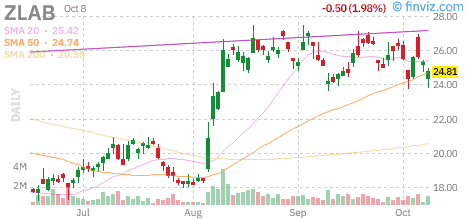
Finviz API data show an October 8 regular-session ADS close of $24.81, down 1.98%, on volume of 979,228 ADSs. The provider’s approximate market capitalization was $2.80 billion. These are dated observations, not a real-time October 9 quote. The chart supplies trading context, but it does not reveal the motives of market participants or establish that an observed move was caused by a particular clinical event. Price and volume alone cannot prove accumulation, manipulation or an imminent change in trend. [14]
The market value reflects expectations about both the regional business and the global pipeline, not simply the next FDA date. Event positioning, broader biotechnology sentiment and currency or geopolitical concerns can influence trading. That makes it especially important to avoid attributing every price move to povetacicept. The relevant analytical question is what new information changes expected future economics, and how much of that expectation was already reflected in the dated share price.
14 Valuation cases and the outside-research perspective
A useful valuation separates existing regional products, licensed development opportunities, global investigational assets and corporate financial obligations. Existing products require assumptions about volume, net price, margin and durability. Licensed candidates add local approval timing, royalties and milestone costs. Global assets require clinical and regulatory risk adjustments and development budgets. Cash and debt then enter the equity bridge with consistent dates and definitions. Adding headline opportunities without those costs would overstate the value retained by current shareholders.
Stephen Ayers’ May Seeking Alpha analysis offered a speculative global-oncology thesis while taking a highly skeptical view of the regional commercial business. The accessible summary assigned no intrinsic value to that regional component and emphasized Zoci as the principal opportunity. That is the author’s valuation judgment, not a balance-sheet fact or a consensus conclusion. It usefully highlights the question of whether regional sales generate enough retained profit, but the answer must be tested against current product margins, costs and cash flows. [15]
In a constructive scenario, regional sales stabilize, newer products improve mix and the global pipeline produces convincing clinical evidence. Povetacicept and other licensed opportunities progress through their local requirements, while Zoci’s data justify development in broader settings. Under that scenario, the company could create value from both operating improvement and pipeline de-risking. The scenario remains conditional: better clinical data do not automatically mean favorable net pricing, and more revenue does not guarantee positive consolidated cash flow.
In a cautious scenario, price pressure persists, launch contributions build slowly and global studies require greater spending or additional work. Positive U.S. partner events may then have limited immediate financial effect on Zai Lab. Bank financing or equity issuance could extend development but alter the risk and per-share economics. This scenario does not require all medicines to fail. Several useful products can coexist with disappointing shareholder returns if retained margins are weak, expectations are high or the cost of reaching scale is underestimated.
This hub does not assign a numerical price target or an approval probability. Those outputs would require assumptions beyond what the verified disclosures establish. The Health Score is an editorial framework rather than a valuation model. Investors can use the evidence to test their own scenarios: which geographic sales belong to the company, which costs accompany them, what clinical result changes confidence, and what financing is required before those benefits can be realized per ADS?
15 What to follow next and how to update the evidence
October 23 is the scheduled Zoci investor webcast, followed by the October 26 ESMO poster. The first task after those events is to replace the current schedule-only description with the actual disclosed dataset. Cohort size, follow-up, confirmed response, durability and safety should be recorded together. A headline should not be allowed to substitute for the denominator or silently combine first-line combination results with later-line monotherapy experience. The development plan should then be assessed against what the new evidence actually supports. [8]
November 30 is Vertex’s U.S. target action date for povetacicept in IgA nephropathy. Any subsequent update should distinguish the decision, the approved population, conditions and commercial timing from Zai Lab’s separate territorial obligations. A favorable U.S. outcome may change confidence without immediately changing Chinese revenue. An unfavorable or delayed outcome would require specific information about the reasons and next steps. Neither the size of a stock move nor an old calendar entry should be used as a substitute for the actual regulatory disclosure. [3] [4]
The next quarterly financial report should update product-level sales, margins, available cash, restricted balances and bank debt. Particular attention belongs to ZEJULA stabilization, VYVGART’s price-volume relationship and the early KarXT launch. The relevant question is whether the portfolio’s retained contribution is improving after the costs required to support it. A single launch quarter may contain timing effects, so a durable trend needs more than an encouraging initial number or a favorable comparison against a very small base.
Clinical watchpoints beyond the immediate calendar include ZL-1503’s healthy-volunteer and patient cohorts, DLLEVATE enrollment, elegrobart’s regional study and the detailed ALKIVIA evidence. Each has a distinct population, stage and timetable. Some expected outputs extend into 2027 and should remain there until a new source changes the schedule. This disciplined separation makes it possible to recognize real progress without promoting every planned event into a near-term approval or treating all clinical programs as equally mature.
ZLAB can respond to several kinds of news because its value is distributed across commercial operations and development assets. The most informative updates will connect scientific or regulatory progress to a realistic economic pathway. Keeping clinical outcomes, geography, cash availability and security units explicit helps prevent attractive headline numbers from being assigned to the wrong business or denominator. The thesis should evolve as those facts change, rather than defend a fixed conclusion about either the promise of the pipeline or the limitations of the regional model.
Sources and research references
Primary disclosures control facts. Finviz supplies dated market data. Seeking Alpha supplies an attributed accessible opinion. Consensus research records were fetched before use; publication design and limitations remain explicit.
[1] Zai Lab Form 10-Q, June 30, 2026; filed August 6[2] Zai Lab Q2 results and corporate update, August 6, 2026[3] Vertex: povetacicept FDA acceptance and November 30 PDUFA, June 1[4] Zai Lab/Vertex regional license, January 10, 2025[5] Vertex: RAINIER Week 36 interim Phase 3 results, March 9, 2026[6] Madan et al., RUBY-3 Phase 1/2, Kidney International Reports; DOI 10.1016/j.ekir.2025.10.029[7] Consensus fetched RAINIER study-design abstract, Li et al., 2025[8] Zai Lab: zoci ESMO presentation and October 23 webcast, September 29[9] Zai Lab: zoci intracranial and epNEC data, April 17, 2026[10] Zai Lab/argenx: ALKIVIA Phase 3 topline, August 17[11] Zai Lab: TIVDAK China approval, June 8[12] Zai Lab: senior leadership changes, May 21[13] Zai Lab: Q1 results and pipeline, May 7[14] Finviz ZLAB API: October 8, 2026 regular-session reference[15] Stephen Ayers, Seeking Alpha: speculative global-oncology thesis; accessible summaryZai Lab stock, povetacicept and Zoci: frequently asked questions
What is the relevant November PDUFA date for ZLAB?
November 30, 2026 is the FDA target action date for Vertex’s povetacicept application in adults with IgA nephropathy. Zai Lab holds rights in specified Asian territories. The U.S. review is relevant to the partnered asset, but it is not a direct Zai Lab U.S. commercialization approval. [3] [4]
Does Zai Lab receive U.S. povetacicept sales?
The disclosed agreement grants rights in mainland China, Hong Kong, Macau, Taiwan and Singapore. It provides for payments and regional net-sales royalties to Vertex. It does not grant Zai Lab U.S. commercialization rights, so worldwide or U.S. sales forecasts cannot be treated as Zai Lab revenue. [4]
Is Zoci already approved or awaiting a 2026 PDUFA?
No such approval or 2026 target is established in the verified sources. Zoci remains investigational. October’s event is a clinical-data update, while the company describes a potential later regulatory submission path subject to study results and discussions with regulators. [2] [8]
Is all of the reported $717.5 million freely available cash?
No. The June company measure includes $100 million of current restricted cash. Cash and equivalents plus short-term investments totaled approximately $617.5 million. Short-term debt and ongoing operating requirements also matter when assessing financial flexibility. These are June balances, not a live cash estimate. [1] [2]
How many ordinary shares does one ZLAB ADS represent?
One ADS represents ten ordinary shares. Nasdaq ADS prices, Hong Kong ordinary-share prices and SEC share counts must be compared using consistent units and currencies. The number of actual deposited ADSs also differs from the total company’s share count expressed in ADS-equivalent units. [1]
Can the upcoming catalysts move the stock?
Yes, if they change expected clinical success, commercial opportunity, timing or financing requirements. The reaction depends on prior expectations and broader market conditions. A clinical response percentage or a regulatory date does not determine a stock-return percentage, and this report makes no promise of a particular price outcome.
 Umbria