01 Three scenarios for a company rebuilding its growth engine
Constructive case: broader access produces durable, profitable volume
Novo Nordisk’s constructive case begins with an established business, not an unapproved molecule. The company already has a global diabetes franchise, a commercial obesity portfolio and substantial operating cash generation. The question is whether those assets can produce attractive incremental economics as treatment formats multiply and pricing becomes more competitive. A larger patient population only helps shareholders if the revenue retained after rebates, distribution costs, manufacturing and commercial spending exceeds the capital required to serve it.
In this scenario, tablets bring additional patients into treatment, higher-dose injections retain appropriate patients within the franchise, and international launches broaden demand without overwhelming supply. Pipeline products then add clinically useful differentiation. The benefit need not come from winning every efficacy comparison. Convenience, tolerability, approved outcomes, reliable supply and reimbursement can each affect treatment selection. The strongest evidence would be several quarters in which volume, adjusted revenue, cash conversion and product availability improve together.
This is an analytical scenario, not management guidance or a forecast of the share price. It would become more credible if Novo demonstrates that new launches expand the business rather than merely transfer existing users between its own brands. A prescription generated through a discounted channel has a different economic value from one filled under a commercial insurance contract. Both can be valuable; the analysis has to follow their contribution rather than assume every prescription is equivalent.
Middle case: innovation offsets pressure without restoring the old trajectory
The middle scenario is an extended transition. New products contribute, but lower realized prices, competition and mature diabetes products absorb much of the benefit. Novo can remain highly profitable while growing more slowly than the obesity market itself. That distinction matters: an expanding therapeutic category does not guarantee an expanding profit pool for every participant. A business can sell more treatment while earning less on each unit.
Management’s August outlook illustrates this tension: adjusted sales and adjusted operating profit were each expected to change by between minus 6% and zero at constant exchange rates in 2026. The range is not a prediction of collapse, but neither is it a return to the exceptional growth associated with the initial expansion of semaglutide. It is the appropriate near-term reference until a subsequent company update replaces it. [F2]
Adverse case: lower prices and execution problems outrun the launches
The adverse scenario combines commercial and operational disappointments. Competitive products could secure better access, oral adoption could be less incremental than hoped, and manufacturing investment could take longer to earn an adequate return. Pipeline setbacks would then matter twice: they would reduce future product options while leaving previous development or acquisition spending behind.
The company would not have to become unprofitable for shareholders to suffer. A lower sustainable earnings base, a reduced valuation multiple or both can produce a poor investment outcome at an otherwise viable company. Conversely, a weak share-price period does not prove that the franchise has disappeared. The useful task is to identify which business assumptions have changed, not to substitute the stock chart for an operating diagnosis.
02 What Novo Nordisk actually owns and sells
Novo Nordisk A/S is a Denmark-based pharmaceutical company headquartered in Bagsvaerd. Its heritage is diabetes, but the business now spans obesity, diabetes and rare diseases. The listed company develops medicines, conducts clinical trials, manufactures active ingredients and finished products, obtains regulatory approvals and sells through country-specific healthcare systems. Its economic exposure therefore extends well beyond discovering an effective molecule. Manufacturing, distribution and access are part of the product’s commercial value. [F1]
The U.S. security is the New York Stock Exchange-listed American Depositary Receipt, ticker NVO. Each ADR represents one B share. The B shares also trade in Copenhagen. The ADR is not a separate U.S. operating company, and ADRs outstanding are not the same thing as the group’s entire share count. Financial statements are presented in Danish kroner, while the U.S. trading line is quoted in dollars. These distinctions are essential when comparing earnings, market capitalization or dividends. [F1]
The portfolio can be understood in three layers. The first is the current cash-generating base: semaglutide products, insulin and established rare-disease medicines. The second is product expansion, including additional formulations, doses, indications and markets. The third is the pipeline, where the company takes clinical, regulatory and commercial risk before it can recognize product revenue. Treating all three layers as equally certain would overstate the business; ignoring the pipeline entirely would understate its renewal effort.
There is another important boundary: Novo Nordisk A/S, Novo Holdings and the Novo Nordisk Foundation are different entities. Their relationships influence ownership and capital allocation, but assets held by the controlling investment company do not automatically belong to NVO shareholders. An announcement involving the broader Novo ecosystem needs to be checked for the actual contracting party before it is included in a valuation or a list of operating assets.
This hub assesses the pharmaceutical company as a whole. Obesity is the most visible growth contest, diabetes is still a major operating foundation, and rare diseases provide both established products and development opportunities. Etavopivat matters within that third category. It is not a reasonable substitute for analyzing the rest of the company.
03 Semaglutide: several brands, one important concentration
Semaglutide is the active molecule behind major Novo brands, but the brands are not interchangeable commercial or regulatory categories. Ozempic and oral diabetes products address diabetes indications, while Wegovy encompasses weight-management products and other specifically approved uses. Formulation, dose, route, eligible population and prescribing information matter. A favorable finding for one use should not be casually described as a universal claim for every semaglutide presentation.
The commercial advantage of a broad molecule platform is that development, manufacturing experience and clinical knowledge can support multiple products. The corresponding risk is concentration. Different brand names can create the appearance of diversification while leaving much of the business exposed to the same underlying scientific platform, competitive alternatives and safety discussion. A concern that materially changes prescribing behavior across semaglutide could affect several revenue streams at once.
Approved outcomes also matter. Weight change, glucose control, cardiovascular events, kidney outcomes and liver histology are different endpoints. An improvement in one does not establish an improvement in all of them. The FDA’s MASH authorization for Wegovy injection, for example, concerns a defined liver-disease population; it should not be converted into a claim that every person with liver fat needs the same treatment. The product label, not a broad market narrative, defines the authorized use. [F8]
For investors, the most useful model separates molecule-level strength from product-level economics. Scientific evidence can support demand, but net pricing, insurance coverage, adherence and production costs determine how that demand reaches the income statement. A new indication may deepen the franchise without immediately generating a proportionate revenue increase. Physicians need time to identify patients, payers may impose conditions, and the commercial channel may differ from the original indication.
That is why a semaglutide franchise assessment should include both resilience and renewal. Novo has a substantial installed clinical and commercial position, but it is investing in amylin-based and other approaches because future growth cannot simply be assumed to follow from the current brands. A strong existing product is an asset to develop, not evidence that innovation risk has ended.
04 Obesity: a larger market with more demanding economics
Obesity treatment is not a single homogeneous market. Patients differ in medical history, treatment goals, response, willingness to use injections, tolerance of adverse effects and ability to obtain reimbursement. Health systems also differ in how they define eligibility and how long they fund treatment. A very large medically eligible population therefore cannot be translated directly into revenue by multiplying it by an advertised monthly price.
Novo’s portfolio has broadened during 2026. The FDA approved Wegovy HD, the 7.2 mg injectable dose, on March 19, 2026, for weight loss and long-term weight maintenance in certain adults. This is an approved product development, not a future pipeline assumption. It also does not mean that every patient should receive the highest dose, or that a larger dose is automatically the most commercially attractive option in every setting. [F7]
The portfolio strategy can create multiple entry and continuation points. Some patients may prefer an oral option; others may prioritize an injectable regimen or a different efficacy and tolerability balance. From an operating perspective, that flexibility potentially reduces the need to lose a patient when preferences change. From a financial perspective, it introduces an important question: how much of the new product’s revenue is incremental, and how much replaces another Novo product?
Payers influence the answer. A product can be clinically attractive but face restrictions that slow adoption. A competing product with a favorable contract may obtain easier access. Direct-pay distribution can broaden availability but may generate a different realized price and persistence profile. These effects make prescription counts useful but incomplete. The company needs to connect volume to net sales and cash generation.
The central obesity watchpoint is therefore not whether the category remains important. It is whether Novo can sustain a useful combination of differentiation, access and manufacturing efficiency. An increasingly competitive market can still grow significantly, while the economics of individual participants become more demanding. That is the setting in which Wegovy’s newer formats and the next generation of candidates have to prove themselves.
05 Oral Wegovy: expansion, convenience and cannibalization
The Wegovy pill’s U.S. launch occurred on January 5, 2026. For the week ended July 17, Novo reported more than 265,000 prescriptions. Its August 4 update also reported more than five million prescriptions accumulated since launch. These are dated company-reported commercial measures, not October prescription data and not a count of five million distinct patients. Repeat prescriptions and treatment duration make that distinction important. [F2] [F3]
An oral formulation can address people who do not want injections and can change how treatment is started. However, eliminating a needle does not eliminate adherence requirements. The prescribing information contains specific instructions for taking the tablets, including fasting-related conditions. A patient’s ability to follow those instructions can affect the practical value of the product. This hub is not a dosing guide; the current label and the treating clinician remain the appropriate references. [F9]
The commercial question is whether oral access broadens treatment or primarily rearranges market share. Both are possible. A patient who would otherwise remain untreated can add genuinely incremental demand. A patient who moves from Novo’s injection to Novo’s tablet may improve retention but does not create an entirely new revenue stream. A patient switching from a competitor has a different competitive significance again. Aggregate prescriptions alone do not identify these pathways.
Oral semaglutide also creates a production question. Convenience at the patient level does not necessarily mean simpler economics at the factory level. Different formulations can require different quantities of active ingredient and different production processes. Without a disclosed product-level cost bridge, it is inappropriate to assume that tablets automatically have superior margins. The evidence should come from capacity utilization, supply availability and the company’s financial disclosures.
The European regulatory sequence is also worth keeping precise. EMA recommended an oral formulation in May 2026, and Novo subsequently reported the European authorization in its August results. An EMA recommendation and the final authorization are different steps. This distinction is especially important when comparing countries or describing an upcoming launch: authorization creates permission to market, while reimbursement and commercial availability determine whether patients can actually obtain the product. [F10] [F3]
06 Diabetes and insulin: the foundation beneath the obesity headlines
Novo’s diabetes business includes injectable and oral GLP-1 therapies as well as insulin. It should not be treated as a historical footnote. Established diabetes products support the manufacturing network, prescriber relationships and cash generation that make the broader development program possible. At the same time, mature products face competition, price pressure and changes in clinical practice. A durable franchise is not the same thing as a franchise with guaranteed growth.
The 2025 annual report recorded DKK 207.109 billion of diabetes-care revenue, compared with DKK 82.347 billion in obesity care and DKK 19.608 billion in rare diseases. These are full-year historical amounts, not a 2026 run rate. They show why an analysis centered only on obesity misses a large portion of the company’s starting economics. [F4]
Awiqli illustrates the continuing innovation effort in insulin. Novo announced U.S. approval on March 27, 2026, for its once-weekly basal insulin in adults with type 2 diabetes. The population limitation matters: this announcement is not a blanket U.S. authorization for all forms of diabetes. A less frequent injection schedule can offer practical advantages, but adoption also depends on clinical suitability, safe titration, prescriber confidence and access. [F11]
The investment interpretation should be disciplined. A new insulin format may strengthen the franchise without becoming an obesity-sized business. Conversely, a mature insulin portfolio can remain economically relevant even if it does not command the highest growth multiple. The right questions concern its cash contribution, manufacturing demands, competitive position and role in customer relationships.
Diabetes also demonstrates why several products can share customers without sharing identical economics. A clinician’s familiarity with Novo may help introduce a new medicine, but payer decisions and approved indications remain product-specific. Portfolio breadth can reduce commercial friction; it cannot make reimbursement automatic. The company needs to earn adoption through evidence and execution in each market.
07 CagriSema: the positive and negative evidence belong together
CagriSema combines the amylin analogue cagrilintide with semaglutide. It remains investigational in the source set reviewed for this hub. Novo’s September 21 announcement stated that the U.S. weight-management application, submitted in December 2025, had an anticipated decision in the fourth quarter of 2026. That is a company-stated regulatory window, not an approval and not an exact PDUFA date. [F12]
The evidence cannot be summarized with a single favorable headline. On February 23, 2026, Novo reported that REDEFINE 4 did not establish the primary non-inferiority objective against tirzepatide. In that open-label obesity trial, the reported weight reductions under the efficacy estimand were 23.0% for CagriSema 2.4 mg/2.4 mg and 25.5% for tirzepatide 15 mg after 84 weeks. This was an important competitive setback at the doses and in the population studied. [F13]
September brought a different comparison. In REIMAGINE 5, CagriSema 1.0 mg/1.0 mg produced 12.4% weight loss versus 9.1% with tirzepatide 5 mg at week 60, using the efficacy estimand, while meeting non-inferiority for HbA1c reduction in adults with type 2 diabetes. Novo also reported 21.0% versus 2.0% weight loss against placebo in REDEFINE 9’s lower-dose comparison at week 68. [F12]
These findings are not contradictory when the trial designs are respected. Different doses, populations, durations and questions can produce different comparative results. The lower-dose diabetes study does not reverse the higher-dose obesity study, and the unsuccessful non-inferiority result does not mean the combination has no clinical activity. The relevant commercial question is which patients and treatment settings might support a differentiated role.
Efficacy estimands also require care. They describe an analytical treatment effect under specified assumptions, not a promise about every patient’s real-world result. Discontinuations, tolerability, adherence and access can change realized outcomes. For shareholders, the important sequence is regulatory assessment, labeling, manufacturing readiness, payer access and sustained adoption. A positive topline result advances that sequence but does not complete it.
08 Zenagamtide and the wider renewal pipeline
Zenagamtide, formerly called amycretin, is a single-molecule GLP-1 and amylin receptor agonist. It should not be confused with CagriSema’s fixed-dose combination of two agents. Novo has been developing injectable and oral approaches. The distinction matters scientifically and operationally because the formulation, dose-finding, manufacturing process and clinical program are not interchangeable. [F14]
At ADA in June 2026, Novo presented phase 2 results in type 2 diabetes, including weight loss of up to 14.6% at week 36 at the highest investigated injectable dose. That figure is early comparative context within a specific study, not a basis for declaring superiority to another company’s late-stage product. The larger phase 3 effort must establish efficacy, safety and practical dosing across broader populations. [F14]
The August investor presentation described the AMAZE obesity and AMBITION diabetes programs. The planned and initiated studies address different settings, including weight management and relevant complications. Their timelines are explicitly directional. A development map is useful for understanding ambition, but it should not be read as a set of guaranteed approval dates. Recruitment, follow-up, data quality and regulatory requirements can all change the schedule. [F5]
Novo is also pursuing approaches outside its best-known GLP-1 and amylin programs. The annual report discusses partnered and acquired assets, including the UBT251 triple-agonist program and other early-stage mechanisms. The point is not to assign full commercial value to every name in a pipeline chart. It is to assess whether the portfolio contains sufficiently different ways to improve treatment, rather than repeatedly depending on the same assumption. [F15]
Pipeline breadth creates options, but it also creates spending commitments. A company can improve productivity by stopping weak programs, yet write-downs can reveal that previous acquisition or development expectations were too optimistic. The disciplined approach is to track both advances and terminations. An extensive list of candidates is not itself proof of high research productivity; the eventual evidence is differentiated approvals and economically useful products.
09 MASH: an approved role and an acquired development asset
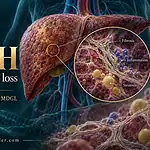
Metabolic dysfunction-associated steatohepatitis, or MASH, connects obesity and diabetes with liver disease, but it is not simply another name for excess body weight. Disease stage and fibrosis matter. In August 2025, the FDA announced approval of Wegovy injection for adults with MASH and moderate-to-advanced fibrosis. The underlying indication and approval conditions should be read in the current label; a broad claim about reversing all liver disease would go beyond this evidence. [F8]
Commercially, an additional indication can support the value of the existing semaglutide platform. It can create a different reason for a specialist or payer to consider treatment. However, diagnosis, referral pathways and reimbursement are not identical to the weight-management market. Screening and confirming an eligible liver-disease population introduce practical steps before a theoretical opportunity becomes treated patients.
Novo also acquired Akero Therapeutics, bringing efruxifermin, an investigational FGF21 analogue, into the portfolio. The 2025 annual report and 20-F describe the completed acquisition and the phase 3 development program. Efruxifermin is not an approved substitute for Wegovy, and the acquisition price is not evidence that its clinical or commercial outcome is assured. Its value depends on the results of its own studies and subsequent regulatory assessment. [F15]
The strategic logic is broader coverage of metabolic disease, potentially including patients whose needs are not fully addressed by the existing franchise. The financial test is tougher than the strategic explanation: the asset has to create enough future cash flow to justify the purchase price, remaining development costs and commercial investment. Acquisition accounting can spread the expense across years, but it cannot remove the economic cost.
For the broader NVO thesis, MASH is a meaningful diversification effort within related biology and specialist care. It should be tracked separately from general obesity prescriptions. Success in one setting cannot be assumed to establish success in another, and a favorable biomarker or histology result is not automatically equivalent to proven long-term clinical benefit. The relevant endpoints, population and regulatory conditions remain central.
10 Rare diseases: established products and a fresh regulatory warning
Rare diseases include marketed blood-disorder and endocrine products alongside development programs. The August pipeline presentation lists products such as NovoSeven, NovoEight, NovoThirteen, Refixia, Esperoct, Alhemo, Norditropin and Sogroya. Their markets, dosing regimens and competitive positions differ. Collectively they provide a business outside the dominant metabolic franchise, but they are not large enough to make obesity and diabetes performance irrelevant. [F5]
Denecimig, also known during development as Mim8, is an important example of the distance between clinical progress and commercial readiness. On October 2, 2026, Novo said the U.S. BLA review remained ongoing because of continuing remediation at a manufacturing facility. The company reported no FDA-identified clinical safety or efficacy deficiencies, but said that no new review timeline had been communicated. A possible U.S. launch in the first half of 2027 remained conditional on approval. [F16]
This update supersedes older references to a third-quarter 2026 decision. It does not establish that the molecule failed clinically, but it does show that manufacturing quality can determine the commercial timetable. Investors should avoid both extremes: treating a facility issue as proof that the therapy does not work, or treating encouraging clinical data as proof that approval is inevitable.
The commercial implications extend beyond the date itself. A delayed launch can defer revenue, alter sales-force planning and give competitors more time. Remediation may also require resources and management attention. The magnitude cannot be calculated reliably without more information, so this hub does not assign an unsupported revenue loss or a precise delay probability.
The rare-disease portfolio deserves continued monitoring because it tests a different set of capabilities: specialist relationships, smaller patient populations, diagnosis pathways and complex biological manufacturing. Its development candidates can contribute to renewal, but each needs an individual assessment. A diversified company can absorb a setback more easily than a single-asset biotechnology company; it still has to account for the capital and time consumed.
11 Etavopivat: a real sickle-cell opportunity, not the whole NVO thesis
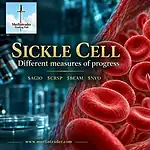
Etavopivat is an investigational once-daily oral pyruvate kinase-R activator acquired with Forma Therapeutics. The rationale is to improve red-cell function through metabolic changes. It is a drug-development program, not a gene-editing treatment and not an approved cure for sickle-cell disease. That distinction keeps the comparison with companies such as Agios, CRISPR Therapeutics and Beam Therapeutics grounded in actual treatment approaches rather than a shared disease label. [F17]
On April 20, 2026, Novo reported that the phase 3 HIBISCUS study met both co-primary endpoints. In 385 participants aged 12 or older, etavopivat reduced the annualized vaso-occlusive crisis rate by 27% versus placebo. A hemoglobin increase greater than 1 g/dL at week 24 occurred in 48.7% versus 7.2%. Standard-of-care treatment was permitted. These are sponsor-reported topline findings with defined endpoints, not a claim that all crises disappear. [F17]
The August presentation placed the first regulatory filing in the fourth quarter of 2026. A planned submission is different from a submitted application, an accepted application or a scheduled approval decision. This review did not verify a completed filing or an FDA decision date by October 9. The appropriate near-term watchpoint is therefore the actual submission announcement and the detail supplied with it, rather than an invented approval countdown. [F5]
An oral chronic treatment could address a different practical need from an intensive, potentially one-time intervention. It may be relevant to patients who cannot access or do not choose other approaches. However, convenience alone does not establish comparative efficacy, long-term safety or affordability. Cross-trial comparisons with different populations and endpoints can be particularly misleading in a disease with heterogeneous severity and background treatment.
For NVO shareholders, the opportunity is proportionate diversification. A successful product could add a valuable rare-disease franchise, but its contribution would sit inside a much larger company. The key questions concern durability of benefit, safety, regulatory interpretation, eligible population, access and eventual pricing. No commercial price is assumed here. The global burden of disease should not be confused with the immediately reachable, reimbursed market.
12 Competition: Lilly is a present commercial rival, not a distant catalyst
Eli Lilly competes directly in metabolic disease. The comparison is no longer limited to injectable products. On April 1, 2026, the FDA approved Foundayo, the oral GLP-1 medicine orforglipron. Lilly’s announcement described administration without food or water restrictions. It is therefore already part of the competitive setting reviewed here, not an unapproved future product that can be ignored until a later year. [F18]
Competitive analysis requires more than arranging trial weight-loss percentages from highest to lowest. Studies differ in participants, duration, background therapy, discontinuation handling and estimands. A head-to-head trial is particularly useful for the comparison it actually tests, but it should not be generalized beyond its dose and population. Novo’s two different 2026 CagriSema comparisons make this limitation concrete.
The commercial contest also includes supply, access and patient persistence. A medicine with attractive efficacy may be hard to obtain under a particular insurance plan. A product with convenient administration may have a different tolerability or cost profile. Physicians and patients do not all optimize for the same outcome. A credible market model therefore allows several products to coexist while still recognizing that some manufacturers can lose share or pricing power.
For Novo, the challenge is to demonstrate that its portfolio creates a defensible combination of options. The company does not need to claim victory in every dimension. It does need evidence that its products retain a clinically and economically meaningful role as alternatives expand. Payer contracts, clinical outcomes and manufacturing reliability can be as consequential as a launch headline.
The risk of a simplistic two-company story is that it excludes additional entrants and future mechanisms. Early-stage rivals should not be valued as if they are already approved, but their potential can influence today’s capital allocation. Novo’s research and production decisions must be judged against the market likely to exist when new assets arrive, not only against the competitive field at the time those investments were announced.
13 Access, pricing and why prescription growth is not revenue growth
The path from a medicine’s list price to Novo’s recognized revenue runs through rebates, discounts, distribution arrangements and country-specific reimbursement. These mechanisms can change the relationship between prescription volume and sales. A rapidly growing number of prescriptions can coexist with a modest revenue increase if the net price or product mix moves unfavorably. This is an analytical relationship, not a claim that every new channel is unprofitable.
The U.S. and international businesses should be examined separately. Insurance structures, public purchasing, out-of-pocket costs and prescribing pathways vary significantly. Launching in additional countries can expand the addressable population while introducing lower average prices or slower reimbursement negotiations. Geographic growth is valuable when it produces an adequate return, not simply because the number of markets rises.
The 340B-related provision reversal in Novo’s first-quarter 2026 accounts shows why gross-to-net accounting deserves attention. It affects reported sales without representing an equivalent burst of new patient demand. Adjustments of this kind are not the same as fraudulent sales, and the company disclosed them. They are nevertheless essential to understanding period-to-period comparability. A reader should not interpret the full reported growth rate as an organic volume signal. [F2]
Cash-pay and other access initiatives add further complexity. A lower entry cost may improve reach but can also change the average revenue per treated patient. Longer persistence might offset some of that difference, but the offset must be demonstrated. The useful measures are sustained treatment, net revenue, retention and contribution after commercial costs, not only the number of people initially enrolling in a program.
Policy and contracting changes can also affect timing. Coverage announcements do not instantly translate into completed prescriptions, and announced discounts do not map one-for-one into company-wide revenue changes. This hub does not assign a precise effect to a policy without a disclosed basis. The financial statements, subsequent guidance and documented access data are the place to test the actual impact.
A specific U.S. pricing change is already announced for 2027. Novo said it would lower the monthly wholesale acquisition cost, or WAC, to $675 from January 1, 2027 for the Wegovy, Ozempic and Rybelsus formulations specified in its announcement. WAC is a list price, not the direct-pay offer or the net amount retained after rebates. The August half-year report reaffirmed the change and expected a cash-flow impact in 2027. Neither announcement supports applying the same percentage reduction mechanically to consolidated net sales. February 24 pricing announcement H1 2026 outlook
14 Manufacturing: capacity is an asset only when it earns a return
Novo is both a research company and a large pharmaceutical manufacturer. The expansion of obesity treatment has required investment in active ingredients, sterile filling, finishing and packaging. These stages are connected but not identical. A shortage at one stage can limit finished-product availability even if another stage has spare capacity. Announced square footage or nominal output is therefore an incomplete measure of usable supply.
The acquisition of three former Catalent fill-finish sites is an important part of this history. The 20-F identifies a USD 11.7 billion purchase price and describes the transaction as mainly debt-financed. The sites were acquired by Novo Nordisk from Novo Holdings in connection with the latter’s Catalent transaction. That does not mean NVO acquired all of Catalent. Keeping the legal entities and assets straight avoids materially overstating the operating footprint. [F1]
Capital spending can support future growth before it contributes current revenue. It can also lower near-term free cash flow and increase depreciation as facilities enter service. The assessment needs to distinguish construction, qualification, regulatory readiness and productive utilization. Completing a building does not complete the investment thesis; the company must produce compliant, saleable medicines at an attractive cost.
The denecimig update is a reminder that manufacturing is also a regulatory constraint. Quality systems and remediation can determine launch timing independently of a product’s clinical profile. This risk is not unique to Novo, but a larger installed base does not eliminate it. Investors should look for specific evidence about readiness rather than assume that an experienced manufacturer is immune to disruption.
The long-term capital-allocation question is whether the network remains flexible as formulations and demand patterns change. Capacity designed for one product mix may have different economics under another. A broad portfolio can improve utilization, but it can also complicate planning. Product demand, capacity deployment and return on invested capital should be considered together; none of them alone is a sufficient measure of success.
15 Financial statements: reported growth and adjusted growth tell different stories
Novo’s first-half 2026 report covers the period ended June 30 and was released on August 4. The following amounts are in DKK billions, rounded from the filing; they are not U.S. dollars. Reported sales were 175.311, compared with adjusted sales of 148.551. Reported operating profit was 86.679, compared with adjusted operating profit of 66.247. Reported diluted earnings per share were DKK 15.66, versus adjusted DKK 12.81. [F2]
The principal sales adjustment was the nonrecurring DKK 26.8 billion reversal of provisions related to the U.S. 340B program in the first quarter. The operating-profit reconciliation also reflects noncash pipeline impairments. This is why the reported first-half sales growth of 18% at constant exchange rates should not be presented as the underlying commercial growth rate: the adjusted figure was 2%. [F2]
The second quarter provides a more focused operating comparison. Adjusted sales grew 7% at constant exchange rates and adjusted operating profit grew 11%, according to the company. However, favorable rebate adjustments also supported the period. A single quarter should not be mechanically annualized into a permanent growth assumption. The next releases need to establish how much of the improvement persists after timing and comparison effects normalize. [F3]
Adjusted measures are useful, but they are not a license to ignore costs. A noncash impairment may not reduce current-period cash, yet it can indicate that capital invested in an asset will not generate the returns previously expected. Conversely, including a large nonrecurring accounting benefit in a recurring earnings multiple can make a company appear artificially cheap. Both reported and adjusted numbers are needed to understand the business.
The 2025 baseline supplies scale: annual revenue was DKK 309.064 billion, operating profit DKK 127.658 billion and net profit DKK 102.434 billion. Those historical figures should not be mixed with a 2026 growth rate without checking the adjustment basis. The most informative model keeps reported results, management adjustments and the analyst’s own normalization in separate columns, with each change explained. [F4]
16 Cash, debt and capital returns
At June 30, 2026, Novo reported DKK 44.482 billion of cash and DKK 140.127 billion of current plus noncurrent borrowings. Its disclosed net-debt measure was DKK 86.523 billion and excludes lease liabilities. A simple borrowings-minus-cash calculation therefore produces a different figure. Neither number should be presented without its definition, particularly when constructing enterprise value or comparing Novo with another company. [F2]
First-half operating cash flow was DKK 79.283 billion and purchases of property, plant and equipment were DKK 23.986 billion, leaving DKK 55.297 billion under the company’s 2026 free-cash-flow definition. That definition is operating cash flow less property, plant and equipment purchases, with comparative periods restated. It is not a comprehensive measure of cash remaining after every acquisition or financial commitment. [F2]
The timing of cash matters. Rebates, taxes, working capital and investment payments can make a strong half-year cash figure a poor straight-line forecast for the full year. Novo’s August guidance called for approximately DKK 55 billion of 2026 capital expenditure and DKK 45 billion to DKK 55 billion of free cash flow. The fact that first-half free cash flow was already near that annual range is a warning against simply doubling it. [F2]
The longer-term investment path is an ambition, not another 2026 forecast. At the September 21 Capital Markets Day, management described a CAPEX peak in 2025 and a declining CAPEX-to-sales ratio toward the industry average, alongside improving free cash flow toward 2030. The financial presentation labels these charts illustrative rather than guidance. This gives a framework for testing whether the manufacturing build-out eventually releases cash; it does not establish a fixed 2030 free-cash-flow target. CMD financial presentation, pages 3 and 11
Capital returns must be evaluated alongside these obligations. Dividends and repurchases can return excess resources to owners, but neither is automatically evidence of undervaluation. A repurchase creates value only if the price paid and the company’s alternative uses of cash make sense. A dividend is cash leaving the business, not a separate source of economic return created from nothing.
Dividend periods must stay separate. The March 26, 2026 AGM approved a DKK 7.95 final dividend for fiscal 2025; with the DKK 3.75 interim dividend paid in 2025, the full-year 2025 total was DKK 11.70 per share. The August 2026 report separately announced an interim 2026 dividend of DKK 3.75. Novo reported a 50.7% payout ratio for 2025, but its stated policy is to maintain a competitive payout relative to pharmaceutical peers, not a fixed 50% distribution rule. No current dividend yield is inferred here without a reconciled price, currency and date. AGM resolutions H1 2026 capital allocation Dividend policy and 2025 payout
Novo is not a development-stage company whose central financing question is how many months remain before an equity raise. Its more relevant questions are the sustainability of cash generation, the debt burden, acquisition discipline and the returns earned on major investments. Strong operating cash flow gives flexibility, while pricing pressure or a large transaction can still change the available choices. Financial resilience is real, but it is not unlimited.
17 Ownership, leadership and the distinction between control and economics
Novo’s governance structure gives the Novo ecosystem substantial influence. The 2025 Form 20-F identifies Novo Holdings as the owner of all A shares and a portion of B shares, with voting control substantially exceeding its proportionate economic ownership. The filing also identifies the Foundation relationship. These features should be understood as the company’s ownership architecture, not as evidence that minority shareholders control strategic decisions. [F1]
The potential advantage of a stable controlling owner is the ability to support long investment horizons. Pharmaceutical development and manufacturing projects can require years before they produce returns. The potential disadvantage is that outside shareholders may have limited influence if they disagree with strategy, related-party transactions or the balance between reinvestment and distributions. Both considerations belong in the analysis.
Mike Doustdar is the president and chief executive officer in the current company materials reviewed here. The September 2026 Capital Markets Day presented the updated corporate strategy and ambitions. Leadership should be assessed by the coherence and execution of those plans, including the willingness to acknowledge pricing pressure, stop unproductive projects and allocate capital selectively. An ambitious presentation does not substitute for subsequent results. [F19]
The relevant monitoring questions are practical. Are incentives aligned with sustainable performance rather than a single launch metric? Do adjusted measures illuminate the business or make comparison harder? Are acquisition assumptions tested against later results? Does the company provide enough detail to distinguish temporary disruption from a structural deterioration? These questions are more useful than treating management confidence as an independent valuation input.
Ownership disclosures also have limits. The 20-F explicitly notes that there is no complete record of beneficial shareholders. Depositary holdings and institutional filing snapshots should not be mistaken for a perfectly current global ownership register. This hub does not infer insider buying, institutional conviction or a live short-interest trend from incomplete information. Such claims require separate, dated evidence.
18 Valuation: keep currencies, share counts and earnings definitions aligned
The NVO ADR trades in dollars, while Novo’s accounts are in Danish kroner. Because one ADR represents one B share, the unit mapping is straightforward, but the currency conversion is still necessary. Dividing a dollar share price by DKK earnings per share produces a meaningless multiple. A valid calculation must convert either the numerator or denominator using a clearly dated exchange rate and an appropriate accounting period.
Enterprise value requires similar discipline. Equity value must reflect the total relevant shares, not only ADRs outstanding. Debt, cash, securities and lease treatment need a consistent definition. A market-data provider may use a different share count or net-debt convention from a financial model. Differences should be reconciled before they are interpreted as an investment opportunity.
Earnings normalization is especially important in 2026. The 340B reversal makes a reported trailing earnings figure less representative of recurring operating performance. At the same time, removing impairments from an adjusted earnings number does not remove the history of capital spent on those assets. A balanced valuation considers the recurring operating base and the quality of past and future investment, rather than selecting whichever denominator makes the multiple most attractive.
No numeric price target is assigned in this hub. A defensible target would require explicit assumptions for product growth, realized pricing, margins, investment, taxes, currency and the probability of pipeline outcomes. It would also require a current market snapshot and a reconciled diluted share count. Supplying a precise-looking number without those inputs would add confidence without adding information.
The useful sensitivity framework has three main questions. How much of Novo’s present earnings survives greater price competition? How much incremental profit can new products generate after cannibalization and launch spending? How much capital must be reinvested to support that profit? Different answers can justify very different valuations even when observers agree that obesity and diabetes remain important therapeutic areas. Business quality and purchase price are related, but they are not the same judgment.
19 Catalysts, strategic ambitions and the evidence that changes the view
The next fixed corporate reporting date in the live investor calendar is November 4, 2026, for the first three quarters of the year. The central questions are the quality of revenue growth, oral-product economics, the pricing environment, cash conversion and any change in the annual outlook. A favorable release would be more persuasive if several of those measures improve together rather than relying on one headline number. [F6]
Other important windows remain conditional. Novo’s September CagriSema release placed a U.S. decision in the fourth quarter of 2026. The August presentation placed etavopivat’s first filing in that quarter. Denecimig has no newly communicated U.S. review deadline after the October 2 update. A decision, a submission and an unresolved review are three different types of event; combining them in one undifferentiated catalyst list obscures the risk. [F12] [F5] [F16]
At the September Capital Markets Day, management outlined ambitions through 2030, including multiple new major product launches, broader patient reach and revenue growth in line with peers over the period from a 2026 base. It also described a risk-adjusted pipeline opportunity for 2035. The company explicitly distinguished these strategic ambitions from financial outlook or guidance. This hub does not convert them into a guaranteed revenue forecast or an assumed growth percentage. [F19]
The constructive interpretation would weaken if new launches merely replace existing revenue while pricing and commercial costs deteriorate. It would also weaken if manufacturing problems repeatedly delay products, or if development spending produces fewer differentiated approvals than expected. Conversely, sustained adjusted growth, good cash conversion and well-supported launches would strengthen the case that the transition is working.
The closing discipline is to update the thesis when the evidence changes. A failed endpoint should remain in the record after a later positive study. A delayed review should replace an obsolete catalyst date. A new financial period should replace an old snapshot, not be mixed with it. Novo is a substantial pharmaceutical company undergoing a competitive reset; understanding that reset requires both the strength of the existing franchise and the uncertainty of its renewal program to remain visible.
20 Safety, patents and the limits of an investment narrative
Medicines have benefits and risks, and a shareholder thesis must not become a promotional claim about treatment. The current Wegovy prescribing information carries a boxed warning concerning thyroid C-cell tumors and includes contraindications and other safety warnings. Gastrointestinal effects, pancreatitis, gallbladder problems and other issues require clinical assessment. This overview does not determine whether a medicine is appropriate for an individual or replace the full prescribing information. [F9]
Large commercial exposure makes safety communication economically important. A label change, new evidence, prescribing restriction or loss of confidence can affect more than a single quarter. At the same time, a reported adverse event is not by itself proof that a medicine caused the event. The proper sources are regulators, prescribing information and well-designed clinical evidence, not isolated anecdotes selected to support a stock-market opinion.
Patent protection is another area where shorthand can mislead. Novo’s 2025 20-F states a 2032 U.S. compound-patent expiry for the semaglutide brands and describes additional patent litigation and settlements. That does not create one universal global date after which every product immediately becomes generic. Geography, formulation, other patents, legal outcomes and regulatory requirements can all matter. This hub does not assume permanent exclusivity or an instantaneous worldwide cliff. [F1]
The broader business risk includes research failure. The August results reported that the ZEUS cardiovascular study of ziltivekimab did not meet its primary endpoint, alongside impairments of pipeline assets. These are reminders that diversification efforts can disappoint even at an experienced company. A well-funded research organization improves the ability to run programs; it cannot guarantee that biology will produce the desired result. [F3]
Finally, financial analysis has its own uncertainty. Market expectations, currencies and competitive behavior can change faster than a static hub. The dated facts on this page are the foundation for judgment, not a claim to know the future. The objective is to make the relevant distinctions visible: approved versus investigational, reported versus adjusted, volume versus net revenue, strategic ambition versus guidance, and a robust company versus an attractively priced security.
Frequently Asked Questions
Is NVO the same investment as the Copenhagen B share?
The ADR represents one B share, but trades in USD. Currency conversion, depositary arrangements and trading hours still matter. It is not a separate U.S. operating company.
Is CagriSema already approved?
The reviewed September 21 source describes it as investigational, with a company-expected U.S. decision in Q4 2026. A review window is not an approval.
Has etavopivat received an FDA decision date?
This review verified a Q4 2026 first-filing target, not a completed filing or a decision date. HIBISCUS topline success is not regulatory authorization.
Why are reported and adjusted sales different?
The first half includes a large 340B provision reversal. Adjusted measures remove specified nonrecurring effects; the full reconciliation remains important.
Does the Health Score indicate whether to buy NVO?
No. It describes operating and financial robustness. It does not assess whether the current market price offers an attractive return.
Primary Sources and Evidence
Research cutoff: October 9, 2026. Financial periods and announcement dates are identified separately. Analytical scenarios and the Health Score are Merlintrader judgments, not company forecasts.
[F1] Novo Nordisk 2025 Form 20-F[F2] SEC Form 6-K: H1 2026 financial report, August 4, 2026[F3] Novo Q2 2026 results announcement, August 4, 2026[F4] Annual Report 2025: financial performance[F5] Novo Q2 2026 investor presentation[F6] Novo investor financial-results calendar[F7] FDA approval of Wegovy HD, March 19, 2026[F8] FDA: Wegovy approved for MASH, August 18, 2025 bulletin[F9] Wegovy U.S. prescribing information[F10] EMA: first oral GLP-1 treatment for weight management[F11] Novo: U.S. approval of Awiqli, March 27, 2026[F12] CagriSema REIMAGINE 5 and REDEFINE 9, September 21, 2026[F13] CagriSema REDEFINE 4: primary endpoint not achieved, February 23, 2026[F14] Zenagamtide phase 2 at ADA, June 6, 2026[F15] Annual Report 2025: innovation and therapeutic focus[F16] Denecimig U.S. BLA review update, October 2, 2026[F17] Etavopivat phase 3 HIBISCUS topline, April 20, 2026[F18] Lilly: FDA approves Foundayo, April 1, 2026[F19] Novo Capital Markets Day ambitions, September 21, 2026[F20] FDA approval of Foundayo, April 1, 2026[F21] EMA Wegovy EPARAdditional reference: U.S. list-price changes, February 24, 2026Additional reference: CMD financial presentation, September 21, 2026Additional reference: AGM resolutions, March 26, 2026Get these reports in real time
Every Merlintrader stock hub, catalyst update and market brief is published to Telegram the moment it goes live. No paywall, no spam, just the research.
Join @merlintraderpub_com on Telegram
Disclaimer. This content is published by Merlintrader for educational and informational purposes only. It is independent journalism and research. It does not constitute investment advice, an investment recommendation, an offer or a solicitation to buy or sell any security, and it is not a research report within the meaning of applicable United States securities regulation. Nothing here should be read as a recommendation to buy, sell or hold $NVO or any other security.
Figures are taken from public filings with the U.S. Securities and Exchange Commission, company press releases and market-data providers, and are stated with their reference dates. Data can change without notice, and figures published before a results release become outdated the moment that release is issued. Merlintrader makes no representation that the information is complete or current at the time of reading. Readers should verify every figure against the primary source before acting on it.
Pharmaceutical companies carry clinical, regulatory, manufacturing, reimbursement, patent, litigation and financing risks. Clinical results do not guarantee approval, approval does not guarantee commercial success, and product benefits must be considered alongside the complete prescribing information. This content is not medical advice. Investors can lose part or all of their capital. Every reader is responsible for their own decisions and should consult appropriately qualified professionals.
Merlintrader may hold positions in securities mentioned. Some links on this page are affiliate or referral links, including those to Finviz and Stocktwits, which may generate a commission at no cost to the reader. Full legal information is available on the disclaimer and terms of use and privacy pages.
 Umbria