Merlintrader Trading Pub
Biotech catalyst, news and analysis PDUFA tracker
Merlintrader Trading Pub
Biotech catalyst, news and analysis PDUFA tracker
AI transparency: articles and reports are produced with the help of artificial intelligence and checked through a process that does not constitute specialist validation. They may contain errors: verify relevant information with independent sources. Read the full disclaimer.
Stock Hub 2026 · Biotech
Nasdaq: $BLSM
Premiumreportfree with an ad
BLSM Stock Hub: BlossomHill Therapeutics News, SOLARA and BH-30643
A focused EGFR resistance opportunity leads a wholly owned oncology pipeline. SOLARA shows early C797S tumor activity, while response durability, liver safety, dose selection and the proposed pivotal path define the next stage.
Get every Merlintrader report in real time on Telegram: join @merlintraderpub_com.
Daily chart
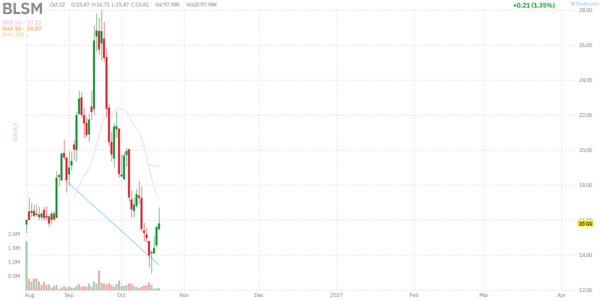
Daily chart $BLSM · Latest regular session October 22, 2026Open chart (affiliate link) · For information only.
Next catalyst
Q4 2026 · End-of-phase-1 meeting planned
Dose selection and the proposed C797S pivotal path
The company plans a Q4 2026 regulatory meeting on the recommended phase 2 dose and a potential accelerated-approval pathway. First dosing in an anticipated pivotal phase 2 study is targeted for Q1 2027. These are development forecasts, with regulatory alignment and study execution still required. Source
Key data
Latest announcementOctober 22, 2026 — Foundation Medicine collaboration advances C797S diagnostic development Source
Dates of the figuresCash at June 30, 2026 is from the Form 10-Q; the IPO closed in August 2026; 31,784,909 common shares were outstanding at September 16, 2026; the runway guidance was issued on September 18, 2026. Source
The constructive case
SOLARA provides an early tumor-response signal in molecularly selected EGFR C797S resistance, with a practical oral treatment hypothesis. The diagnostic collaboration supports patient identification, and a wholly owned pipeline preserves strategic flexibility. IPO funding gives time to pursue regulatory alignment and more mature evidence across the EGFR, CLK and KRAS programs.
The case against
The lead response result comes from a selected, open-label analysis and includes unconfirmed responses. Liver-enzyme abnormalities, later severe liver cases and pneumonitis require continued assessment. BH-30236 has early evaluable-patient blast-reduction evidence with meaningful serious toxicity, while BH-501284 remains preclinical. Future trials, employee equity and additional financing can affect per-share value.
Operating and financial position
Clinical-stage precision-oncology developer. Cash and equivalents were $95.376M at June 30, before the August IPO’s approximately $151.7M net proceeds. H1 operating cash use was $44.174M. Management forecasts funding into Q2 2028. No cash balance after June 30, 2026 has been reported yet; the next quarterly report will show spending since the IPO. Source · Related source
Executive summary
BlossomHill Therapeutics is developing oral small molecules for cancers with important treatment gaps. BH-30643 leads the portfolio through SOLARA, with early activity in EGFR C797S resistance and a proposed pivotal phase 2 path. The reported response signal is clinically interesting, while confirmation, durability, liver safety and the recommended dose remain decisive. BH-30236 adds a distinct CLK and RNA-splicing approach in leukemia; BH-501284 supplies earlier pan-KRAS opportunity. A wholly owned portfolio and recent IPO funding provide flexibility, while clinical translation, study execution, competition and dilution determine how much of that opportunity can become value for each BLSM share.
Latest news
October 22, 2026 — Foundation Medicine collaboration advances C797S diagnostic development
BlossomHill and Foundation Medicine will develop and validate a companion diagnostic assay for EGFR C797S using the ongoing SOLARA program. The collaboration supports identification of the intended BH-30643 population, with assay validation and the medicine’s clinical and regulatory requirements still ahead. Source
September 28, 2026 — BH-501284 adds original pan-KRAS preclinical evidence
The company presented sustained KRAS target engagement and antitumor activity in experimental cancer models. These findings support further development of the non-covalent inhibitor; the planned Q1 2027 IND submission precedes human assessment of safety and efficacy. Source
September 18, 2026 — IPO financing supports projected runway into Q2 2028
The Form 10-Q for the quarter ended June 30, 2026 (filed September 18, 2026) records $95.376M of cash and equivalents before the August IPO. The offering and partial option exercise added approximately $151.7M net. Management projected funding into Q2 2028 under its operating plan; the next quarterly report will show spending after the IPO. Source
September 15, 2026 — SOLARA reports 18 responses among 40 selected C797S patients
The reported 45% response rate includes 16 confirmed and two ongoing unconfirmed partial responses. Disease control was 35/40, with 25 patients still receiving treatment at efficacy follow-up. The result supports further investigation while durability, dose selection and safety remain central. Source
Extended analysis
Does $BLSM deserve a place in your portfolio?
The full deep dive has the answer’s building blocks: cash, dilution, catalysts and risks, every figure sourced.
Free. No signup. You decide, we don’t recommend.
Using an ad blocker? The free “watch an ad” option is hidden automatically. Pause it on merlintrader.com and reload the page to see the free option.
01 What BlossomHill Therapeutics Does: Precision Oncology and BLSM Stock
BlossomHill Therapeutics is a clinical-stage cancer-drug developer based in San Diego, California. Its common stock trades on the Nasdaq Global Select Market under BLSM. The company designs oral small molecules around specific weaknesses in existing targeted treatments. Its lead program, BH-30643, addresses EGFR-mutant lung cancer, while BH-30236 targets RNA-splicing biology in leukemia and related blood cancers. A third candidate, BH-501284, remains in preclinical KRAS development. Company and pipeline, Corporate filing.
The core business proposition is a sequence of clinical tests. A drug designed to overcome a resistance mechanism must reach adequate exposure, control the intended cancer population and remain tolerable long enough to provide useful benefit. Each step can add value, while failure at any step can sharply reduce the opportunity. Molecular potency provides a starting point rather than a complete commercial product.
BH-30643 supplies the strongest current clinical evidence. Its initial development priority is lung cancer with acquired EGFR C797S resistance after an earlier EGFR inhibitor. A September 2026 SOLARA update reported tumor responses in this selected population. The broader program also explores previously untreated EGFR-mutant disease and chemotherapy combinations. These settings offer different opportunities and require separate evidence. SOLARA update.
BH-30236 broadens the company beyond one receptor and one solid-tumor indication. Its early study evaluates monotherapy and combination treatment with venetoclax in relapsed or refractory acute myeloid leukemia, or AML, and higher-risk myelodysplastic syndromes, or MDS. Preliminary reductions in marrow blasts support further investigation, while remission quality, safety and durability remain critical questions. Initial leukemia results.
The August initial public offering materially changed financing capacity and the share base. That transition gives BlossomHill more resources to pursue multiple studies, but also introduces the obligations and market structure of a newly listed company. Its medical opportunity and its per-share economics must therefore be assessed together. Cash funds the evidence-generating process; additional share issuance determines how future value is divided.
The pipeline is wholly owned, according to the IPO prospectus. That provides strategic flexibility and the possibility of retaining substantial economics if a medicine succeeds. It also leaves development, regulatory preparation and potential commercialization costs with the company unless a future partnership changes that allocation. Ownership of an asset and the ability to finance its full development are related but distinct strengths. Intellectual property and business disclosures.
BLSM consequently represents exposure to an early precision-oncology portfolio with a focused lead indication. The important questions concern reproducibility of the response signal, the usable dose, liver and lung safety, regulatory alignment and the capital needed to reach more decisive evidence. The broader pipeline can add value as its own clinical evidence develops.
02 EGFR C797S Resistance: The Medical Need Behind BH-30643
EGFR mutations can make lung cancer dependent on an abnormal growth-signaling pathway. EGFR tyrosine kinase inhibitors can suppress that pathway and produce meaningful responses, but resistant tumor populations can emerge during treatment. Resistance has several causes: some involve a new change in EGFR itself, while others involve alternative signaling pathways or a change in tumor biology. A treatment aimed at one mechanism must identify the patients whose disease actually depends on it.
C797S is an acquired EGFR mutation that can undermine drugs relying on binding at that position. Original research published in 2015 identified C797S in patients whose cancers had developed resistance to AZD9291, now known as osimertinib, and demonstrated its resistance effect experimentally. The study also found other molecular patterns at progression, illustrating that resistance to the same initial treatment can have different biological causes. Original resistance research.
That heterogeneity shapes the intended role of BH-30643. An oral inhibitor active against C797S could provide a more directly targeted option for an identifiable subset of patients. It would need to retain useful activity in the presence of the original activating EGFR mutation and, in some patients, concurrent T790M. Broad activity across relevant mutation combinations is therefore more informative than activity against an isolated laboratory mutation.
The unmet need also has an important boundary. Patients progressing after an EGFR inhibitor have treatment options, including approved antibody-and-chemotherapy approaches in appropriate populations. BlossomHill’s proposed advantage is a precision oral approach directed at an on-target resistance mechanism. The existence of an underserved molecular subgroup and the availability of broader post-progression treatments can both be true. Approved post-TKI treatment.
Testing is central to this strategy. The resistance mechanism present when treatment begins can differ from the tumor’s original diagnosis. A biomarker-defined trial must connect current molecular information with eligibility and the treatment’s biological rationale. Tumor heterogeneity can also mean that a detectable resistance mutation coexists with other drivers that reduce dependence on EGFR inhibition alone.
An additional challenge is central nervous system disease. Patients with EGFR-mutant lung cancer can develop brain metastases, making drug exposure in the brain an important development consideration. Adequate systemic tumor control and adequate intracranial control are separate outcomes. A history of brain metastases in a trial population identifies clinical relevance but supplies no numerical measure of the treatment’s brain response rate.
For BLSM, a narrowly defined C797S population can create a practical initial development path. It can also limit the first addressable market. Expansion into earlier treatment or other mutation groups would require additional studies, potentially stronger comparative evidence and more capital. The lead indication is therefore both a clinical focus and a strategic choice about how to establish the medicine’s usefulness.
03 BH-30643 Design, Preclinical Breadth and the CNS Rationale
BH-30643 is an investigational oral, non-covalent, macrocyclic EGFR inhibitor. The company uses the term OMNI-EGFR to describe intended activity across classical, atypical, exon 20 insertion and resistance-associated EGFR mutations. The design seeks strong inhibition of mutant EGFR while limiting wild-type EGFR activity, which can contribute to skin and gastrointestinal toxicity. These are performance objectives whose practical value depends on clinical exposure and outcomes. Program description.
Non-covalent binding supplies a reason to investigate activity against C797S, while the macrocyclic structure is intended to support potency and selectivity. Those design features address specific limitations of prior drug families. They still require confirmation that effective exposures can be sustained in patients without unacceptable off-target or organ toxicity.
An original ASCO 2025 preclinical abstract reported activity across several EGFR mutation categories in experimental models. It supports the broad mechanism and the rationale for entering clinical testing. Laboratory sensitivity across a mutation panel offers a useful map for exploration, while each clinical population brings different tumor heterogeneity, prior therapy and exposure requirements. Original preclinical abstract.
SOLARA is a phase 1/2, open-label study, registered as NCT06706076. Its early work includes dose escalation and expansion, with pharmacokinetics, safety and antitumor activity informing selection of a recommended phase 2 dose. The study includes EGFR- and/or HER2-mutant lung cancer populations, while the current lead commercial strategy centers on EGFR C797S resistance. A broad trial eligibility framework and a specific lead indication serve different purposes. SOLARA registry.
The company describes BH-30643 as brain active. The ASCO presentation includes preclinical cerebrospinal-fluid exposure work supporting the possibility of central nervous system activity, as well as individual clinical examples. A prospectively characterized intracranial response population would provide a more informative measure of brain efficacy than exposure data or selected examples. General response rates in patients with prior brain metastases leave that question only partly answered. ASCO presentation.
Dose selection is particularly important for this asset. A more potent compound can still face a narrow useful exposure range if bilirubin, liver enzymes or other toxicities rise with exposure. The goal is the regimen that gives patients durable control with sustainable treatment delivery. The highest tested dose and the eventual recommended dose need not be the same.
The broader mutation coverage also creates opportunities for combination development. Combining a targeted inhibitor with chemotherapy could address tumor populations containing more than one resistance mechanism, but it adds toxicity and complicates attribution of benefit. A favorable single-agent profile is helpful preparation, while combination exposure and tolerability must be measured directly.
The scientific attraction is a coherent attempt to design around known resistance liabilities. The clinical challenge is to show that this produces a useful treatment advantage in identifiable patients. Breadth of laboratory activity, CNS exposure and mutation coverage strengthen the development hypothesis; response durability, safety and comparative context determine the medicine’s eventual value.
04 SOLARA WCLC Results: Responses, Confirmation and Denominators
The September 15, 2026 update focused on patients with EGFR C797S-positive resistance, with or without concurrent T790M. It used data through May 12 with efficacy follow-up through August 10. Among 40 patients in the reported target population, 18 had a partial response that was either confirmed or still ongoing and unconfirmed, producing the reported 45% objective response rate. Sixteen responses were confirmed and two awaited confirmation. WCLC results.
The distinction matters. The headline 45% incorporates both categories. A confirmed-only calculation from the disclosed counts is 16 of 40, or 40%. Ongoing unconfirmed responses may later be confirmed, but their status at the reported follow-up remains part of the evidence. Keeping confirmation attached to the numerator makes the result easier to compare with later regulatory-quality analyses. Original WCLC slides.
Disease control was reported in 35 of 40 patients, or 88% after rounding. At a median follow-up of 6.9 months, 25 remained on treatment. These findings add useful context to tumor shrinkage, while continued treatment is a different measure from duration of response or progression-free survival. Mature time-to-event estimates require adequate observation and transparent accounting for patients whose outcomes remain censored. Efficacy follow-up.
The target group was selected. The presentation excludes patients with concurrent driver alterations or prior treatment with an EGFR inhibitor specifically targeting known C797S. It also excludes later-enrolled patients outside the analysis date and one patient who stopped because of an adverse event on day six. The response result consequently describes an efficacy analysis population rather than every person exposed to BH-30643. Analysis population footnote.
The clinical population was nevertheless meaningfully pretreated. The release reports a median of two prior treatment lines, prior osimertinib in 98%, prior chemotherapy and/or an ADC in 53%, and a history of brain metastases in 53%. Concurrent T790M occurred in 35%. These characteristics support relevance to acquired resistance while also showing why patient mix can influence comparison with another study. Baseline characteristics.
Earlier ASCO evidence belongs to an earlier stage of the program. The published meeting abstract reported a smaller initial population and fewer patients with on-treatment scans. Later WCLC findings provide the more relevant C797S update. They add follow-up and patients, while retaining the uncertainties of a small, open-label development study. Original ASCO clinical abstract.
The constructive implication is a reproducible-looking activity signal in a difficult resistance setting, sufficient to justify a more focused clinical program. The key remaining questions concern how long responses last, what proportion of all eligible treated patients benefits, and whether the selected dose sustains activity without excessive interruption or organ toxicity. A larger study with prespecified analyses can make those estimates more reliable.
The reported confidence interval for the 45% result was 29% to 62%. That wide range reflects the limited sample and underscores why a precise response percentage should carry limited forecasting weight. More mature cohorts can change both the estimated size of benefit and confidence in its consistency. Statistical range.
05 BH-30643 Safety: Bilirubin, Liver Enzymes and Treatment Delivery
The WCLC safety presentation covered 174 patients treated at the 40, 50 and 60 mg twice-daily expansion dose levels. This population is broader than the 40-patient C797S efficacy group. Treatment-related adverse events occurred in 89%, with grade 3 or 4 treatment-related events in 22%. Reported treatment-related dose reductions and discontinuations were 9% and 3%, respectively. Expansion-dose safety.
Bilirubin elevation was the most common treatment-related event, occurring in 45%. The company described a predominantly unconjugated, often asymptomatic pattern consistent with UGT1A1 inhibition. That mechanism can explain part of the observed laboratory profile and may permit continued treatment in some patients. Individual liver-test abnormalities still require clinical evaluation because bilirubin changes can occur alongside other disease or treatment factors. Bilirubin description.
The original slides also report grade 3 or worse ALT increases in 7% and AST increases in 5%, rare pneumonitis of approximately 1%, and no grade 5 treatment-related events in that safety analysis. Median exposure was three months. These findings make liver and pulmonary safety important parts of further development, particularly as exposure lengthens and more patients receive the selected regimen. Liver and lung findings.
The IPO prospectus supplies additional information after the May analysis date. Through July 31, it described two further cases of grade 4 transaminitis, one reported as serious, that improved after treatment interruption. It also described another patient with grade 3 transaminitis and grade 4 bilirubin elevation who discontinued treatment, with further evaluation pending at that disclosure. These later cases belong to a separate update and are clinically important alongside the earlier safety table. Subsequent liver events.
This broader account prevents the safety assessment from resting entirely on an asymptomatic bilirubin explanation. A plausible off-target mechanism can coexist with clinically consequential liver events. The decisive development question is whether the recommended dose preserves antitumor activity while producing a monitoring and interruption burden that patients can sustain.
Wild-type EGFR-associated effects also remain present. The WCLC table includes rash, diarrhea, dry skin and stomatitis, mostly at lower grades. Lower severity can make chronic treatment more practical, but frequency still affects patient experience, adherence and the feasibility of combining medicines. The relevant comparison is the full treatment experience over adequate exposure rather than one favorable toxicity category.
Safety interpretation must also account for population and duration. A limited median exposure can underrepresent cumulative adverse events. Heavily pretreated patients may have other causes of abnormal liver tests or respiratory symptoms, complicating attribution. Larger cohorts, detailed case follow-up and regimen-specific analyses will clarify the frequency and reversibility of serious risks.
The later liver-case update also illustrates why enrollment and observation dates matter. A safety table describing an earlier population can remain numerically accurate while later exposure reveals additional events. The practical assessment needs both: the denominator-based experience at the stated doses and the subsequent case history. Pooling different disclosures without a defined population would create an unreliable rate, while ignoring the later cases would leave out information relevant to dose selection and monitoring.
For BLSM, dose selection and liver follow-up are therefore value-defining clinical tasks. Strong response activity becomes more useful if it can be delivered consistently. A dose that frequently requires interruption, or a safety signal that restricts the eligible population, could change both the registration strategy and the commercial scope of the asset.
06 Fast Track, the Foundation Medicine Collaboration and Phase 2
On August 18, BlossomHill announced FDA Fast Track designation for BH-30643 in adults with advanced or metastatic EGFR C797S-positive NSCLC after a third-generation EGFR inhibitor. The designation concerns a defined population. It provides a framework for development interaction, while the medicine remains investigational and must satisfy the evidentiary requirements for any marketing application. Fast Track announcement.
FDA describes Fast Track as allowing more frequent meetings and communications, with eligibility for other expedited programs when their criteria are met. It can improve the development process without fixing the outcome. The study design, strength of benefit, safety and quality of the application will determine whether an accelerated or other approval route becomes available. FDA Fast Track framework.
The September corporate update forecast an end-of-phase-1 meeting in the fourth quarter of 2026 to discuss dose selection and a potential accelerated-approval pathway. It targeted first dosing in an anticipated pivotal phase 2 study in the first quarter of 2027. These are company milestones, with regulatory alignment and execution still required. They represent a proposed sequence rather than an announced approval commitment. Development milestones.
The October 22 collaboration with Foundation Medicine adds a practical component: development and validation of a companion diagnostic assay for EGFR C797S. The collaboration will use the ongoing SOLARA study to help validate detection of the resistance mutation. This supports a biomarker-defined development strategy, while both the assay’s validation and the medicine’s regulatory pathway remain active development work. Companion diagnostic agreement.
A reliable diagnostic can improve identification of the intended population and consistency across clinical sites. It can also become important to a future indication that depends on an approved test. The collaboration has operational value even before a commercial product exists. It supplies no substitute for response durability, safety or evidence of clinical benefit.
Diagnostic readiness also affects timing. A drug program and its intended test may need coordinated evidence, documentation and regulatory review. Problems identifying the biomarker consistently can delay enrollment or complicate interpretation even when the molecule is active. The company therefore has to develop the treatment and the patient-selection pathway together. The October collaboration addresses that operational dependency, with its value ultimately measured by a validated assay that supports the population in the proposed clinical and regulatory strategy.
The future pivotal design will matter as much as the date of initiation. Population definition, required prior therapy, confirmation of C797S, dose, response review and handling of early discontinuation all influence the result. A study built around a rare resistance subgroup must also recruit efficiently enough to generate interpretable evidence before funding assumptions become strained.
The company forecasts additional C797S durability data in the first half of 2027, followed by targeted-therapy-naive durability and initial chemotherapy-combination data in the second half. Those updates examine different potential uses of the molecule. A durable resistant-disease signal could support the initial strategy; earlier-line or combination activity would create opportunities requiring their own assessment of incremental benefit and burden. Clinical update calendar.
The near-term regulatory catalyst is consequently clarity about the path forward. The most informative outcome would connect a selected regimen with an agreed evidence plan and feasible population. That would reduce important development uncertainty while leaving approval dependent on the data subsequently generated.
07 Competition and the Commercial Evidence Required for BH-30643
The competitive setting extends beyond other C797S inhibitors. Patients and clinicians choose among treatment sequences, including targeted drugs, antibody regimens, chemotherapy and clinical trials. A new oral medicine can create value through useful efficacy, reduced treatment burden or a better option for a clearly defined subgroup. Its role depends on the outcomes available at the time it could reach the market.
Amivantamab with carboplatin and pemetrexed has FDA approval after progression on an EGFR inhibitor for appropriate exon 19 deletion or L858R disease. The randomized MARIPOSA-2 evidence showed improved progression-free survival against chemotherapy. This is a relevant post-progression alternative, while its broad eligibility and combination regimen differ from a selected C797S oral-monotherapy program. FDA post-progression approval.
An oral targeted treatment could be attractive if it provides durable control with a manageable safety profile. Convenience alone would carry limited weight against an effective alternative if tumor control is short-lived or organ toxicity requires frequent interruptions. A future commercial case therefore needs to integrate response depth, duration, intracranial outcomes, patient function and treatment burden.
The broader EGFR market is also segmented. Sunvozertinib received accelerated FDA approval in 2025 for previously treated EGFR exon 20 insertion NSCLC, with an approved companion diagnostic. That is a different molecular indication from C797S resistance, but it illustrates the strength of the evidence and diagnostic infrastructure already present in neighboring EGFR markets. Broad preclinical coverage by BH-30643 would need clinical validation in each proposed expansion population. Exon 20 approval.
The first-line opportunity is larger in strategic scope but more demanding. Earlier treatment generally competes with established regimens supported by mature comparative evidence. A previously untreated expansion cohort can generate an initial activity signal, while a convincing replacement or addition strategy requires evidence appropriate to that setting. The resistant-disease development path and the first-line ambition therefore have different evidentiary and financing requirements.
Patient identification can constrain realized sales even in a medically important niche. Testing frequency, availability of informative tissue or plasma results, coexisting resistance mechanisms and fitness for further treatment all affect eligibility. A population estimate based on a mutation’s frequency is an initial opportunity measure; it must be narrowed to patients who can be identified, treated and retained on therapy.
Commercial execution would add another layer. A successful developer must supply the medicine reliably, obtain reimbursement, support testing and communicate an evidence-based place in treatment. Those capabilities can be built internally or obtained through a partner, with different costs and retained economics. The current Foundation Medicine collaboration addresses diagnostic development rather than the entire commercialization task.
The useful competitive question is whether BH-30643 can solve a specific clinical problem sufficiently well to earn a durable role. Comparing response percentages across small studies would miss differences in patient selection, confirmation, review and follow-up. The next evidence should make the proposed advantage more precise and show where its limits lie.
08 BH-30236: CLK Inhibition and the Early Leukemia Signal
BH-30236 is an oral macrocyclic inhibitor of CDC-like kinases, or CLKs, being studied in AML and higher-risk MDS. The biological rationale centers on aberrant alternative RNA splicing, a process that can influence cancer growth and resistance. Modulating that machinery could affect several survival pathways simultaneously, offering a different approach from targeting a single downstream mutation. Program rationale.
The preclinical literature includes an original conference abstract describing BH-30236’s effects on alternative splicing and antileukemic activity. It reported activity in experimental leukemia systems and changes in proteins relevant to survival and resistance. This supports investigation of the mechanism, while the clinical study must determine whether useful disease control can be achieved at a tolerable human exposure. Original preclinical research.
In March 2026, the FDA granted orphan drug designation to BH-30236 for the treatment of AML, as disclosed in the IPO prospectus and the second-quarter Form 10-Q. The designation brings financial incentives such as tax advantages and user-fee waivers and, if BH-30236 is later approved for that use, the possibility of seven years of U.S. marketing exclusivity for it. It does not shorten development or regulatory review time and does not make approval more likely.
The EHA 2026 update covered 30 patients receiving monotherapy and 18 receiving BH-30236 with venetoclax as of April 10, with efficacy follow-up through May 20. These were dose-escalation populations across several dose levels. They provide early learning about exposure, safety and activity rather than a uniform selected-dose estimate. Clinical update.
The original poster defined a smaller efficacy set requiring a post-baseline marrow assessment. At least a 50% reduction in marrow blast counts occurred in 6 of 21 monotherapy patients and 8 of 15 combination patients. Those outcomes are reductions in leukemia burden, rather than overall response or complete-remission rates. Their denominators also differ from the safety populations of 30 and 18. EHA efficacy definitions.
The combination group included patients previously exposed to venetoclax, and selected cases showed remissions after prior treatment failure. These observations are clinically interesting because treatment resistance is a major problem. A case of remission after progression can justify further study without quantifying the probability of remission for the broader population. Disease biology, prior response, exposure and subsequent care can all influence an individual outcome.
Venetoclax already has a clinically validated role in selected AML treatment. In the randomized VIALE-A study in previously untreated patients ineligible for intensive chemotherapy, adding venetoclax to azacitidine improved survival but also increased important toxicities. That evidence supports the importance of the pathway and the relevance of treatment resistance. It concerns a different population and regimen from BlossomHill’s early relapsed-disease combination. Original VIALE-A trial.
For BH-30236, durable remission, blood-count recovery, transfusion needs and the ability to proceed to transplant are more informative than blast reduction alone. A fall in marrow blasts can be encouraging while leaving a patient with substantial cytopenia or short-lived control. The next clinical stage should connect biological activity to a consistent patient benefit.
The second program therefore provides a credible additional clinical hypothesis with much earlier efficacy maturity than the lead lung-cancer strategy. Its value could grow substantially if activity persists at a selected regimen and proves reproducible. Until then, the evidence supports continued clinical learning with careful separation of disease burden, formal response and durable benefit.
09 BH-30236 Safety, Venetoclax and the Dose-Selection Challenge
The EHA safety table reported grade 3 or worse BH-30236-related adverse events in 9 of 30 monotherapy patients and 9 of 18 combination patients. The combination population had more frequent cytopenias. These findings make the overall safety assessment more substantial than a description based only on mostly low-grade gastrointestinal symptoms. Original EHA safety table.
One dose-limiting toxicity was grade 3 diarrhea at the 120 mg daily monotherapy dose. The poster also described grade 4 decreases in platelet and neutrophil counts, and three participants had Grade 2 events consistent with differentiation syndrome that resolved with corticosteroid treatment, with or without interruption. Such events can be managed in specialist practice while still representing meaningful treatment burden and risk. Dose-limiting and serious toxicities · Grade 2 differentiation syndrome (IPO prospectus).
The IPO prospectus described serious adverse events in 36 of the 48 patients, with nine patients experiencing events judged at least possibly related to BH-30236. The high background risk of heavily pretreated leukemia complicates attribution, but the serious-event distribution remains important. Event severity, seriousness and investigator attribution are different dimensions of safety. Prospectus clinical safety.
Combining therapies can create benefit while narrowing the usable treatment window. Venetoclax-based regimens already require attention to blood counts, infections and treatment scheduling. A new partner must add enough activity to justify its additional burden. The appropriate comparison is the entire regimen delivered over time, including interruptions, supportive care and recovery between cycles.
The early study reported no apparent important pharmacokinetic interaction with venetoclax within the assessed dose range. That helps interpret exposure but answers only part of the combination question. Pharmacodynamic toxicity can occur even when one drug does not materially change the other’s measured concentration. Repeated-cycle tolerability and consistent treatment delivery remain necessary clinical tests. Early pharmacokinetic observations.
The distinction between a recommended expansion dose and a recommended phase 2 dose matters here. Dose escalation identifies exposures worth exploring; expansion provides additional information in the chosen population. A regimen that produces occasional deep responses can still require adjustment if a larger share of patients cannot receive sustained treatment. Selection should connect pharmacology, safety and clinical benefit.
The company plans further phase 1 safety and antileukemic updates in the first half of 2027. That next evidence can clarify whether the early blast reductions translate into formal, durable remissions, whether benefit is concentrated in specific biological subgroups, and how prior venetoclax exposure affects the result. Program milestone.
For BLSM shareholders, this program is meaningful diversification but also another claim on capital. Broad exploration may reveal an attractive treatment niche, while expansion before the regimen is sufficiently understood can consume resources inefficiently. The most valuable progress would identify a reproducible population-regimen combination with evidence adequate to justify the next development investment.
10 BH-501284, Pan-KRAS Development and Intellectual Property
BH-501284 is a preclinical oral pan-KRAS inhibitor built around a non-covalent Switch-II binding approach. Its intended breadth includes several KRAS mutations, with selectivity relative to HRAS and NRAS. BlossomHill describes prolonged target binding as pseudo-irreversible. That term refers to experimental binding behavior and sustained target engagement, rather than a covalent bond or a demonstrated clinical duration of benefit. September preclinical update.
The original AACR pancreatic-cancer conference abstract reported prolonged KRAS binding, pathway suppression and antitumor activity in experimental systems. The frequently highlighted residence time exceeding 54 hours came from an assay using KRAS G12D protein. Mouse models included pancreatic, lung and colorectal cancers. These findings support entry into clinical development, while patient exposure, safety and antitumor benefit remain untested for this candidate. Original BH-501284 abstract.
The preclinical update also described combination activity with an anti-PD-1 treatment in a mouse colorectal-cancer model. A mechanistically attractive combination can generate a useful hypothesis, but experimental survival improvement in mice provides a different level of evidence from efficacy in patients. A clinical combination would require its own dose, safety and treatment-sequencing work.
Pan-KRAS activity could address a broader range of tumors than a mutation-specific medicine. That potential breadth also creates a demanding selectivity problem: effective pathway inhibition must coexist with tolerable effects in normal tissues. Sparing related RAS proteins in laboratory systems is encouraging, while the full therapeutic window will emerge only when exposure is studied in people.
The company targets an investigational new drug submission in the first quarter of 2027. An IND filing is a readiness milestone for entering human studies. It precedes the clinical questions that dominate ultimate value, including dose-limiting toxicity, sustained exposure, response and resistance. IND submission target.
Intellectual property supports the broader portfolio strategy. The IPO prospectus describes a wholly owned patent portfolio, including pending composition-of-matter applications for the principal programs and, for BH-30236, one issued composition-of-matter patent in Taiwan with an expected natural expiry of December 16, 2041. Ownership can preserve flexibility in partnering and commercialization, while pending claims remain subject to examination, scope limitations and possible challenges. A patent application and a granted, enforceable commercial moat have different economic significance. Patent portfolio.
The pipeline’s three targets provide scientific diversity, yet development risks remain correlated through the organization. All require high-quality clinical execution, adequate capital, reliable manufacturing and regulatory evidence. Success in one program may improve financing options for the others; setbacks can make the same portfolio more difficult to fund.
The practical role of BH-501284 is therefore an earlier opportunity with potentially broad scope and a substantial translation gap. It can become a more important part of the company as human data arrive. Assigning it the same evidence maturity as the SOLARA response signal would obscure the main clinical distinction within the portfolio.
11 BLSM Stock Dilution, IPO Proceeds and Cash Runway
BlossomHill reported $95.376 million of cash and equivalents at June 30, 2026. The August IPO occurred after that balance-sheet date. Including the partial exercise of the underwriters’ option, the company issued 10,516,240 common shares and reported approximately $168.3 million gross and $151.7 million net proceeds. The next quarterly report will show spending since the IPO. Quarterly filing and subsequent financing.
Adding the June balance and net IPO proceeds creates an arithmetic bridge, while operating expenditures continue between and after those events. A current cash balance requires a later reported measurement. The financing materially increased resources, but treating the sum as cash still available would ignore the cost of ongoing trials and corporate operations.
The June balance sheet had no conventional loan or bond borrowing line. It did include $23.371 million of operating-lease liabilities, alongside payables and other operating obligations. Financial flexibility therefore involves both accessible resources and contractual spending commitments. The preferred-stock conversion at the IPO removed that earlier preferred presentation, while leaving the company’s ongoing operating liabilities intact. Balance-sheet obligations.
The September financial update projected funding into the second quarter of 2028. That forecast reflects the IPO and the operating plan, including multiple clinical and preclinical programs. Actual runway depends on enrollment, study expansion, manufacturing, regulatory work and other spending decisions. A company can reach important early milestones within its projected horizon while still requiring additional capital for approval and launch. Financial update and runway.
First-half operating cash use was $44.174 million and net loss was $44.766 million. The cash-use figure averages approximately $7.36 million a month over that historical period. It supplies context for the scale of development rather than a forecast of the next period. A pivotal program and broader combination cohorts can change spending materially. Cash-flow and operating results.
The second-quarter Form 10-Q also breaks research spending down by program. Of $41.256 million of research and development expense in the first half of 2026, external costs attributed to individual candidates were $18.516 million for BH-30643, $3.714 million for BH-30236 and $2.629 million for BH-501284. The rest went to other programs and discovery, personnel and facilities, which the company does not allocate by candidate. External spending on the lead program was more than three times the $5.608 million of the first half of 2025. Research and development by program.
The early funding priorities also reveal the scale of the plan. The IPO prospectus contemplated allocating approximately $70 million to BH-30643, $20 million to BH-30236 and $15 million to BH-501284, alongside other uses. These were intended allocations at that time, with flexibility as development evolves. They indicate that broader pipeline exploration competes for resources with the lead registration strategy. Efficient execution depends on revising those priorities when clinical evidence changes. IPO use of proceeds.
Common shares outstanding were 31,784,909 at September 16. The IPO also converted the outstanding preferred shares into common stock, changing the presentation of the capital structure. Historical pre-IPO share counts, weighted-average earnings denominators and post-IPO outstanding shares therefore answer different questions. Per-share analysis needs the date and purpose of each count. Capital structure.
Ownership filings made in August 2026 show how large the main institutional holdings were after the IPO. OrbiMed Advisors reported beneficial ownership of 2,714,279 shares, or 8.9% of the common stock, in a Schedule 13D filed August 18, 2026. Cormorant Asset Management reported 3,614,034 shares, or about 11.8%, in a Schedule 13D filed August 13, 2026. Perceptive Advisors reported 1,808,533 shares, or 5.9%, in a Schedule 13G filed August 14, 2026, and Vivo Innovation Fund II Holdings reported 1,681,240 shares, or 5.5%, in a Schedule 13G filed August 17, 2026. Immediately before the IPO closed, the outstanding convertible preferred stock converted automatically into 18,258,960 common shares, as reported in the second-quarter Form 10-Q. Each percentage is the one stated in its filing and reflects holdings at that time; later purchases or sales can change it.
Employee equity and future financing create additional dilution potential. Options, stock-plan reserves and already exercised but unvested shares have different characteristics and can overlap in financial disclosures. Their treatment requires attention to vesting, exercise and the actual common-share count. Reserved capacity is also different from shares already issued to investors.
The filings quantify these layers. At June 30, 2026, 1,344,330 stock options were outstanding under the 2020 plan, of which 525,503 were exercisable. When the IPO became effective, the 2026 Equity Incentive Plan reserved 5,280,528 common shares, a figure that includes the 1,544,599 options granted at the IPO, and the 2026 Employee Stock Purchase Plan reserved 302,529 shares. The amended and restated charter authorizes 700,000,000 common shares and 10,000,000 preferred shares; authorized shares are issuing capacity, not shares in circulation. Equity plans · IPO option grants · Charter.
The prospectus includes a 180-day lock-up framework with exceptions and potential waivers. The 180-day period runs from the August 6, 2026 prospectus date, to around early February 2027; shares bought in the directed share program are not subject to the lock-up, except those acquired by directors and officers. That arrangement can affect the timing of tradable supply, while future selling depends on holder decisions and applicable restrictions. A lock-up expiration is a market-structure event rather than evidence of a change in drug value. IPO selling restrictions.
The economic question is what evidence the capital can generate before more financing is needed. Stronger clinical clarity can improve partnering or financing alternatives. A safety setback or delayed study may consume cash without a corresponding increase in asset value. The interaction among progress, spending and ownership determines the eventual outcome for each BLSM share.
The absence of a commercial revenue base makes this sequencing especially important. Resources are being converted into clinical information, regulatory readiness and manufacturing capability. A forecast extending into a future quarter gives management time to pursue those tasks, while the quality and timing of the resulting evidence determine the next financing choices. Runway is consequently a measure of development capacity under assumptions, rather than a guarantee that the full portfolio can reach commercialization with existing funds.
12 BLSM Stock Catalysts, Scenarios and Observable Thesis Tests
The next planned lead-program milestone is the end-of-phase-1 regulatory meeting in the fourth quarter of 2026. The company then targets first dosing in an anticipated pivotal C797S phase 2 study in the first quarter of 2027. Both remain forecasts. The most useful update would clarify dose selection, population, endpoints and the conditions supporting the proposed regulatory pathway. Company milestone calendar.
The same calendar includes BH-501284’s planned IND submission in Q1 2027, C797S durability and BH-30236 clinical updates in H1, and later EGFR treatment-naive and chemotherapy-combination evidence. These are different tests of value. An IND submission establishes readiness for human development; a mature response analysis can change confidence in existing clinical benefit; a safety update can alter the usable regimen.
In a constructive scenario, a selected BH-30643 dose maintains the C797S activity signal with convincing durability and a manageable liver profile. Diagnostic development supports consistent identification of the intended population. Regulatory interaction produces a feasible pivotal plan, while the leukemia program adds reproducible remission evidence and the KRAS candidate enters clinical assessment. This would improve both the portfolio’s medical credibility and strategic options.
A more moderate scenario involves narrower opportunities. Benefit may be strongest in a subset of EGFR resistance, dose adjustments may trade some exposure for better tolerability, or the pivotal design may require more patients and time. BH-30236 may identify a promising niche without broad activity. The company could still progress, while financing needs and a smaller commercial scope constrain value per share.
An adverse scenario would involve weakening response durability, liver toxicity that restricts sustained dosing, a less favorable regulatory path or failure of early leukemia signals to reproduce. KRAS development could also reveal an inadequate therapeutic window. These outcomes could reduce the scope of the pipeline while increasing the capital required to reach a decisive result.
The central clinical tests are observable. For BH-30643, they include confirmed responses in a clearly defined treated population, duration, progression patterns, intracranial endpoints where assessed, and liver outcomes with longer exposure. For BH-30236, they include formal remission rates, blood-count recovery, duration, serious adverse events and treatment delivery across repeated cycles. For BH-501284, initial human safety and exposure would establish a new level of evidence.
Financial tests connect those results to shareholders. Actual operating cash use, the size and terms of any future financing, and continued alignment between funding and the development calendar can change the stock case independently of target biology. Whole ownership of the programs preserves opportunity, while also concentrating the obligation to finance their advancement.
Trading liquidity supplies an additional practical limit. A newly listed biotechnology stock can experience abrupt changes in available liquidity when clinical information arrives. Average volume cannot prevent an overnight information gap. The appropriate assessment therefore combines clinical evidence, the time and capital needed to improve it, and the ownership remaining after that work is financed.
BLSM Stock FAQ: BlossomHill Therapeutics Questions Answered
What does BlossomHill Therapeutics develop?
BlossomHill develops oral cancer medicines: BH-30643 targets mutant EGFR, BH-30236 targets CLK and RNA-splicing biology, and BH-501284 targets KRAS. The first two programs are clinical; BH-501284 remains preclinical. Pipeline.
What is the main BH-30643 opportunity?
The lead development focus is EGFR C797S-positive lung cancer after prior EGFR inhibition. The company is also studying other mutation groups, targeted-therapy-naive patients and chemotherapy combinations. Each population requires its own efficacy and safety assessment. SOLARA update.
Was SOLARA’s reported 45% response rate fully confirmed?
The reported 18 responses among 40 patients included 16 confirmed and two ongoing unconfirmed partial responses. The confirmed-only proportion from those counts was 40%. The analysis population and follow-up remain important to interpretation. WCLC evidence.
What are the principal BH-30643 safety questions?
Bilirubin elevation, transaminase increases and pneumonitis require continued assessment. The prospectus also described additional severe liver-test cases after the earlier analysis date. Recommended-dose selection must balance sustained tumor control against the full safety profile. Detailed safety disclosure.
What does the Foundation Medicine agreement add?
The collaboration announced October 22 aims to develop and validate a companion diagnostic for EGFR C797S using the ongoing SOLARA program. It supports patient identification and development; assay validation and drug approval remain separate requirements. Collaboration announcement.
Did BH-30236 produce a 53% remission rate?
The disclosed 8 of 15 result concerned at least a 50% reduction in marrow blasts in an evaluable combination cohort. Blast reduction is a different outcome from formal remission, and the safety population was larger. Original EHA poster.
When are the next major BLSM milestones?
The company targets a Q4 2026 regulatory meeting, a Q1 2027 pivotal phase 2 start for BH-30643 and a Q1 2027 IND submission for BH-501284. C797S durability and BH-30236 updates are forecast for H1 2027. Milestone calendar.
Does June cash include the August IPO?
The $95.376 million June balance precedes the IPO. The company subsequently reported $151.7 million in total net IPO proceeds and projected funding into Q2 2028. Spending between those dates affects later cash availability. Financial filing.
Sources
- Official company pipeline and investor relations.
- second-quarter Form 10-Q; financial update and milestone calendar; IPO prospectus.
- Foundation Medicine collaboration, October 22; BH-501284 preclinical update, September 28; SOLARA update, September 15; Fast Track designation, August 18.
- Original presentations: WCLC 2026 SOLARA, ASCO 2026 SOLARA, EHA 2026 BH-30236.
- Original publications: C797S resistance research, BH-30643 preclinical abstract, BH-30643 clinical abstract, BH-30236 preclinical abstract, BH-501284 pancreatic-cancer abstract, VIALE-A trial.
- Trial registries: SOLARA NCT06706076, BH-30236 NCT06501196.
- Regulatory context: FDA Fast Track, post-TKI amivantamab combination, sunvozertinib approval.
Join the Merlintrader community: follow the discussion and get more deep dives on our subreddit — r/MerlintraderPub — and on the Telegram channel @merlintraderpub_com.
Get these reports in real time
Every Merlintrader stock hub, catalyst update and market brief is published to Telegram the moment it goes live. No paywall, no spam, just the research.
Disclaimer. This content is published by Merlintrader for educational and informational purposes only. It is independent journalism and research. It does not constitute investment advice, an investment recommendation, an offer or a solicitation to buy or sell any security, and it is not a research report within the meaning of applicable United States securities regulation. Nothing here should be read as a recommendation to buy, sell or hold $BLSM or any other security.
Figures are taken from public filings with the U.S. Securities and Exchange Commission, company press releases and market-data providers, and are stated with their reference dates. Data can change without notice, and figures published before a results release become outdated the moment that release is issued. Merlintrader makes no representation that the information is complete or current at the time of reading. Readers should verify every figure against the primary source before acting on it.
Biotechnology companies face clinical, safety, regulatory, manufacturing, commercial and financing risks. Trials can fail, adverse effects can limit use, regulatory applications can be delayed or rejected, and an approved medicine may not achieve commercial expectations. Additional borrowing or equity issuance can increase obligations or dilute existing shareholders. Investors can lose part or all of their capital. Every reader is responsible for their own decisions and should consult a licensed financial adviser where appropriate.
Merlintrader may hold positions in securities mentioned. Some links on this page are affiliate or referral links, which may generate a commission at no cost to the reader. Full legal information is available on the disclaimer and terms of use and privacy pages.
BLSM Stock Hub: BlossomHill Therapeutics News, SOLARA and BH-30643 · Merlintrader
Biotech catalysts and company research
Clinical milestones, regulatory events and independent company analysis.
Open the biotech catalyst calendar → · Top Ten Biotech →