Merlintrader Trading Pub
Biotech catalyst, news and analysis PDUFA tracker
Merlintrader Trading Pub
Biotech catalyst, news and analysis PDUFA tracker
AI transparency: articles and reports are produced with the help of artificial intelligence and checked through a process that does not constitute specialist validation. They may contain errors: verify relevant information with independent sources. Read the full disclaimer.
Who Pays for the Launch? $OTLK $IOVA $IBRX $VRNA
The FDA decision is behind them. The commercial work is not. Four real cases show who finances the launch, what shareholders give up, and how adoption becomes a business.
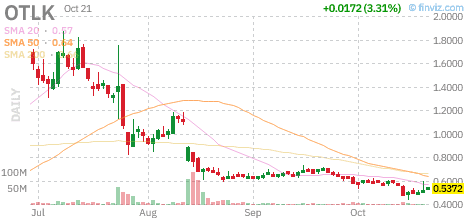
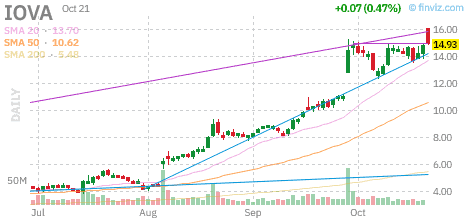
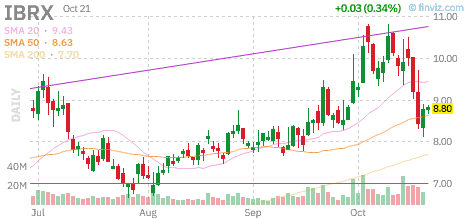
Four mini charts · Finviz daily
$OTLKOutlook Therapeutics
$IOVAIovance Biotherapeutics
$IBRXImmunityBio
$MRKMerck · Verona acquirer
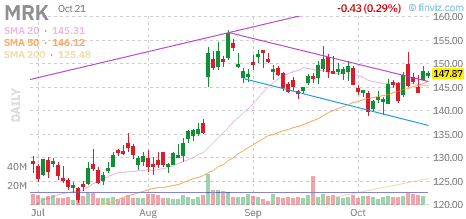
Verona Pharma was acquired by Merck in October 2025. The fourth chart is MRK, the acquirer; it is not a historical VRNA chart. Click a chart to open Finviz.
From permission to a self-funding business
01ApprovalWhat can be marketed?
02AvailabilityCan patients receive it?
03AccessCan the system support use?
04RevenueWhat sales are recognized?
05CashWhat does the business retain?
The next test
A launch needs resources before it can fund itself.
Equity, loans, revenue interests, product receipts and larger commercial organizations carry different costs and conditions.
Four companies · four operating questions
Outlook · Oct. 9
The company continued to target U.S. availability before the end of 2026.[23]
Iovance · Sept. 29
FY2026 total revenue guidance raised to $410 million–$420 million; a company forecast, not reported annual sales.[4]
ImmunityBio · Oct. 14
ANKTIVA’s U.S. indication expanded to include BCG-unresponsive NMIBC with papillary-only tumors.[20]
Verona · historical
Acquired by Merck on October 7, 2025; no longer a standalone Nasdaq trading case.[12]
What supports the commercial transition
Observable use, access that works in practice, improving product contribution and resources matched to a defined operating plan.
What keeps the financing question open
Cash needs ahead of collection, conditional capital, ongoing clinical investment and claims on future revenue or ownership.
Operating and financial position
Approval, availability, sales and financial self-sufficiency are separate milestones. Quarter-end liquidity and subsequent financing also belong on separate lines.
Executive summary
The analysis follows the money behind four launches. It distinguishes achieved results from company forecasts and compares the capital used with the operational work it finances. It is not a stock ranking or a forecast of takeover outcomes.
An approval headline answers an essential question: can this medicine be marketed for the use specified in its label? It does not answer the next question facing the company, its shareholders or the trading screen: who finances the distance between permission to sell and a business that generates enough cash to support itself?
That distance is the subject of this article. It is not a prediction about which stock will rise after a regulatory decision. It is a comparison of four real commercial transitions, each with a different combination of capital, operating complexity and evidence. Outlook Therapeutics has an approved ophthalmic product and a U.S. launch still being prepared.[1] Iovance has a commercial cell therapy whose delivery depends on a network of treatment centers and centralized manufacturing.[3] ImmunityBio has growing product revenue alongside substantial operating spending and a layered capital structure.[5] Verona Pharma provides a historical example of pre-launch financing, commercial adoption, refinancing and eventual acquisition.[10][12]
The useful question is not simply whether an approved product addresses a large market. It is whether the company can finance the work needed to reach that market, how much of the resulting economics belongs to common shareholders, and what observable evidence shows that the transition is progressing.
01 Approval changes the question, not just the label
Before an approval, the debate can become concentrated around a calendar date. A trader may spend months following a resubmission, a manufacturing inspection, a clinical endpoint or a regulatory review. Once the decision arrives, those questions do not all disappear, but the center of gravity shifts. A medicine now has a defined commercial starting point. The company has to turn that starting point into access, treatment, revenue and ultimately cash.
These are separate stages. Approval is a regulatory event. Availability is an operational event. Coverage is a payer decision. A prescription or treatment order reflects a clinical choice. Recognized revenue follows the company’s accounting policies. Collection occurs when the money arrives. A functioning business has to connect the stages without exhausting the capital required to keep them moving.
Outlook makes the distinction unusually visible. The company announced U.S. approval of LYTENAVA on July 24, 2026, and said it expected to make the product available to eligible U.S. patients before year-end. In its October 1 announcement about a reimbursement-code application, it was still describing a planned launch before the end of 2026. The approval and the availability target were therefore not interchangeable dates.[1][6]
Iovance illustrates another distinction. AMTAGVI received accelerated approval on February 16, 2024, for a defined previously treated advanced melanoma population. Continued approval may depend on verification and description of clinical benefit in confirmatory trials. Its commercialization does not eliminate the need to finance the associated clinical work.[8]
ImmunityBio adds a further layer. ANKTIVA’s original U.S. approval was in April 2024. In October 2026, the company announced an expanded indication covering BCG-unresponsive disease with papillary-only tumors as well as the previously approved population. An established product can therefore enter another commercial investment phase when its label expands.[9][20]
For an investor trying to understand these transitions, a binary vocabulary becomes inadequate. An approved product can coexist with an early launch, a widening operating loss, an improved gross margin, a new financing and an unfinished clinical program. Those conditions are not automatically contradictory. They are different parts of the same business, operating on different clocks.
The important analytical move is to stop treating approval as a universal finishing line. It is better understood as a change in the evidence that matters. Before the decision, regulatory uncertainty can dominate. Afterward, commercial execution and the terms of the funding supporting it become increasingly measurable.
This does not make every disappointing quarter a failed launch. It also does not make every revenue increase proof that financing risk has disappeared. A company needs time to establish a commercial pattern, while shareholders need enough detail to distinguish a temporary investment phase from a business whose cash requirements remain structurally ahead of its economics.
02 The launch has a cash cycle of its own
A commercial organization cannot generally be built after the first patient payment has already arrived. People, systems, inventory, training and market-access work have to be ready earlier. Exactly which costs fall on the developer depends on its contracts and operating model, but the timing problem is common: spending and collection do not necessarily occur together.
Consider the activities rather than the headline budget. A company may need to establish distribution, prepare commercial supply, engage treatment sites, answer reimbursement questions, support patients and maintain quality systems. A partner can assume some of that work. A specialist distributor can provide part of the infrastructure. Neither arrangement removes the need to identify who pays, when payment is due, and what the other party receives in return.
There is also a difference between making a product and financing a business that sells it. Inventory may absorb cash before it produces revenue. Receivables may rise while reported sales improve. Clinical development can continue alongside commercial spending. Interest and contractual revenue payments can absorb part of the cash generated by a product that appears attractive at the gross-profit level.
The four cases in this article should therefore be read through the same sequence of questions, not forced into the same revenue multiple or launch curve. What is already approved? What has actually been launched? Which party carries manufacturing and commercialization? What funding has been received, and what remains conditional? What economic claims sit ahead of, or alongside, common equity?
A cash balance answers only one of those questions. It is a dated stock of resources. It does not reveal the pace of future investment, the availability of an undrawn facility, or the share of future receipts committed to a financing counterparty. Similarly, an announced financing maximum is not necessarily the amount of unrestricted cash delivered at signing.
Verona’s May 2024 financing is a particularly clear example. The announced package provided access to up to $650 million, divided between a term-loan facility and a revenue-interest arrangement. Different portions depended on approval, sales milestones or lender consent, and much of the initial loan draw was allocated to repaying an existing facility. The headline maximum was not equivalent to new cash freely available on day one.[10]
Outlook provides the equity version of the same discipline. Its June 30, 2026 cash balance and an August offering were different dated events. Combining them without accounting for subsequent spending would create an apparent cash figure that was never a reported balance. Counting the attached warrants as if their exercise proceeds were already in the bank would add another unsupported assumption.[2]
For traders, this matters because the market can move from one question to another faster than a company completes the underlying work. A regulatory event can be resolved in a day; the commercial cash cycle takes longer to reveal itself. The financial statements and the financing documents are where that second story becomes visible.
03 Outlook Therapeutics: approval secured, launch infrastructure still being built
The milestone is real, and so is the next phase
Outlook announced FDA approval of LYTENAVA on July 24, 2026, for neovascular, or wet, age-related macular degeneration. The FDA approval letter authorizes Lytenava, bevacizumab-vikg, for that indication. Following approval, the company’s next operating task is to make the product available to eligible U.S. patients.[1][7]
The commercial proposition is specific. Outlook describes LYTENAVA as an ophthalmic formulation of bevacizumab developed for use in the eye. Its approval announcement contrasts that product with repackaged formulations originally intended for intravenous use. This is a proposed commercial distinction within an existing treatment landscape, rather than the creation of an entirely new category of patient demand.[1]
That distinction matters to the launch analysis. A company entering an established treatment setting has to explain how its product fits into actual practice. Regulatory status is part of the proposition, but adoption also involves price, reimbursement, supply, clinical familiarity and the work required of the practice. Those variables determine how a theoretical opportunity becomes a usable commercial offering.
In its August business update, Outlook explicitly described an approach shaped by affordability, the evolving biosimilar landscape and potential additional entrants. It was building a focused commercial organization, expanding payer engagement and scaling commercial supply. Those are operating tasks with their own costs and execution requirements, not benefits automatically delivered by the approval letter.[2]
The funding event belongs inside the launch story
At June 30, 2026, Outlook reported $11.2 million in cash and cash equivalents. In the subsequent August update, it described an offering of 55,555,556 common shares with accompanying warrants to purchase the same number of shares, at a combined offering price of $0.99 per share and accompanying warrant. The update stated approximately $51.1 million in net proceeds after underwriting discounts, commissions and estimated offering expenses.[2]
These figures tell a more informative story together than separately. The quarter-end balance describes the resources reported before the U.S. approval. The offering describes financing announced after it. The share issuance and the warrants describe the ownership terms attached to that capital. The product milestone and the shareholder denominator changed through different mechanisms.
Outlook’s $11.2 million cash balance was reported at June 30, before the August financing. Spending after June also affects available cash, and as of October 21, 2026, the company had not reported a more recent cash balance.
The warrants also deserve their own category. They represent potential additional shares and, depending on their terms and future circumstances, potentially additional proceeds. They are not the same as common shares already outstanding, and possible future exercise cash is not a substitute for cash already received. An assessment of launch funding has to keep those distinctions intact.
Reimbursement is a separate workstream
On October 1, 2026, Outlook announced an application to CMS for a permanent, product-specific HCPCS Level II J-code for LYTENAVA. The announcement explained that permanent J-codes are used by government and commercial payers to facilitate billing and reimbursement. It also made two important limitations explicit: an application does not guarantee assignment of a code, and assignment is separate from coverage and payment determinations.[6]
This is a particularly useful example of why an operational milestone should not be exaggerated. A coding application is evidence that the company is working on a reimbursement pathway. It is not proof that the pathway is complete, that every payer will cover the product, or that every practice will receive a specified payment. Those are different assertions requiring different evidence.
For a retina practice, the commercial experience is more than the medicine’s approved indication. A practice needs to understand ordering, administration, documentation, billing and payment. A launch plan that addresses those issues is doing necessary work. Whether that work produces broad adoption will emerge through later commercial evidence, not through the existence of the application alone.
The distinction is equally important when reading launch timelines. The October 1 release said Outlook remained on track for a U.S. launch before year-end. That was a company target, not a report of completed U.S. commercial sales. On October 9, the company again described preparations to make LYTENAVA available before the end of 2026 while announcing its chief commercial officer appointment.[6][23]
Europe is a useful contrast, not a shortcut
Outlook reported commercial launches in Germany, Austria and the United Kingdom. It also explained that, in certain EU member states, pricing and reimbursement approval is required before sales can begin. A central authorization therefore does not mean that each national market becomes commercially accessible at the same moment.[2]
The European experience gives the company a real commercial context, but it should not be used as a shortcut for projecting U.S. adoption. Different jurisdictions have different access processes, prices and purchasing structures. An existing European launch does not itself establish a U.S. revenue trajectory, just as U.S. approval does not automatically establish reimbursement in another country.
For the fiscal quarter ended June 30, 2026, Outlook reported net revenue of $9,000. This reporting period preceded U.S. approval and the planned U.S. commercial launch.[2]
What the next commercial evidence needs to show
The relevant progression is now practical: product availability, practice access, commercial supply, reimbursement implementation and then reported sales. A staffing announcement is evidence about organizational preparation. A coding application is evidence about administrative preparation. Neither is the same category as revenue or cash collection.[6][23]
Outlook’s August update also cited the potential to exceed $500 million in annual U.S. LYTENAVA sales by 2030, a long-range management estimate. The financial starting point remains the actual balance sheet, the August financing and the launch milestones.[2]
The lesson from OTLK is not that approval has little value. It is that approval and the funding of commercialization solve different problems. The regulatory milestone establishes a permitted commercial opportunity. The subsequent financing, reimbursement work and organization-building determine how the company attempts to pursue it, and on what terms shareholders participate.
04 Iovance: the launch is also a treatment-delivery system
A product cannot outrun the system delivering it
AMTAGVI presents a different commercialization problem from a medicine distributed to a physician’s office as a conventional finished product. Iovance manufactures AMTAGVI through a centralized, company-owned U.S. manufacturing process, and patients are treated at a network of authorized treatment centers. The commercial organization therefore has to coordinate clinical access and treatment delivery as well as product demand.[3]
Its original FDA authorization was an accelerated approval dated February 16, 2024. The indicated population comprises adults with unresectable or metastatic melanoma previously treated with a PD-1 blocking antibody and, if BRAF V600 mutation-positive, a BRAF inhibitor with or without a MEK inhibitor. The FDA product page also identifies the potential requirement for confirmatory evidence to support continued approval.[8]
That starting label matters to the economic discussion. Revenue from an approved population is not interchangeable with the potential opportunity in an earlier treatment setting or another cancer. Expanding the commercial opportunity can require additional studies, regulatory work and investment. A launch budget cannot be understood in isolation from those continuing obligations.
Iovance made the connection explicit immediately after approval. On February 20, 2024, it announced pricing of a common-stock offering expected to generate approximately $211 million in gross proceeds before discounts, commissions and expenses. The stated uses included the AMTAGVI launch, the IOV-LUN-202 study, the TILVANCE-301 confirmatory trial and other pipeline and corporate purposes.[15]
This was not a financing devoted exclusively to advertising or a sales force. It supported a company carrying commercial and clinical responsibilities simultaneously. That is an important distinction when readers ask why an approved-product company continues to require capital: the approved product and the broader organization are not identical cost centers.
The reported commercial evidence has become more substantial
For the quarter ended June 30, 2026, Iovance reported total product revenue of $99.3 million. The release described approximately $91 million in U.S. AMTAGVI revenue and approximately $9 million in global Proleukin revenue.[3]
On September 29, 2026, management raised full-year total revenue guidance to $410 million–$420 million from $350 million–$370 million, citing demand for AMTAGVI and Proleukin. The new range superseded the earlier guidance review described in the August results. It remained management guidance, not revenue already earned.[4]
Separating the two products is essential. The group total describes the company, while the AMTAGVI figure describes the principal launch being analyzed. Assigning all company revenue to AMTAGVI would overstate that product’s contribution. Treating Proleukin revenue as an automatic leading indicator for AMTAGVI would introduce another assumption that the company’s own risk disclosures caution against.[3][4]
The same discipline applies to geographic expansion. A treatment center in one jurisdiction is not necessarily evidence of reimbursement or patient access in every other jurisdiction. Iovance’s August release discussed Australian treatment-center authorization progressing alongside national reimbursement discussions. That is a concrete reminder that regulatory access and commercial access can move on different schedules.[3]
Treatment centers are infrastructure, not identical revenue units
The August release described more than 95 centers across the United States, Canada and Australia and a target of at least 110 by year-end 2026. By the September update, the network had grown to approximately 100 authorized treatment centers, and the company said it remained on track for the year-end target. The international center count alone does not show each country’s share of treatment activity or revenue.[3][4]
A center count is useful because it describes the breadth of the delivery network. It does not, by itself, reveal the number of patients treated, the activity at each center or the conversion of referrals into completed treatment. A larger network can expand capacity, but the relationship between infrastructure and revenue still has to be demonstrated.
The company’s August update also described manufacturing turnaround of 31 days or less. That is an operational measure within the treatment process, not a guarantee about the time from every patient’s initial referral to final cash collection. Different parts of the pathway have different starting and ending points.[3]
For the commercial analysis, the question is how the pieces work together. A growing referral base has limited economic meaning if treatment capacity cannot support it. Capacity has limited economic meaning if access barriers leave it underused. Revenue has to be interpreted alongside the system producing it, rather than as an isolated number on an earnings slide.
Gross margin deserves its footnote
Iovance’s second-quarter 2026 release highlighted a 56% gross margin, with a footnote specifying that the measure excludes depreciation and amortization. The release linked the improvement to higher AMTAGVI volume, cost optimization and manufacturing efficiencies. Any comparison with another company’s reported gross margin needs to preserve that definition.[3]
The distinction is not cosmetic. A percentage excluding selected charges cannot simply be treated as identical to a percentage calculated with those charges included. More importantly, gross margin measures only one layer of the business. Even an improving product contribution does not automatically fund research, selling costs, administration and every other corporate requirement.
That is why the question “are sales growing?” needs a companion question: “how much cash does the organization still require while sales grow?” The first can describe adoption. The second describes the distance to financial self-sufficiency. They are related, but neither replaces the other.
The liquidity definition matters too
At June 30, 2026, Iovance reported a cash position of approximately $304 million, defined to include cash, cash equivalents, short-term investments and restricted cash. Its financial table separated $297.674 million of cash, cash equivalents and investments from $6.005 million of restricted cash. The broad headline was therefore not a statement that every dollar was unrestricted cash.[3]
Management expected that position to fund operations into the second half of 2028. That is a company forecast dependent on its operating assumptions, not a guaranteed financing horizon. The same release identified unanticipated expenses and changes in expected capital requirements among the risks affecting its outlook.[3]
The lesson from IOVA is that commercialization can be an execution system as much as a sales campaign. The evidence now includes meaningful reported revenue, an expanded center network and a raised outlook. Understanding the financial transition still requires the definitions underneath those headlines, the cost of the delivery model and the clinical programs that continue alongside the launch.
05 ImmunityBio: growing ANKTIVA revenue and the capital structure behind it
An approved product can enter another expansion phase
ANKTIVA’s original U.S. approval date was April 22, 2024. The original indication involved use with BCG for patients with BCG-unresponsive non-muscle-invasive bladder cancer with carcinoma in situ, with or without papillary disease. The product is administered into the bladder in combination with BCG.[9]
The commercial story changed again on October 14, 2026, when ImmunityBio announced FDA expansion of the indication to include patients with BCG-unresponsive NMIBC with papillary-only tumors. The company’s filed announcement described the expanded label as ANKTIVA with BCG for adult patients with BCG-unresponsive non-muscle-invasive bladder cancer.[20]
The expanded indication broadens ANKTIVA’s eligible patient population. Its financial effect depends on subsequent patient uptake and reported sales: an approved commercial opportunity is distinct from revenue already generated.
The October development also shows why “post-approval” is not a single, stable state. A company may be commercializing an existing indication while preparing for a broader one and funding additional research. The product’s commercial reach and the organization’s investment requirements can expand together.
Revenue growth is visible, but it is not the entire financial statement
For the quarter ended June 30, 2026, ImmunityBio reported $50.7 million in net product revenue, up 92% from the corresponding 2025 quarter. First-half net product revenue was $94.8 million. The release described continued adoption of ANKTIVA and eight consecutive quarters of sequential net product revenue growth since its commercial launch.[5]
Those are reported commercial results, not market-size projections. They demonstrate that the discussion has moved beyond whether the company can book any product sales. The next financial question concerns the relationship between that revenue, the spending required to support it and the wider company’s obligations.
In the same quarter, the release reported approximately $60.8 million in research and development expense and $51.8 million in selling, general and administrative expense, including related-party components. The financial table showed an operating loss of approximately $61.7 million. Commercial growth and an operating loss therefore coexisted in the same reported period.[5]
This does not establish that the spending was ineffective, nor does it imply that all research expense was necessary to sell the existing product. It establishes the narrower, more useful fact: the organization’s reported cost base was not yet covered by its revenue in that quarter. The approved product and the consolidated company must be analyzed at different levels.
Accounting loss, adjusted loss and cash use answer different questions
ImmunityBio reported a second-quarter net loss attributable to common shareholders of approximately $230.4 million. A substantial part of the financial-statement difference from operating loss involved non-cash fair-value changes in warrants, derivatives and a related-party convertible note. The company also reported an adjusted net loss of approximately $81.0 million, with its own reconciliation.[5]
Neither number should be called operating cash burn. The same release provided a cash-flow summary showing approximately $66.5 million used in operating activities during the quarter and approximately $141.9 million during the first half of 2026. Those cash-flow figures are the appropriate starting point for examining historical operating cash consumption.[5]
The distinction prevents two opposite mistakes. The large GAAP loss cannot simply be divided into cash to calculate a depletion date. The smaller adjusted loss cannot be treated as proof that the business generated cash. Adjustments change the accounting lens; they do not replace the cash-flow statement.
Even operating cash use requires context. It reflects the period’s timing of receipts and payments as well as the underlying business. A single quarter is informative, but it is not a binding forecast for the next one. A historical figure becomes useful when it is connected to current plans and an explicit understanding of what may change.
Financing is more than a headline total
On March 31, 2026, ImmunityBio announced financing transactions described as totaling $100 million. The components were different: $75 million of additional funding under an existing revenue-interest arrangement and conversion of $25 million of an affiliated entity’s outstanding note principal into common equity. The conversion involved issuance of approximately 4.6 million shares.[19]
Calling the entire $100 million new cash would therefore be wrong. The revenue-interest funding contributed cash under the financing arrangement. The debt conversion reduced a liability and increased common shares. Both can change a balance sheet, but they are not the same transaction and do not provide the same type of resource.
The announcement said total committed capital under the revenue-interest arrangement had increased to $375 million. That aggregate commitment is another category again. It should not be confused with the incremental funding announced that day or with the subsequent quarter-end cash and investment balance.[19]
The company described the additional $75 million financing as non-dilutive. In the narrow share-count sense, revenue-interest funding differs from a common-stock sale. Economically, however, the arrangement gives the counterparty a claim linked to future revenues under its contract. It is not free capital simply because it does not immediately create common shares.[19]
The balance sheet contains claims as well as resources
At June 30, 2026, ImmunityBio reported $357.4 million in cash, cash equivalents and marketable securities. The balance-sheet table separately showed approximately $75.7 million of cash and cash equivalents and $281.7 million of marketable securities.[5]
The same table reported a related-party convertible note at fair value and a revenue-interest liability. Those accounting carrying amounts are not interchangeable with contractual principal, near-term cash payments or a new financing commitment. Their existence nevertheless makes the analytical point: the product’s future economics sit inside a capital structure, not outside it.[5]
For common shareholders, the question is not only how much ANKTIVA can sell. It is how revenue, operating spending, clinical investment and financing obligations interact. More product adoption can improve the business while different contractual claims affect how much of the resulting economics eventually reaches equity.
The BCG combination also matters commercially. The original approval describes ANKTIVA used with BCG, and the financing release identified BCG supply among the company’s operational risks. A combination regimen needs the associated treatment ecosystem to function; product demand alone is not the whole delivery equation.[9][19]
The lesson from IBRX is that sales growth and financial self-sufficiency are different milestones. The revenue trend is measurable, and the October label expansion creates a new commercial context. The cash-flow statement and financing terms explain why those developments must still be connected to the resources and obligations of the whole company.
06 Verona Pharma: finance the launch, demonstrate adoption, then change the capital structure
A completed historical case, not a current Nasdaq setup
Verona is included as a historical comparison. Merck completed its acquisition of the company on October 7, 2025, for $107 per American Depositary Share, with each ADS representing eight ordinary shares. The announced transaction value was approximately $10 billion. Merck stated that Verona’s ADSs would no longer be listed or traded on Nasdaq.[12]
That status matters. Verona is no longer a standalone stock, and its acquisition is not a template for the other companies. The case is useful because several stages of its commercial financing story can be observed in sequence: capital arranged before approval, an actual launch, reported adoption, a financing revision and a completed ownership change.
Ohtuvayre, ensifentrine, was approved by the FDA in June 2024 for maintenance treatment of COPD in adults. By April 2025, Verona was reporting commercial product sales and attributing higher selling, general and administrative expense mainly to the field sales team hired before launch, launch-related commercial activities and the continued buildout of its commercial organization. Approval and commercialization were connected by a financing structure established before the approval arrived.[12][17]
The pre-launch package was large, but conditional
On May 9, 2024, Verona announced access to up to $650 million of strategic financing. The package comprised a term-loan facility of up to $400 million and a revenue-interest purchase and sale agreement, or RIPSA, of up to $250 million. Both headline amounts contained multiple components rather than representing a single immediate payment.[10]
The initial term-loan draw was $55 million. Approximately $52 million of that draw was intended to repay the existing facility, including associated fees and costs. Additional term-loan amounts depended on FDA approval, specified net-sales milestones or lender approval for strategic initiatives.[10]
The revenue-interest agreement also had stages. It provided for $100 million upon FDA approval and eligibility for another $150 million upon achievement of specified net-sales milestones. In return, the agreement provided a share of certain revenues, subject to its contractual terms and a cap of 1.75 times the amount actually funded.[10]
The analytical lesson is unusually concrete. “Access to $650 million” described a financing architecture. It did not mean that $650 million of unrestricted cash was deposited at signing. A portion refinanced existing obligations. Other portions required the company to cross regulatory or commercial milestones. The structure could support the launch while retaining conditions and an economic cost.
This is also why a company can rationally arrange capital before approval without claiming that approval is certain. Funding agreements can make different tranches available at different stages. The critical details are the conditions attached to each tranche and whether the company has enough resources to reach the stage that unlocks the next one.
Commercial progress creates a new set of choices
In its April 29, 2025 update, Verona reported first-quarter Ohtuvayre net sales of $71.3 million and total net revenue of $76.3 million. It also reported approximately 25,000 prescriptions filled, with refills representing approximately 60% of dispenses. The product-sales figure and total revenue were different measures, just as they are in the Iovance example.[17]
Those operating details add something that a single revenue number cannot. Prescriptions, prescriber activity and refills address different parts of adoption. They do not make every future quarter predictable, but they help distinguish the breadth of use from a headline estimate of the potential market.
Verona’s reported first-quarter revenue exceeded operating expenses excluding non-cash charges, according to the update. This comparison excludes non-cash expenses and is distinct from overall profitability or operating cash flow.[17]
The update also described a plan to add approximately 30 sales representatives in the third quarter of 2025. That is a useful illustration of the relationship between adoption and reinvestment. A company seeing commercial traction may choose to spend more to broaden its reach rather than immediately minimize every expense.[17]
The original financing terms were not permanent
On March 28, 2025, Verona announced that it had amended its strategic financing arrangements. It repurchased the $100 million RIPSA obligation with reduced repayment fees and increased the term-loan facility to $450 million. The announcement described $250 million outstanding after an additional borrowing and access to a further $200 million subject to conditions.[18]
The 2024 revenue-interest arrangement financed an earlier phase of the launch. Verona repurchased that obligation before the later acquisition, changing the funding structure supporting the business.
The financing revision also demonstrates why “non-dilutive” is an incomplete endpoint for analysis. A company can initially use revenue-linked funding and later decide to replace that claim with a different source of capital. The relevant comparison is the total economic trade-off at each stage, not whether the original transaction avoided an immediate stock issuance.
Acquisition was a separate event, not a promised final chapter
The October 2025 acquisition transferred Verona into Merck’s organization. Merck’s completion announcement emphasized the addition of Ohtuvayre to its cardiopulmonary portfolio and its intention to apply its commercial capabilities to the product. That is a documented outcome for this company, not evidence that successful launches generally lead to takeovers.[12]
A retrospective can make the path look inevitable because the ending is already known. At the time of the financing, the later commercial performance and acquisition were not reported facts. The sound way to use this case is to examine what the funding enabled and how the evidence evolved, without turning the outcome into a rule for another stock.
The lesson from Verona is the sequence. Financing can bridge approval and adoption; adoption can support a revision of financing terms; ownership can change later. Each step has its own evidence and its own economics. The existence of the final transaction does not erase the conditional capital, operating investment or execution risk that came before it.
07 Four cases, four different bridges from approval to a business
The companies share a broad problem, but not an identical solution. Comparing them becomes more useful when the financing model and the operational bottleneck are placed side by side.
| Case | Commercial starting point | Capital evidence | What the evidence does not establish |
|---|---|---|---|
| Outlook Therapeutics / $OTLK | U.S. LYTENAVA approval in July 2026; year-end launch target reiterated in October | June cash balance followed by an August common-stock-and-warrant offering | A reported October cash balance, completed U.S. rollout or guaranteed reimbursement.[1][2][6] |
| Iovance / $IOVA | AMTAGVI already generating revenue through a treatment-center and manufacturing system | Post-approval equity offering; June 2026 liquidity and an explicitly defined margin measure | That all group revenue is AMTAGVI revenue, that all centers contribute equally, or that gross margin equals free cash flow.[3][15] |
| ImmunityBio / $IBRX | ANKTIVA commercial growth plus an October 2026 label expansion | Revenue-interest funding, debt conversion and a balance sheet with multiple financing claims | That a financing headline is all new cash, or that growing sales already cover the consolidated cost base.[5][19][20] |
| Verona Pharma / former $VRNA | Historical Ohtuvayre launch followed by acquisition | Conditional pre-launch funding, RIPSA repurchase and amended term lending | A currently listed standalone opportunity or a takeover roadmap for peers.[10][12][18] |
The dated company events and financial figures behind this comparison are detailed in the case studies above.
Equity exchanges ownership for time and resources
In an equity offering, the issuer receives capital while the share count changes. The economic assessment therefore has two sides: what the money can enable and how the additional shares affect participation in the resulting business. Treating dilution as either automatically destructive or automatically irrelevant removes half the transaction from view.
Outlook’s August offering also included warrants, adding a separate potential source of future shares. Iovance’s February 2024 announcement identified a common-stock offering and several intended uses. Neither company’s transaction can be understood solely from the gross financing headline, without examining expenses, instruments and deployment of capital.[2][15]
Revenue interests exchange part of future receipts for capital today
A revenue-interest structure can provide funding without the same immediate share issuance as a stock offering. Its economic cost appears through the contract’s claim on future revenues and any associated conditions, caps or repayment mechanisms. The investor needs the actual agreement, not merely the adjective “non-dilutive.”
Verona’s original RIPSA and its later repurchase make that trade-off visible over time. ImmunityBio’s additional funding under its existing arrangement shows the same broad category of financing in a different business and at a different stage. The two contracts are not assumed to have identical terms.[10][18][19]
Debt provides capital with obligations attached
A loan facility can include undrawn amounts, conditions, interest, maturity and other contractual requirements. The cash already drawn, the maximum facility size and the amount available subject to conditions are different measures. Verona’s announced package illustrates why those categories should stay separate.[10][18]
A debt conversion is different again. ImmunityBio’s March transaction reduced note principal in exchange for common shares. That can change leverage and ownership without bringing in an equivalent amount of fresh cash. A cash-flow assessment has to recognize the distinction even when the transaction is included in a broader balance-sheet announcement.[19]
A partner or acquirer changes the perimeter of the business
A commercial partner can assume activities in return for rights or economics. An acquirer changes ownership more broadly. Neither arrangement makes the underlying work disappear; it changes the organization that performs it and the allocation of the resulting value.
Merck’s acquisition of Verona is the documented example here. It placed Ohtuvayre inside a much larger commercial portfolio, but that later event should not be confused with Verona having launched the medicine through a partner from the outset.[12]
08 Reading the launch through the financial statements
A product launch is often discussed through a small set of headline figures: sales, cash and runway. The more useful view connects those figures through the income statement, balance sheet and cash-flow statement. Each explains something the others cannot.
Revenue is the beginning of the bridge, not its endpoint
Reported net product revenue describes recognized sales after the adjustments required by the company’s accounting policies. It is different from a product’s headline price multiplied by a count found elsewhere in a presentation. Patient counts, prescriptions, doses, treatments and shipments are also different units. An analysis becomes unreliable when it silently substitutes one for another.
The company examples show why precision matters. Iovance reported AMTAGVI and Proleukin components within total product revenue. Verona reported Ohtuvayre net sales within total net revenue. ImmunityBio reported product revenue alongside other revenue. Those distinctions affect comparisons even before the analysis reaches expenses.[3][5][17]
Product contribution has to support more than production
A gross margin can indicate how much revenue remains after the costs included in that measure. It does not automatically pay for the entire organization. Research and development, selling costs, administration, interest and other requirements still need to be financed.
Iovance’s 56% margin measure explicitly excluded depreciation and amortization. ImmunityBio’s operating statement showed the separate research and administrative expenses accompanying its growing product revenue. Comparing the two by a single headline percentage would miss both differences in definitions and differences in business structure.[3][5]
The practical question is whether the product’s contribution can grow faster than the organization’s ongoing cash requirements, under a realistic operating plan. That is an analytical question, not a claim that any company in this comparison has already crossed the relevant threshold.
Working capital can make a successful sales period cash-intensive
A company can report more revenue while also financing inventory or awaiting collection. The business may need resources before the associated cash inflow arrives. For a launch, the timing of those needs matters alongside the eventual product margin.
A reader should therefore distinguish revenue growth from cash generation and examine the balance-sheet accounts and operating cash flow that connect them. The point is not to assume a collection problem whenever receivables rise. It is to understand whether the change reflects normal growth, timing, access constraints or something that requires more explanation.
The same applies to inventory. Building supply can support an expanding launch, but the economic significance depends on expected use, product characteristics and the obligations attached to production. A larger inventory number is neither inherently reassuring nor inherently alarming without that context.
Cash burn cannot be read from one loss figure
ImmunityBio’s second-quarter release supplies a useful worked comparison without needing hypothetical numbers: GAAP net loss, adjusted net loss and operating cash use were all different. The cash-flow statement showed what operating activities consumed during the period, while the income statement and reconciliation explained the accounting results.[5]
A runway calculation based on the wrong numerator or denominator can be precise to a decimal place and still be conceptually wrong. Restricted cash is not the same as unrestricted liquidity. A fair-value loss is not automatically a cash outflow. An undrawn facility is not the same as money already received.
A funding horizon is an assumption-based statement
Management’s runway estimate can be useful when its reference date and definition are clear. It remains dependent on sales, expenditure, development plans and other assumptions. Iovance’s expectation of funding into the second half of 2028 belongs in that category, rather than being treated as a contractual promise.[3]
For a changing commercial organization, a dated runway statement is best read alongside the milestones it is intended to finance. Does the plan cover initial availability only, a broader launch, additional clinical work or a later operating target? Those are different claims. The word “funded” needs an object and a time frame before it becomes useful.
09 Three commercial paths after the approval headline
A useful scenario framework describes what would have to happen, rather than attaching an unsupported probability or share-price target to each outcome. For these companies, the central variables are the speed of access, the conversion of demand into revenue, the cash required to support growth and the terms of any additional funding.
Path one: adoption catches up with the investment
In this path, commercial access broadens, the delivery system works reliably and revenue grows against a cost base that becomes more manageable relative to sales. The company may still invest in expansion or research, but each reporting period supplies more evidence that the product is contributing to the organization’s financing needs.
Evidence would include consistency across several measures rather than a single strong headline. Availability would translate into actual use. Reported sales would be accompanied by understandable cash collection and production economics. Any increase in spending would have an identifiable purpose and a funding plan rather than being hidden behind an undifferentiated growth narrative.
Verona’s reported first-quarter 2025 adoption metrics and financing revision provide a historical example of commercial progress being accompanied by changes in funding choices. They do not establish that the same path will occur for Outlook, Iovance or ImmunityBio.[17][18]
Path two: the product advances, but the financing bridge gets longer
A product can attract genuine use while the organization still needs more time and capital. Access may broaden unevenly. The business may deliberately add staff or manufacturing capability. Clinical programs may continue to absorb resources. Revenue progress and further financing can coexist without either automatically disproving the other.
The distinction then concerns terms and purpose. Additional capital used to support a documented expansion is not analytically identical to capital needed because earlier operating assumptions were missed. The financing announcement and the subsequent results have to explain which situation is occurring.
This path is especially relevant to the article’s central question. A launch can be real and the balance sheet can still matter intensely. The company does not become financially self-sufficient merely because the first commercial milestone is behind it. Shareholders remain exposed to the amount, timing and structure of future capital requirements.
Path three: access or economics do not develop as expected
In this path, reported evidence falls short of the operating assumptions supporting the launch. The issue could concern adoption, delivery, reimbursement, manufacturing, cost or the size of the commercial organization relative to achievable sales. Those possibilities are analytically distinct and would require company-specific evidence.
It is important not to infer this path from one incomplete early indicator. A slow administrative step is not the same as a failed product. A quarter influenced by timing is not a permanent commercial verdict. Equally, a large addressable-market estimate does not answer a sustained shortfall in actual adoption or cash generation.
The decisive question is whether the business can identify the constraint and finance a credible response. That requires an operating explanation and financial resources, not simply repetition of the original approval headline. The scenario remains a framework for evaluating evidence, not a statement that any named company is destined to follow it.
10 The next milestones belong on more than one calendar
A post-approval watchlist is more useful when its events are divided by what they actually prove. Regulatory events change the permitted use of a medicine. Commercial events change its availability or access. Financial reporting measures the resulting economics. Financing events change the resources and claims supporting the business.
For Outlook, the announced U.S. availability target remained before year-end 2026 in its October releases. The permanent J-code application was submitted, but the company explained that code assignment and payer coverage were separate matters. Those are related milestones, not one completed reimbursement event.[6][23]
For Iovance, the September revenue-guidance increase and the target of at least 110 treatment centers by year-end describe different types of expected progress. The same update said third-quarter results were expected in early November 2026. Reported results would then provide evidence against the company’s outlook; the guidance itself was not a substitute for those results.[4]
For ImmunityBio, the October 14 expanded approval changed the commercial context after the June financial period discussed here. Subsequent reporting will be needed to describe the financial effect of the broader label. The June revenue and cash-flow figures cannot be attributed retrospectively to an indication expansion announced months later.[5][20]
For Verona, there is no current standalone quarterly catalyst in this comparison. The relevant sequence is historical and ends here with the completed acquisition. Tracking Ohtuvayre inside Merck is a different analytical task from following Verona as a separately listed launch-stage company.[12]
There is also a continuing regulatory calendar after approval. LYTENAVA’s approval letter includes a postmarketing commitment to qualify a working reference standard, with the final report due in July 2027. AMTAGVI’s accelerated-approval status includes the potential requirement for confirmatory evidence. Commercial activity does not replace those responsibilities.[7][8]
This is why the most useful milestone list is not simply a series of expected sales announcements. It connects access, operations, clinical obligations and financing. A company’s next meaningful test may be a reimbursement development, a completed launch, an operating result or a financing term, even when the original regulatory decision is already settled.
11 Questions worth asking before calling a launch “funded”
Funded to do what? Initial availability, a national commercial rollout, international expansion and development of another indication are different projects. A cash horizon has meaning only when the plan behind it is defined. The same financing can support several projects, as Iovance’s February 2024 stated uses demonstrate.[15]
Which amount is actually cash? A quarter-end balance, announced gross proceeds, expected net proceeds, conditional loan capacity and a debt conversion should appear on separate lines. ImmunityBio’s March transactions show why a financing headline can include both cash funding and a non-cash change to the balance sheet.[19]
What economics have been exchanged for that funding? The answer can involve new common shares, warrants, interest, revenue participation or commercial rights. Avoiding one form of dilution does not remove every economic cost. Verona’s original arrangement and subsequent repurchase make that trade-off visible.[10][18]
Which operating measure connects to actual treatment? A treatment-center count, prescription count, shipment and recognized sale describe different stages. The relevant unit depends on the product and delivery model. Iovance’s network and Verona’s prescription metrics are useful within their own businesses, not interchangeable measures for a league table.[3][17]
What remains after the product-level margin? A commercial medicine sits inside a company with research, administration and financing requirements. Product contribution can improve while consolidated cash use continues. ImmunityBio’s second-quarter statements provide a concrete example of the distinction.[5]
Which dates belong to which claims? June cash is June cash. September guidance is September guidance. An October label expansion changes the future commercial context, not the historical quarter. Keeping those dates attached to the figures is more informative than presenting a collection of individually accurate numbers as if they describe one moment.
What would change the interpretation? Better access, repeatable demand, more efficient delivery and a clearer funding path would support a different assessment from repeated delays, unexplained cash use or financing assumptions that remain conditional. These are conditions for analysis, not instructions to trade around a particular announcement.
12 The bottom line: approval creates an opportunity that still needs a business
The question in the title has several possible answers. Shareholders can supply capital through an offering. Lenders can provide a facility. A revenue-interest investor can fund the company in exchange for future receipts. An organization can reinvest product revenue. A partner or acquirer can take responsibility for a broader part of the commercial effort.
What matters is not choosing a universally preferred funding label. It is understanding whether the resources fit the operating task, whether the conditions are realistic, and how the economic value is divided. An approved medicine and an attractive market are only part of that assessment.
Outlook makes the pre-launch bridge visible: approval, new financing, market-access work and organization-building.[1][2] Iovance shows commercialization as an integrated delivery system whose revenue and cost definitions matter.[3] ImmunityBio shows that substantial product growth can coexist with operating cash use and several financing claims.[5][19] Verona shows a completed historical sequence in which the funding structure evolved as the launch developed.[10][12][18]
None of these cases turns an approval into a guaranteed commercial outcome or an inevitable financing problem. They demonstrate why the next chapter deserves its own research. The most revealing post-approval question is not simply “how big could this product become?” It is: what must happen between here and a self-sustaining business, who is paying for that work, and what do they receive in return?
Frequently asked questions
Does FDA approval mean a company can stop raising money?
No. Approval permits marketing under the approved label; it does not establish that product revenue covers the organization’s cash requirements. Outlook’s subsequent offering is one example of capital being raised around the commercial transition.[1][2] Iovance’s offering announced after AMTAGVI’s approval is another.[8][15]
Is a J-code the same as reimbursement approval?
No. Outlook’s October 1 announcement explicitly states that assignment of a code is separate from coverage and payment determinations and does not guarantee reimbursement by Medicare or another payer. The application, any code assignment and the payer decision are distinct steps.[6]
Is “non-dilutive” funding economically free?
No. The term can describe the absence of an immediate common-share issuance while the contract still assigns a portion of future revenues or imposes other obligations. Verona’s original RIPSA and ImmunityBio’s revenue-interest funding illustrate why the actual terms matter.[10][19]
Does an expanded indication immediately increase reported revenue?
An expanded label changes the approved commercial scope, but its financial effect has to emerge through subsequent use and reporting. ImmunityBio’s October 2026 expansion should therefore be kept separate from financial results for the quarter ended June 30, 2026.[5][20]
Why include Verona if it is no longer a standalone stock?
Because it provides a historical sequence rather than an unresolved forecast. Its pre-launch funding and reported adoption are documented stages.[10][17] The later financing revision and completed acquisition are separate events.[12][18] The case is educational and is not a suggestion that another company will be acquired.
Are these four companies ranked against one another?
No. They have different products, treatment settings, operating structures, financial periods and commercial stages. The comparison concerns how a launch is funded and measured. It is not a valuation ranking, a product comparison for patients or a recommendation to buy, sell or hold any security.
Sources and dated reference documents
- Outlook: LYTENAVA U.S. approval announcement — July 24, 2026
- Outlook: fiscal Q3 2026 results and launch update — August 14, 2026
- Iovance: Q2 2026 results — August 6, 2026
- Iovance: revised 2026 revenue outlook — September 29, 2026
- ImmunityBio: Q2 2026 results and financial tables — August 4, 2026
- Outlook: permanent J-code application — October 1, 2026
- LYTENAVA: original FDA approval letter — July 2026
- AMTAGVI: FDA product page and approval history
- ANKTIVA: FDA original-approval snapshot — April 2024
- Verona: strategic financing announcement — May 9, 2024
- Verona: completed Merck acquisition — October 7, 2025
- Iovance: offering pricing and intended use of proceeds — February 20, 2024
- Verona: Q1 2025 commercial update — April 29, 2025
- Verona: amended financing and RIPSA repurchase — March 28, 2025
- ImmunityBio: revenue-interest funding and debt conversion — March 31, 2026
- ImmunityBio: ANKTIVA indication expansion, Form 8-K — October 14, 2026
- Outlook: commercial organization update — October 9, 2026
Disclaimer. Merlintrader publishes this material for educational and informational purposes. It is not investment advice, a recommendation to buy, sell or hold a security, or an offer or solicitation. The discussion is financial and editorial, not medical advice or a comparison of treatment suitability for patients.
Biotechnology companies carry clinical, regulatory, manufacturing, reimbursement, commercial and financing risks. Additional funding can dilute shareholders or assign part of future product economics to other parties. Company forecasts are uncertain, and financial figures describe their stated periods rather than a continuously updated balance sheet. Investors can lose part or all of their capital. Readers should conduct their own research and consult an authorized financial adviser where appropriate.
Prepared with AI support and editorial oversight. Disclaimer · Terms of use and privacy