
Merlintrader Trading Pub
Biotech catalyst, news and analysis PDUFA tracker
Merlintrader Trading Pub
Biotech catalyst, news and analysis PDUFA tracker
AI transparency: articles and reports are produced with the help of artificial intelligence and checked through a process that does not constitute specialist validation. They may contain errors: verify relevant information with independent sources. Read the full disclaimer.
Biotech Radar — October 20, 2026: $RAPP, $AMGN, $RCUS, $TEVA
Rapport, Amgen/AstraZeneca, Arcus and Teva/Sanofi lead today’s Biotech Radar. Beyond those four stories: clinical findings, regulatory and manufacturing developments, corporate transactions and upcoming events across the sector. Relevant October 19 developments appear in a separately dated section.
Four stories at a glance
$RAPP
RAP-219: Phase 2 bipolar mania
3.1-point YMRS difference vs. placebo
$AMGN
Tezspire: full CROSSING results
64.8% / 68.9% histologic remission
$RCUS
Casdatifan: ARC-20 kidney cancer
14.5-month PFS in the combination cohort
$TEVA
Duvakitug: maintenance in IBD
130 induction responders entered maintenance
$RCUSArcus BiosciencesOpen daily chart on Finviz →
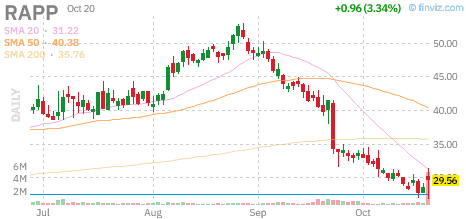
01 · Rapport Therapeutics $RAPP — RAP-219 succeeds in Phase 2 bipolar mania
RAP-219 met the primary and secondary endpoints in its Phase 2 acute bipolar mania trial, which enrolled 253 adults hospitalized with an acute manic episode of bipolar I disorder and compared RAP-219 0.75 mg once daily with placebo. At Week 3, the mean improvement in the Young Mania Rating Scale was 15.4 points with RAP-219 and 12.3 points with placebo. The difference was 3.1 points, with p=0.045. The prespecified secondary CGI-BP measure of mania severity also showed a statistically significant improvement.
The finding supports further development, with two Phase 3 mania trials expected to begin in the second half of 2027. Confirmation in subsequent trials remains important. Effect size, tolerability and reproducibility will shape the program’s prospects; development in epilepsy follows a separate clinical path. Rapport’s October 20 release, furnished with its Form 8-K.
Reading the benefit alongside the placebo response
The result becomes more informative when the absolute improvement and the difference between groups are considered together. Both groups improved during treatment. The placebo-adjusted difference is the relevant estimate of RAP-219’s additional contribution in this trial, while the total reduction describes the change experienced by treated participants. Those measures answer different questions. A large within-group improvement can coexist with a more modest difference from the control group.
The study was randomized and double-blind, and treatment took place in an inpatient setting. Its main observations cover three weeks. That provides evidence in acute mania, while longer-term experience, persistence of benefit and use in different care settings require further evaluation. The p-value’s proximity to the conventional significance threshold makes replication and the precision of subsequent estimates especially relevant. Statistical significance was achieved; the size and durability of a benefit capable of supporting a future clinical position remain development questions.
The comparison also matters for interpreting the commercial narrative. An additional treatment mechanism can be scientifically valuable without every feature of a future product being settled. A development program must connect the measured improvement to an acceptable treatment experience and to the population described by the eventual evidence. That connection will depend on the full clinical package rather than a single headline figure.
Tolerability, parallel programs and financial resources
During the treatment period, treatment-emergent adverse events occurred in 51.6% of patients on RAP-219 and 52.8% on placebo; all were mild or moderate, and no serious adverse events were reported. Discontinuations due to adverse events were 3.2% versus 0.8%, and agitation was more frequent with RAP-219 (16.7% versus 9.4%), typically in the first week and with a median duration of two days. Short exposure nevertheless provides a limited window on safety. Event frequency, discontinuations and treatment persistence become increasingly important as more patients are treated and observation extends. The company also distinguishes the three-week treatment findings from the subsequent observation period. Trial design and safety findings.
Rapport plans an End-of-Phase 2 meeting with the FDA in the first quarter of 2027 and expects to begin two Phase 3 mania trials in the second half of that year. Epilepsy is the other development axis for RAP-219: the pivotal FOCUS 1 and FOCUS 2 Phase 3 trials in focal onset seizures are enrolling, initial open-label extension data are expected in the fourth quarter of 2026, and a Phase 3 trial in primary generalized tonic-clonic seizures is expected to begin in the first half of 2027. Multiple indications can broaden the opportunities associated with a molecule, while each retains its own population, endpoints and regulatory requirements. Success in mania may strengthen interest in RAP-219; registration in epilepsy will depend on the epilepsy studies.
The company reported $436.1 million in cash, cash equivalents and short-term investments as of June 30, 2026, with operations expected to be funded into the second half of 2029. This is a dated financial position and a management runway projection. It is not an October 20 cash balance. For evaluating the stock, the useful comparison is between the disclosed resources and a schedule containing several advanced studies. Protocol changes, enrollment speed and shifting priorities can alter capital consumption. Rapport’s financial position and milestone schedule.
Next checkpoint: initial open-label extension data in epilepsy expected in the fourth quarter of 2026, the End-of-Phase 2 meeting with the FDA expected in the first quarter of 2027 and the start of two Phase 3 mania trials expected in the second half of 2027.
Principal risk: the effect size, treatment experience and reproducibility still require evaluation in subsequent studies.
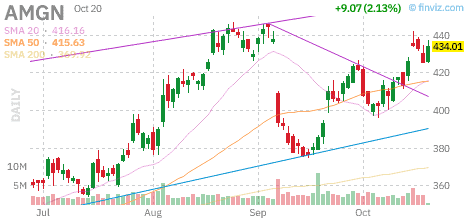
02 · Amgen $AMGN / AstraZeneca $AZN — full CROSSING results for Tezspire
The full Phase 3 eosinophilic esophagitis results showed histologic remission at Week 24 in 64.8% of patients receiving 210 mg and 68.9% receiving 420 mg, versus 3.5% with placebo. The co-primary dysphagia endpoint (DSQ) was also met at both doses in the 368-patient trial, and benefits were sustained through Week 52. The doses were administered every four weeks.
The October 20 announcement provides the complete findings from a trial whose positive topline outcome had already been announced in August. The results were presented as a late-breaking oral presentation at UEG Week 2026; the most frequently reported adverse events were nasopharyngitis, headache and diarrhea. It adds clinical detail to the product’s expansion program; the eosinophilic esophagitis indication remains under development. Amgen and AstraZeneca’s October 20 release.
Tissue findings and the patient’s experience
CROSSING offers complementary perspectives. Histologic remission measures control of inflammation in tissue samples. The dysphagia questionnaire measures the frequency and severity of difficulty swallowing. Both contribute to evaluating a disease that affects eating and daily life. A change in tissue and an improvement in symptoms can reinforce one another while remaining distinct outcomes.
At Week 24, the DSQ score fell by 18.8 points with 210 mg and 22.0 points with 420 mg, compared with 14.7 points with placebo. The control group therefore experienced an improvement that belongs in any assessment of the treatment’s additional effect. Versus placebo, the DSQ difference was −4.1 points with 210 mg (95% CI −8.1 to −0.0; p=0.049) and −7.3 points with 420 mg (95% CI −11.3 to −3.3; p<0.001), so the lower dose sat close to the significance threshold on this measure. Simply comparing two percentages does not establish the preferred regimen for a future indication. Complete CROSSING results.
The distinction is also useful when translating scientific findings into expectations. A medicine that improves tissue findings may have a different practical proposition from one that also provides sustained relief of symptoms. The complete dataset makes that discussion more concrete. It still needs to be assessed in the context of the full development package, the intended patient population and the alternatives available to clinicians.
Duration, development and the two-company context
At Week 52, histologic remission was 67.8% with 210 mg and 63.3% with 420 mg versus 5.4% with placebo, and total endoscopic remission reached 34.4% and 29.5% versus 4.1% (all p<0.001). Maintenance of benefit through Week 52 adds information about persistence. In a chronic condition, longer observation helps distinguish an initial response from control that continues over time. Treatment continuity, adverse events and experience across patient characteristics remain relevant. Regulatory and medical assessment of the complete package will determine its implications for clinical use.
For Amgen and AstraZeneca, this is a product-expansion story within broader inflammation portfolios. Compared with a small biotechnology company dependent on a single lead candidate, the economics of one additional indication sit inside much larger businesses and commercial organizations. A favorable result can broaden a product’s opportunity without determining either group’s overall financial performance. The size of a potential market is also different from the revenue attributable to each partner.
The path from evidence to financial contribution includes review of the indication, any authorization, access, prescriber adoption and continuing use. Complete results support a more substantial scientific discussion than an initial announcement of success. Estimating a financial contribution would require documented assumptions about the addressable population, net pricing, timing and the partners’ economics. These clinical findings support further development; they do not by themselves establish a sales forecast.
Next checkpoint: further development of the eosinophilic esophagitis indication.
Principal risk: converting the complete clinical package into an authorized indication and a meaningful contribution depends on additional regulatory and commercial steps.
03 · Arcus Biosciences $RCUS — new ARC-20 findings in kidney cancer
The second-line casdatifan plus cabozantinib cohort (43 patients) reached a median progression-free survival of 14.5 months, with a confirmed objective response rate of 44%, 18-month overall survival of 77% and a median follow-up of 21.3 months. Across four pooled late-line monotherapy cohorts (121 patients), median overall survival was 35 months. The underlying data are dated September 4, 2026; the announcement is dated October 20.
Arcus expects to start PEAK-20, a first-line Phase 3 registrational trial of casdatifan plus ipilimumab and nivolumab, in the fourth quarter of 2026, and also plans a registrational trial with tivozanib; PEAK-20 therefore tests a different regimen and treatment line from the cohorts reported today. The company reported no unexpected safety signals at the data cutoff. Comparisons with other treatments in the release rely on results from different studies. Randomized evidence will be needed to measure the treatment’s contribution against a control within the same trial. Safety, treatment setting and execution of the registrational program remain important. Arcus’s October 20 ARC-20 release.
Different cohorts address different questions
ARC-20 evaluates casdatifan across several settings in clear cell renal cell carcinoma. The second-line combination and monotherapy in previously treated patients involve different populations, treatment histories and clinical questions. Presenting the findings together describes the breadth of the program. Interpretation still needs to preserve the meaning of each cohort.
Median PFS identifies the point at which the estimated proportion remaining free from progression reaches half the analyzed population. Overall survival measures a different outcome and is also influenced by patients’ subsequent treatment history. A combination’s PFS median and the pooled monotherapy cohorts’ OS median are not a ranking of regimens. Clinical setting, data maturity and earlier treatments are essential to understanding what each observation adds.
Casdatifan is an investigational HIF-2α inhibitor. The company’s strategy is to develop it across treatment lines and appropriate combinations. That approach can broaden the molecule’s opportunities, while requiring evidence of its incremental contribution in each relevant association. A biologically coherent combination can still need a comparative assessment of benefit and tolerability. Arcus’s findings and development strategy.
Why the registrational comparison carries more weight than a benchmark
External benchmarks can help orient initial interest. Patients selected in different periods, centers and studies may differ in risk, previous therapy, assessment frequency and follow-up. Even a large numerical difference across studies leaves uncertainty about how much comes from treatment and how much from the populations. Randomization within a trial addresses that uncertainty more directly.
The planned PEAK-20 start therefore matters both for future evidence quality and for operational execution. A registrational program needs a definitive protocol, active sites, enrollment and resources. Timing is one dimension of the investment question; the clinical outcome is another. Encouraging cohort data can support the decision to invest in a trial without anticipating its result.
The constructive interpretation is the possibility of turning the cohort signals into a coherent body of comparative evidence. The risk is that the apparent benefit becomes smaller under more rigorous conditions or that a different balance of efficacy and safety emerges. The most useful subsequent disclosures will clarify population, comparator, endpoints and actual program progress. Those are the elements through which scientific interest becomes a measurable registrational proposition.
Next checkpoint: PEAK-20 initiation, expected in the fourth quarter of 2026.
Principal risk: cohort findings and external benchmarks require confirmation in the relevant randomized comparisons.
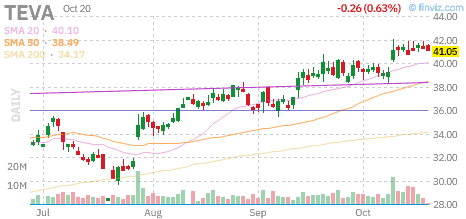
04 · Teva $TEVA / Sanofi $SNY — duvakitug maintenance in inflammatory bowel disease
The RELIEVE UCCD Phase 2b extension describes 130 patients who responded during induction: 72 with ulcerative colitis and 58 with Crohn’s disease. At maintenance Week 44, clinical remission in ulcerative colitis was 47% with 450 mg and 58% with 900 mg. Endoscopic response in Crohn’s disease was 41% and 55%, respectively. Clinical remission in Crohn’s disease was 81% and 84%, and discontinuations due to adverse events ranged from 2% to 6% across arms.
Patients were selected on the basis of their initial response and randomized between two active doses. The percentages are descriptive maintenance findings in responders, with safety reported as consistent with induction. The informative contribution is the observed duration of response within the anti-TL1A program. Teva and Sanofi’s October 20 UEG Week presentation.
The detailed UEG presentation follows the principal maintenance percentages already announced on February 17, 2026. Teva and Sanofi’s original February 17 announcement.
Initial selection changes the denominator
The extension starts with patients who have already responded during induction. The maintenance percentages therefore describe a selected population. This design addresses a concrete clinical question: how long can disease control continue in patients for whom treatment has already worked? The probability of a response in a new patient starting treatment is a different question, informed in part by the induction results.
Participants were assigned to two active doses. Numerical differences between the regimens can inform development, but the release classifies the findings as descriptive. Clinical remission in ulcerative colitis and endoscopic response in Crohn’s disease also measure different aspects of disease. Expressing both as percentages does not make the endpoints interchangeable or establish a direct comparison between the patient groups.
Durability within the anti-TL1A program
Duvakitug is an investigational antibody targeting TL1A. The announcement pairs maintenance durability with biomarker findings from the induction study, which showed reduced markers of several inflammatory pathways and, in Crohn’s disease, of tissue remodeling. In these conditions, a treatment’s clinical value can include symptom control, activity observed in tissue and the ability to sustain benefit. Tolerability becomes particularly relevant when exposure continues over long periods. UEG presentation and maintenance findings.
Duvakitug is already in Phase 3, with SUNSCAPE-1 and SUNSCAPE-2 in ulcerative colitis and STARSCAPE-1 and STARSCAPE-2 in Crohn’s disease; execution of those trials is the next test. Dose choice, enrollment size and population definitions affect trial duration, cost and interpretability. Two partners broaden the capabilities available, while value creation depends on consistent progress through those steps. A positive extension strengthens one part of the evidence; a registrational package contains additional questions.
The connection with Odyssey and Palisade today is primarily thematic. All three programs seek improvements in inflammatory bowel disease through different mechanisms and at different stages. A useful comparison examines design, endpoints and evidence maturity. Percentages in a selected maintenance population are not directly comparable with those in a small open-label induction study. That difference helps determine the weight of each announcement without constructing an artificial ranking of the medicines.
Next checkpoint: progress of the SUNSCAPE and STARSCAPE Phase 3 programs.
Principal risk: the maintenance population was selected for an initial response, and the descriptive extension compared two active doses.
The rest of the Biotech Radar
Novo Nordisk $NVO — CagriSema analysis in women from REDEFINE 1
A post hoc analysis of REDEFINE 1 in 2,309 women with obesity or overweight associated CagriSema with mean weight loss of 25.0% at Week 68, compared with 3.0% with placebo. The data were presented at The Menopause Society 2026 Annual Meeting. A second post hoc analysis of 1,902 women by menopausal status showed weight loss of 26.7%, 24.8% and 23.1% in premenopausal, perimenopausal and postmenopausal women, compared with 2.1%, 1.7% and 2.6% with placebo; Novo Nordisk describes these exploratory analyses as hypothesis-generating. The efficacy estimand assumes adherence to treatment. The October 20 announcement concerns additional analyses of a completed trial. That distinction matters when comparing the result with other populations, studies or medicines. Novo Nordisk’s October 20 announcement.
What the analysis adds
The finding in women broadens the description of a clinical population already studied. Analyses by participant characteristics can show how an overall result is distributed across groups and can help formulate further questions. A post hoc evaluation retains an exploratory role: the subdivisions are examined after the trial, and their weight depends on the original design.
The efficacy estimand addresses a particular statistical question about treatment effect under adherence. In ordinary use, discontinuations, tolerability, access and treatment persistence also matter. The 25% finding therefore belongs to the specified population, analysis and duration of observation. Generalizing it to everyone who might start treatment would require evidence appropriate to that setting. REDEFINE 1 analyses presented by Novo Nordisk.
For the stock, a favorable analysis can add to CagriSema’s scientific positioning. An economic comparison with other obesity programs must still account for trial characteristics, regimen, population and the measure used. Findings in a subgroup do not replace the overall results or studies that directly compare two treatments. A sound interpretation integrates all of that information over time.
The next layer of evaluation concerns how the treatment’s characteristics might meet patient needs and support sustained use. The size of the weight reduction, treatment experience and persistence have different implications. A medicine can produce a substantial effect in a trial and encounter barriers to access or continuity. A favorable statistical analysis does not quantify those subsequent steps. This finding broadens knowledge of a trial population; assessment of the program requires the complete body of evidence.
Odyssey Therapeutics $ODTX — OD-001 in ulcerative colitis
Odyssey presented the completed induction analysis of its Phase 2a OD-001 trial. The oral candidate selectively inhibits RIPK2 scaffolding. The analysis includes 56 efficacy-evaluable patients, and the trial met its primary endpoint, with a mean 2.4-point reduction in modified Mayo score at Week 12 (p<0.001). In the 20 mg twice-daily group (41 patients), clinical remission was 27% and clinical response 61%; in the 10 mg twice-daily group (15 patients), the figures were 20% and 40%.
The trial was open-label and lacked a concurrent placebo control. The release also says that results remain subject to change until database lock. Biomarker changes and exploratory analyses of paired colonic biopsies were described as consistent with RIPK2 scaffolding inhibition. Odyssey plans a randomized, placebo-controlled, double-blind Phase 2b monotherapy trial and a randomized, double-blind Phase 2a study combining OD-001 with vedolizumab, with topline induction results expected in the second half of 2027. Odyssey’s completed induction findings.
Connecting a biological rationale with controlled evidence
The program seeks to connect activity at the proposed mechanism with observable changes in inflammatory bowel disease. Biomarkers and biopsy analyses contribute information about that biological pathway and can help select dose, population and subsequent studies. Their value increases when they accompany a reproducible clinical benefit.
In a small open-label trial, comparison with each participant’s baseline provides an initial measure of activity. A concurrent control group allows a better estimate of the treatment’s contribution against what could occur in the same setting. Future randomization is therefore a substantial step in the reliability of the evidence. The number of evaluable patients and their distribution between doses remain integral to interpretation. Study design and complete induction analysis.
The future monotherapy and combination trials address different problems. Monotherapy measures the candidate’s effect against its planned control. A combination study must clarify the additional contribution alongside the other treatment and the resulting tolerability. Developing both approaches can broaden the platform’s opportunities, while also creating operational and financial priorities.
Odyssey has an initial signal and a reasonably defined verification path. The expected second-half 2027 results window remains management guidance. Actual initiation, enrollment, execution quality and continuity of resources will matter between now and then. The constructive case is biological activity translating into a controlled clinical advantage. The risk is that the apparent signal diminishes when a comparator and more rigorous conditions are introduced.
Revolution Medicines $RVMD — treatment begins in Phase 3 RASolve 308
Revolution Medicines began treating patients in the global Phase 3 RASolve 308 trial. It evaluates zoldonrasib with pembrolizumab and chemotherapy as first-line treatment for metastatic RAS G12D non-squamous non-small cell lung cancer.
The study is randomized and double-blind. Zoldonrasib is compared with placebo, with both added to the same pembrolizumab and chemotherapy backbone. The primary endpoint is progression-free survival. The announcement documents treatment initiation in a registrational program; the trial results will measure benefit. Revolution Medicines’ October 20 release.
The operational meaning of a registrational start
RASolve 308 moves evaluation of this combination into a registrational comparison in first-line disease. For a company developing an oncology strategy, the first treated patients mark progress from planning into execution. The work that follows includes patient selection, site participation, treatment delivery and collection of comparable observations. These are necessary steps for turning the program’s rationale into a measurable clinical answer.
Adding zoldonrasib to the same backbone used in the control group is important. The design seeks to isolate the candidate’s contribution within the protocol’s intended setting. PFS will describe control of progression, while other outcomes help assess benefit duration, survival and tolerability. Future interpretation will depend on the complete picture as well as whether a statistical threshold is met. RASolve 308 design and initiation.
For investors, an advanced trial combines opportunity with cost. It increases the possibility of generating decisive evidence while also increasing exposure to enrollment timing, spending and clinical risk. Today’s announcement primarily concerns progress along that path. Subsequent operational disclosures can show how quickly the study is executed; results will determine whether the combination delivers the hoped-for contribution.
Alvotech $ALVO — FDA approves a more productive SIMLANDI process
The FDA approved a new manufacturing process for SIMLANDI, Alvotech’s biosimilar to Humira. The company says it more than doubles drug-substance output per batch without changing the upstream manufacturing scale.
The development concerns industrial productivity and capacity. Producing the same amount in fewer batches frees capacity for other products and can improve plant utilization. The release describes comparability with the approved process while maintaining product quality, safety and efficacy. The economic effect will depend on commercial execution and the use of available capacity. Alvotech’s October 20 announcement.
Productivity as an industrial driver
In a biosimilar business, greater output per batch can affect manufacturing flexibility. Using fewer batches for the same volume can free time and productive resources for other programs. The potential consequence is a better allocation of available capacity, alongside the continuing need for product quality and reliable supply. The validation and comparability described in the release support the transition to the new process.
Output per batch, unit cost and commercial margin are different measures. Technical improvement can contribute to efficiency, while financial results depend on volumes sold, prices, costs and contractual terms. The release describes a process improvement. Quantifying its contribution to earnings would require additional financial information. SIMLANDI process approval.
Following this announcement, useful questions include the deployment of released capacity, delivery reliability and the portfolio’s commercial performance. These differ from the endpoints of a clinical-stage biotechnology company. The sector can generate value in discovery and in the ability to manufacture and distribute medicines through robust processes. The operational risk is a gap between theoretical capacity, demand and financial realization.
Early studies: signals and their limits
BioVie $BIVI — bezisterim in Parkinson’s disease. The October 20 release presents SUNRISE-PD data at the American Neurological Association meeting. The double-blind, placebo-controlled study randomized 57 patients for 12 weeks, with a primary pharmacodynamic endpoint based on blood inflammatory biomarker indices. The company highlights statistically significant motor and nonmotor improvements in the prespecified subgroup with above-median baseline platelet counts, about half of the population, while describing overall-population efficacy only as generally favoring bezisterim. The clinical endpoints are exploratory, and the subgroup result requires confirmation in subsequent studies. BioVie announcement.
The subgroup selection is central to development. A population identified in advance can help formulate a more precise hypothesis about who might benefit from treatment. Its outcome nevertheless needs to be considered alongside the entire study and the role assigned to the clinical measures. A signal involving motor and nonmotor symptoms deserves attention, while demonstrating an effect on disease progression requires a design and duration suited to that question. Twelve weeks can illuminate a short treatment period; longer-term disease modification is a different clinical proposition.
For BioVie, the next informative step is translating the observations into a program capable of testing them. Patient selection, the primary endpoint and treatment duration will influence the conclusions that can be drawn. The ANA announcement can strengthen the rationale for a development choice. Subsequent results will show whether that choice produces a reproducible benefit. This makes the company relevant for clinical monitoring while preserving the uncertainty associated with a small study. Funding and execution will also matter as the program moves toward a more definitive test of its hypothesis.
Actinium Pharmaceuticals $ATNM — initial human ATNM-400 data. The HER3-directed alpha radiotherapy was evaluated in the first three patients with metastatic castration-resistant prostate cancer, with no dose-limiting toxicities reported at the initial dose level. Escalation to the next level has begun. The release is dated October 20 and the clinical presentation October 19. The sample primarily documents initial safety and treatment distribution. A second announcement concerns preclinical lung, colorectal and ovarian cancer models. Human data, preclinical models.
An initial human experience can help establish where a treatment reaches and how patients tolerate the starting dose. For a radiotherapy directed at a tumor target, distribution and retention contribute to the rationale for continuing development. Three patients provide a very limited observation of biological variability and safety. Dose escalation explores part of that uncertainty through a gradual process, with the relationship between exposure and tolerability becoming more informative as additional patients are treated.
HER3 broadens the questions about potential applications beyond the better-known radiotherapy targets in prostate cancer. Future value will depend on the relationship among exposure, antitumor activity and toxicity in treated patients. Preclinical models of other cancers can support new hypotheses, with each indication requiring its own development evidence. The monitoring priority is therefore the evolution of clinical cohorts and the ability to connect the biological rationale with measurable human outcomes. The company’s two announcements describe different levels of evidence, and their implications depend on the stage of the work being reported.
Palisade Bio $PALI — PALI-2108 at UEG Week. The October 20 release adds translational details and revisits previously reported phase 1b findings: five patients with fibrostenotic Crohn’s disease and a mean 47.5% reduction in endoscopic disease activity after 14 days. Four patients also received biologics. The sample is small, open-label and uncontrolled. The phase 2b ASCENTRA-UC study is enrolling. Palisade Bio announcement.
The translational contribution seeks to connect intestinal drug exposure with biological activity and endoscopic observations. This is a useful connection when developing a treatment directed at the disease site: the mechanism has to reach the relevant tissue and produce a consistent effect. Early observations can help shape subsequent study design, particularly when they are collected alongside clinical and biological measures. They also help define the questions that a larger trial should be able to answer.
In fibrostenotic Crohn’s disease, the short treatment period and concomitant medicines require care when attributing the observed change to PALI-2108. The small sample can generate a hypothesis for subsequent Crohn’s development. ASCENTRA-UC concerns ulcerative colitis, a different population, and moves that branch of the program toward a broader evaluation. For the stock, enrollment, treatment continuity and controlled results will matter alongside the intestinal-delivery rationale. Clinical development must establish how consistently any apparent benefit can be reproduced under conditions suited to distinguishing the drug’s contribution.
Acrivon Therapeutics $ACRV — ACR-7280 advances toward an IND. Acrivon prioritized the oral CDK11 inhibitor ACR-7280 as its next development candidate; IND-enabling studies are underway, and the company says an investigational new drug submission remains on track for the first half of 2027. Reported tumor regressions concern animal models of acute myeloid leukemia. The next step is completing the development work required to seek the start of human testing. Acrivon’s October 20 announcement.
Candidate selection marks a transition from a series of promising molecules to a program on which development resources can be concentrated. For ACR-7280, the scientific issue is the potential of targeting CDK11, supported by activity observed in leukemia models. The operational issue is completing the work needed before clinical testing. These dimensions complement each other: a molecule active in a model also needs characteristics that support development in humans. The preclinical announcement supports the company’s selection decision while leaving human tolerability and activity to be established.
The first-half 2027 IND target provides a reference point for following execution. Submission and a possible clinical start would be distinct subsequent steps. Evaluating the program will progressively require exposure, tolerability and activity data in patients. The preclinical result supports the decision to invest in development; the risk is that biological or safety constraints alter the scope of the opportunity along the way. For an investor following the pipeline, meeting a development milestone and establishing therapeutic benefit remain different achievements with different evidence requirements.
Quoin Pharmaceuticals $QNRX — publication of the pediatric QRX003 case. The October 20 announcement concerns a paper published online on October 13: a single pediatric patient with Netherton syndrome treated for 21 months under compassionate use. Favorable observations belong to an individual case. The company expects to complete phase 2/3 enrollment by the end of 2026 and report results in the second quarter of 2027. Quoin announcement.
The long observation of one patient helps describe a clinical experience and makes the therapeutic rationale accessible to a specialist community. Peer-reviewed publication allows the case to be examined in detail, while the sample remains one individual. Duration of exposure and generalizability are different qualities of evidence. A long case report can supply information about that experience without resolving how reliably comparable outcomes would occur across a broader patient population.
The phase 2/3 program will offer a broader framework than this individual experience. Enrollment, endpoint assessment and continuity of follow-up are the steps to watch through the expected second-quarter 2027 results window. For Quoin, the case can support clinical interest and knowledge of the product. Consistency across multiple patients will determine the program’s weight. Announced timing represents a development objective and can change with execution. The most substantial future information will address both the extent of benefit and the reliability with which the program can demonstrate it.
Creative Medical $CELZ — Ultrasome in knee osteoarthritis. The October 20 release revisits data presented October 10: 28 of 30 patients met the response criteria of an open-label, single-arm pilot. The group’s mean pain score declined by approximately 65% at six months. The 93% figure describes the proportion of responders; 65% describes the change in the average pain score. Creative Medical announcement.
Distinguishing response rate from mean change makes the announcement easier to interpret. A large proportion of patients reaching a response criterion describes how frequently that criterion was observed. A reduction in average pain describes the aggregate trajectory of the group. These are complementary observations that leave questions about the distribution of individual responses and the treatment’s specific contribution. The percentage measures answer different questions, even when both are drawn from the same group of patients at the same follow-up point.
An open-label pilot can guide the next study’s measures, duration and feasibility. Measuring comparative benefit would require a design suited to separating treatment from other influences on symptoms and assessments. For the stock, more substantial subsequent announcements would clarify how the signal will be tested more rigorously. Laboratory data and product characterization support development with a role distinct from clinical observations. The pilot’s results can justify additional investigation while the strength of a future investment case will depend on how that investigation is designed, funded and executed.
Studies, events and corporate transactions
Oncolytics $ONCY. On October 20, the company announced a trial-in-progress abstract on REO 033 at ESMO: pelareorep plus FOLFIRI/bevacizumab versus FOLFIRI/bevacizumab in second-line RAS-mutated, microsatellite-stable metastatic colorectal cancer. The design calls for 30 patients per arm, with objective response as the primary endpoint. Referenced REO 022 findings belong to the earlier study. Oncolytics announcement.
REO 033 matters because it introduces a contemporary control into a story also supported by earlier historical comparisons. Objective response as the primary endpoint measures antitumor contribution under the protocol. Subsequent outcomes and tolerability will help establish whether a response difference accompanies a broader clinical advantage. Biomarker collection can add information about how treatment behaves. The common treatment backbone allows the randomized comparison to examine the incremental contribution of pelareorep within that particular population and regimen.
A trial-in-progress abstract makes the experimental question clearer and can build awareness of the program among clinicians. Its presence at a congress documents that scientific and communication step, while enrollment must generate the observations needed for the comparison. For Oncolytics, execution and resources remain central during the wait. The decisive information will concern pelareorep’s measured contribution relative to the same background treatment in the control arm. The earlier study helps explain the rationale for pursuing the question, while the current study is intended to provide its own evidence.
Eloxx $ELOX. The company finalized the phase 2 EXPRESS design for exaluren in nonsense-mutation autosomal dominant polycystic kidney disease: approximately 60 patients, placebo-controlled randomization and 52 weeks of treatment. The first patient is expected in the third quarter of 2027, with 52-week data in the first half of 2029. This is a development update with a long horizon. Eloxx’s October 20 announcement.
The htTKV endpoint describes height-adjusted total kidney volume and is used in the design to track anatomical disease evolution. A 52-week duration aims to provide a picture over time, alongside the other planned observations. For a program selected through specific mutations, identifying eligible patients is part of clinical execution. The targeted population and the chosen measures shape what the trial can establish about the treatment’s potential role.
The dates show an extended path. Between finalizing the design, treating the first patient and obtaining one-year results are operational stages with their own risks. For the stock, the rationale must coexist with development timing and funding needs. Appointment of a chief medical officer strengthens the announced organization. The next clinical step remains the actual start and then progress of the study. Investors can reassess the program as those uncertainties narrow, while recognizing that a finalized protocol is an enabling milestone on a longer route to clinical evidence.
NovaBridge $NBP / Visara. Majority-owned Visara obtained an exclusive option to acquire worldwide rights to the YOL104 program, including YOL104-2 for ocular surface squamous neoplasia. The agreement provides an option; acquisition depends on exercise and completion of the transaction. October 20 announcement.
The option structure lets Visara evaluate a program before assuming the full commitment associated with an acquisition. The initial payment purchases a contractual right. Exercise, further payments and possible development belong to later stages. This flexibility can help capital allocation, while value creation depends on economic terms and asset quality. An option can preserve access to an opportunity while management assesses the evidence and requirements associated with taking it forward.
For NovaBridge, the relationship between the subsidiary and the wider portfolio also matters. A potentially additional program can diversify ophthalmic development, with resources and priorities that need balancing. The next concrete information would concern option exercise and development choices. Until then, the verified development is exclusive access to the opportunity on the announced terms, accompanied by the risk that evaluation or conditions fail to lead to acquisition. The announcement therefore supplies a corporate-development milestone whose ultimate clinical and financial consequences remain dependent on subsequent decisions.
Myriad Genetics $MYGN. The company agreed to sell its prenatal health testing business to Labcorp for $210 million in cash, plus inventory value at closing. Completion is expected by early 2027, subject to conditions and approvals. The story concerns reallocation of the diagnostics portfolio. Joint October 20 announcement.
The sale changes the business perimeter and potential capital availability at completion. Assessing the economic benefit requires distinguishing the transaction price, cash actually received and operating flows from the divested activity. Proceeds can support other priorities, while disposing of a business also changes future revenue and costs. The strategic rationale needs to be assessed through that combination, including what remains within Myriad and how management allocates the resulting resources.
A definitive agreement is more advanced than an intention or negotiation, while closing remains a subsequent event. Approvals and conditions can affect timing and completion. For Myriad, the next informative developments are closing, use of proceeds and the economic profile of retained operations. The announcement thus creates a diagnostics portfolio-allocation theme with financial questions different from those raised by a clinical trial. Its importance will emerge through the completed transaction and the performance of the business that remains afterward.
PDS Biotechnology $PDSB. Three board appointments were announced, effective October 18: John Dawson, Deborah Ramsdell and Bruce Wendel. The release connects stronger governance with development and partnership objectives. PDS’s October 20 announcement.
A board change can influence available expertise, oversight and the ability to discuss strategic transactions. Its effect on results depends on subsequent decisions and execution. The release’s connection with clinical development and partnerships identifies stated priorities without determining in advance which transaction will occur or on what terms. Directors’ experience can be relevant to those priorities, while progress still needs to be demonstrated through the company’s actions.
Following PDS therefore means connecting governance with observable developments: development choices, study designs, signed agreements and resource management. The appointments constitute a corporate event. Their practical importance will become clearer through the decisions that follow. Partnership objectives remain objectives until an agreement is announced, and stronger governance does not by itself change the efficacy evidence or establish the economics of a possible future transaction.
CytoDyn $CYDY. Robert E. Hoffman’s appointment as CEO becomes effective October 20, following the October 19 announcement. Jacob Lalezari, CEO since November 2023, moves to Head of Research and Translational Sciences. CytoDyn announcement.
Separating corporate leadership from research responsibilities can clarify execution priorities. A chief executive integrates development, resources and potential agreements; scientific leadership maintains attention to program quality. The announced role changes describe this organization, while success will depend on subsequent outcomes. The management transition can be followed through the consistency of the development plan and the way available resources are assigned to it.
For shareholders, the important information will be alignment among clinical objectives, timing and capital availability. Appointing a CEO does not automatically establish a partnership or acquisition. Leronlimab will continue to be assessed through relevant studies, data and regulatory steps. Lalezari’s continuing research role is part of the corporate fact. Interpretations about possible future transactions remain scenarios until concrete agreements are announced. The announcement’s significance should therefore be tested against execution rather than inferred from the leadership change alone.
Moleculin $MBRX. The 1-for-20 reverse stock split announced October 16 becomes effective October 20. Price changes need to be read on a split-adjusted basis. The October 20 CEO Corner revisits MIRACLE progress and the expectation of full Part A data in the first quarter of 2027. The split changes share count and unit price without adding new capital. Moleculin’s split announcement, October 20 CEO Corner.
The reverse split consolidates existing shares into fewer securities. The nominal price change arising from the transaction does not measure an increase in the economic value of the holding. This distinction is also necessary when reading charts, historical comparisons and volume: the series must be consistent with the new share basis. The transaction addresses the unit structure of the equity while leaving clinical development dependent on its own results and resources.
MIRACLE progress and capital structure are two parts of the same company assessment. The first concerns the ability to generate evidence on Annamycin; the second concerns the resources and conditions under which the path is pursued. CEO Corner revisits development information and helps identify management’s priorities. The most relevant clinical step remains availability of full data within the stated window, followed by an appropriate assessment of results and the next stage. A corporate presentation can explain that plan, while the data will determine the strength of the evidence supporting it.
Scinai $SCNI — contracts, financing and work to convert into revenue
The October 20 CEO letter distinguishes several components of the CDMO program. The new agreement includes approximately $5.1 million of committed base services, subject to execution and contractual conditions. Total Committed Customer Orders reported by the company were approximately $8.1 million as of October 20. This measure includes orders already invoiced or recognized during the year and therefore is not remaining backlog. For work still to be performed, revenue and collections depend on progress and contractual terms.
The company also describes future phases with an indicative value of approximately $5.85 million. These activities remain uncommitted and require the relevant work packages to be defined and activated. Keeping them separate from the base agreement helps measure the opportunity without adding potential work to services already ordered. Their value depends on the customer’s project progress and its decision to activate subsequent phases. The difference affects both the certainty of demand and the timing of any resulting revenue.
On capital, Scinai reports approximately $5.3 million in combined net proceeds from recent transactions described in the letter. Its runway forecast into late 2027 depends on the operating plan and expected customer payments. A possible extension associated with subsequent activities retains further conditions. Completed financing therefore sits alongside an operating forecast, with different levels of certainty. October 20 shareholder letter.
For the stock, the central question is the ability to convert work into margins and cash flow. Order growth can support facility utilization while requiring technical execution, timely delivery and collection. Financing supplies resources through that stage, with dilution already associated with the transactions. Subsequent operating and financial communications will help establish how much of the stated improvement becomes realized performance. The commercial opportunity and the funding position should be assessed together, using the distinct definitions attached to committed services, reported orders, potential phases and expected cash receipts.
Other October 20 developments
- Solid Biosciences $SLDB: announced ESGCT presentations on gene therapy development, delivery and manufacturing research. Company release.
- Neurogene $NGNE: announced ESGCT presentations concerning NGN-401, MECP2 expression and transgene regulation in Rett syndrome. Company release.
- NanoViricides $NNVC: reported NV-387 safety and toxicology findings in juvenile mice, a preclinical development update. Company release.
- Vistagen $VTGN: selected GATC Health to apply predictive AI models to clinical programs and study design. Company release.
- Atrium Therapeutics $RNA: Yakira Capital called for a strategic review, tighter spending controls and an explanation of a dilutive financing. Those assessments belong to the shareholder that issued the letter. Shareholder release.
- YD Bio $YDES: partnered with EG BioMed and JoiiUp on AI-driven cancer-risk assessment for corporate wellness programs. Company release.
- Insmed $INSM: appointed two new directors. Company release.
- Evogene $EVGN: announced participation in a U.S. East Coast AI drug-discovery roadshow. Company release.
- Financial calendar announced on October 20: Wave $WVE reports third-quarter results on October 27; Madrigal $MDGL, BioNTech $BNTX, Ardelyx $ARDX and Zevra $ZVRA on November 3; Harmony $HRMY on November 4; Innate $IPHA and Vera $VERA on November 5, with Vera also hosting an ASN Kidney Week investor webcast on October 22; Scholar Rock $SRRK on November 10.
Calendar sources: WVE, HRMY, SRRK, MDGL, BNTX, ARDX, ZVRA, IPHA, VERA.
October 19 context that remains relevant
| Company | October 19 development | What to watch |
|---|---|---|
| Disc Medicine $IRON | Phase 3 APOLLO met both coprimary and all secondary endpoints; a $350 million offering was proposed after the session. | Planned NDA resubmission by year-end 2026 and financing terms. |
| Silence Therapeutics $SLN | Agreement to be acquired by Merck KGaA for $20 per ADS, approximately $1.3 billion in equity value. | Transaction conditions and expected first-quarter 2027 closing. |
| EyePoint $EYPT | LUCIA missed its primary noninferiority endpoint; approximately 53% workforce reduction and a focus on diabetic macular edema. | Restructuring execution and pivotal DME data expected in the fourth quarter of 2027. |
| Veradermics $MANE | Part A of VDPHL01 Study 304 met primary and secondary endpoints in 536 men. | Subsequent development and the regulatory path. |
| GSK $GSK | FDA granted accelerated approval to Jemperli for adults with stage II/III locally advanced MSI-H or dMMR rectal cancer. | The molecularly selected indication and accelerated approval’s confirmatory requirements. |
| CorMedix $CRMD | REZZAYO supplemental NDA accepted for Priority Review in prevention of invasive fungal disease. | Announced first-quarter 2027 PDUFA target. |
| Evaxion $EVAX | Update on sustained responses among patients reaching three-year EVX-01 follow-up. | October 24 ESMO poster and October 29 webinar; interpretation of the small sample. |
Sources: Disc, APOLLO, Disc, proposed offering, Silence, EyePoint, Veradermics, FDA, Jemperli, CorMedix, Evaxion’s October 19 release.
Merck KGaA, Darmstadt, Germany, is separate from Merck & Co., which trades in the United States under MRK. All developments in this table were announced on October 19, 2026.
Disc Medicine $IRON — results quality and capital for the next stage
APOLLO combines a biological endpoint with a measure of patient experience: PPIX reduction and pain-free time in sunlight. Agreement between different measures strengthens interest in the program. The regulatory path retains its own steps, including the company’s planned resubmission. The offering proposed after the results adds the question of resources for development and potential commercialization. For shareholders, financing terms and instruments will determine actual dilution. Clinical results and financing therefore belong in the same assessment, with trial success, regulatory submission and a completed capital raise representing different milestones. APOLLO results.
Silence Therapeutics $SLN — an agreement changes the question for shareholders
A cash acquisition shifts attention from pipeline development alone toward the probability and timing of completion. The announced price is the contractual reference, while the economic outcome for a shareholder depends on closing under the expected terms. Conditions and timing affect the relationship between the trading price and the consideration offered. The pipeline remains the industrial rationale for the transaction, while the closing calendar becomes central. Identifying the buyer correctly also prevents an inappropriate connection with U.S.-based Merck & Co. The announced expected closing window is the first quarter of 2027, subject to the agreement’s conditions. Silence/Merck KGaA agreement.
EyePoint $EYPT — clinical risk becomes resource reallocation
LUCIA’s outcome changes priorities because the primary requirement defines the question the study was designed to answer. Secondary findings can inform subsequent research, while the missed noninferiority endpoint remains the fact guiding this assessment. Workforce reduction and concentration on DME show an operational response to that change. For the stock, restructuring execution, required resources and results from the remaining priority program will matter. Moving from an unsuccessful indication toward a different trajectory takes time and additional evidence. Investors following the company will need to connect clinical expectations with the financial and organizational capacity to reach the next meaningful results window. EyePoint strategy announcement.
Veradermics $MANE — formulation and consistency of effect
VDPHL01 is an investigational extended-release oral formulation of minoxidil. Results from the study in men support the program, with regimens and measures requiring assessment together. Hair count and the patient’s perception of improvement describe complementary dimensions of clinical usefulness. Formulation can contribute to positioning, while exposure, tolerability and use over time remain relevant to development. The male study’s conclusions belong to that population. Development in other populations requires the results of their respective studies. The next stage will determine how the study’s evidence fits into the broader clinical and regulatory package and the requirements for potential practical use. Veradermics’ October 19 Study 304 release.
GSK $GSK — a selected indication and confirmatory evidence
Jemperli’s accelerated approval concerns a population defined by molecular characteristics and disease stage. That precision is essential to understanding the announcement’s scope. The registration evidence comes from the single-arm AZUR-1 study, while confirmatory requirements form part of the accelerated approval pathway. Assessing the economic contribution will require consideration of access to appropriate diagnosis, patient identification and clinical adoption. The indication’s scientific importance and its effect on the finances of a large pharmaceutical group are different questions, both dependent on context. The FDA’s specified population is the appropriate starting point for evaluating the authorized use and the subsequent evidence requirements. Official FDA notice.
CorMedix $CRMD — a review path with an outcome still ahead
Acceptance of the supplemental NDA provides a regulatory calendar defined at least at the quarterly level. Priority Review describes the path assigned to the application; the review will assess the package supporting the requested indication. Prevention in patients undergoing allogeneic transplantation is an essential part of the announcement and defines the proposed use. For investors, the next step is the FDA outcome, followed by possible commercial implementation. Until then, the conditions of a potential authorization and the expansion’s economic scope remain open. The announced first-quarter 2027 target supplies a monitoring window without establishing approval or a specific day beyond the company’s stated timing. CorMedix announcement.
Evaxion $EVAX — following patients while preserving the denominators
Longer follow-up can add information about response duration, particularly when a program seeks to change cancer control over time. In small studies, it matters which patients reach each assessment and what treatments they received. The EVX-01 experience includes an earlier combination with pembrolizumab and an extension with its own characteristics. Persistence observed among patients reaching the three-year assessment does not establish benefit across the entire original population. The poster and webinar will offer additional opportunities to evaluate program details and prospects. Those details will help place durability observations in the context of the number followed, treatment history and the study’s design limitations. Evaxion update.
Upcoming events
- October 20, 1–4 p.m. Eastern / 7–10 p.m. Italy: REGENXBIO $RGNX investor event on sura-vec. Pivotal ATMOSPHERE/ASCENT data remain expected in the fourth quarter of 2026 under company guidance. REGENXBIO hub with the October 12 announcement.
- October 22: Oculis $OCS presents ACUITY biomarker analyses of NfL and GFAP involving privosegtor in optic neuritis. Oculis’s October 20 announcement.
- October 24 and 29: Evaxion’s ESMO poster and webinar on EVX-01.
The day combines clinical evidence of different strengths with development milestones on different timelines. RAP-219 supplies a randomized result in mania; casdatifan and OD-001 require subsequent testing in the relevant controlled studies. Alvotech adds industrial progress, while early programs retain substantial risks around clinical confirmation and financing. Following the next milestones means matching each announcement to the question its evidence can answer and to the resources required for the stage that follows.
Informational and educational content prepared with AI support and checked against the sources indicated. Interpretations are blog commentary; company forecasts remain forecasts. This content is not financial advice or an investment recommendation. Readers should make their own assessments and consult an authorized adviser when appropriate.