01 The COGT investment question before two FDA decisions
Cogent Biosciences is approaching a transition that could change how investors evaluate the company. Its lead medicine, bezuclastinib, remains investigational, but two applications have target action dates before the end of 2026. The November 30 review concerns treatment with sunitinib for gastrointestinal stromal tumors, or GIST, after prior imatinib. The December 30 review concerns nonadvanced systemic mastocytosis. An additional application in advanced systemic mastocytosis has a June 29, 2027 target. These are three clinical settings and three regulatory decisions, not three independent molecules or three guaranteed launches. [3] [4]
The distinction matters for both upside and risk. Successful development of a single compound in several settings can spread research and manufacturing investments across a broader commercial base. Physicians also gain a larger body of experience with the molecule. However, a manufacturing problem, a newly recognized safety issue or a financing constraint could affect several opportunities together. Adding separate indication valuations without recognizing their shared dependence on bezuclastinib would make the portfolio appear more diversified than it actually is. Diversification by indication helps, but does not eliminate concentration in one asset.
The clinical case is supported by different kinds of evidence. PEAK measured progression-free survival against an active treatment in GIST. SUMMIT measured symptoms against placebo added to supportive care in nonadvanced mastocytosis. APEX assessed responses in advanced disease using defined criteria. A favorable result in one endpoint does not automatically answer questions about another: symptom improvement is not a demonstrated survival benefit, and an objective response rate does not establish superiority to a treatment that was never randomized against the investigational drug. The chapters below preserve those distinctions when discussing commercial potential. [1]
The financial case also requires more than the headline cash number. Cogent reported substantial resources at June 30 and raised additional equity capital afterward. It is nevertheless spending heavily on development and launch preparation, carries convertible debt and has multiple categories of potential equity claims. An approval could improve the expected value of the business without immediately making it profitable. Investors need to follow net sales, access, duration of treatment, retained margins and operating costs before concluding that regulatory progress has become durable cash generation.
This hub therefore treats COGT as a company approaching potentially consequential regulatory events with meaningful clinical support and meaningful remaining uncertainty. A constructive thesis rests on useful labels, disciplined commercialization and a sustained clinical benefit that supports continued treatment. A cautious thesis emphasizes expectations already reflected in a multibillion-dollar valuation, shared asset risk, competition and future dilution. Neither scenario determines the next share-price move. The relevant test is whether new evidence changes the expected amount, timing or reliability of cash ultimately available to shareholders.
02 Cogent Biosciences: business, leadership and development model
Cogent Biosciences, Inc. develops precision therapies for diseases associated with defined genetic alterations. The company identifies Waltham, Massachusetts and Boulder, Colorado as its principal locations, combining corporate and development activities with a research organization. Its common stock trades on Nasdaq under COGT. Andrew Robbins is president and chief executive officer in the current disclosures reviewed for this report. The official investor-relations site and SEC filings provide the authoritative record for corporate developments, capitalization and financial statements. [1] [2]
The operating model joins a late-stage lead program with an internal discovery portfolio. Bezuclastinib is the immediate regulatory and prospective commercial focus, while other programs address ErbB2, PI3Kα, KRAS and JAK2 alterations. That combination offers a possible route beyond dependence on one medicine, but it also creates competing demands on resources. Late-stage trials, launch preparation and early research consume capital on different schedules. A well-funded balance sheet gives management choices; it does not make those choices free or remove the need to prioritize programs according to their evidence and likely returns.
Commercial preparation has moved beyond planning presentations. In its August results, Cogent said it had completed onboarding of the customer-facing organization, including commercial and medical field personnel. The September supply agreement with Hovione provides another concrete preparation step. Those actions support readiness if the FDA grants an approval. They also mean that expenses can precede revenue. A delayed decision or a narrower-than-expected label would therefore affect the return on investments already made, even if the underlying science remained useful. Preparation and successful execution are related but separate milestones. [2] [8]
The company does not yet have an approved bezuclastinib product generating recurring commercial sales in the verified record. It should consequently be assessed differently from a mature pharmaceutical business with established product margins. Current losses reflect a development and preparation phase, while future profitability depends on assumptions that have not been demonstrated in reported sales. A low earnings multiple is not available as a shortcut because there are no positive recurring earnings to capitalize. Investors must instead evaluate the quality of evidence, the prospective economic opportunity and the resources required to reach it.
Corporate execution will become easier to measure if launches occur. Useful indicators would include the number of patients starting treatment, access and reimbursement progress, net revenue, treatment persistence, gross-to-net deductions and the expense trajectory. Not all companies disclose every metric, so readers should distinguish reported indicators from inferred ones. Management statements about readiness are informative, but actual operating results provide the stronger test. This report uses dated corporate statements to describe current preparation while leaving future launch performance explicitly unresolved.
03 Why KIT biology supports the bezuclastinib program
Bezuclastinib is a selective tyrosine kinase inhibitor designed to inhibit KIT D816V and other mutations in KIT exon 17. KIT is a signaling protein whose abnormal activation can contribute to disease. In systemic mastocytosis, the program targets a biological driver of abnormal mast-cell accumulation and activity. In advanced GIST, KIT mutations and acquired resistance patterns provide a rationale for targeted treatment. These scientific relationships explain why the same molecule is being developed across different diseases, but they do not make the diseases interchangeable or establish a single clinical benefit applicable to all patients. [1]
The central therapeutic idea is to inhibit disease-relevant signaling while limiting activity that could cause unwanted effects. Selectivity is a pharmacological property supported by laboratory and clinical observations; it is not a synonym for absence of toxicity. Exposure, concomitant treatment, baseline organ function and the disease itself can influence the observed safety profile. A drug described as selective can still produce clinically important liver-enzyme changes, blood-count abnormalities or other adverse events. An investment analysis should therefore examine actual trial safety tables alongside the mechanistic explanation rather than treating the explanation as a substitute for them.
In GIST, Cogent developed bezuclastinib with sunitinib rather than presenting the lead Phase 3 result as monotherapy. The combination strategy attempts to address a broader resistance problem than one agent alone. Economically, this means the product proposition includes the effectiveness and tolerability of a treatment regimen. Clinicians and payers may consider how patients manage both components, whether monitoring is practical and what happens when dose modifications are necessary. It would be misleading to attribute every observed effect to bezuclastinib alone when the randomized intervention was the combination. [1] [5]
Mastocytosis raises different questions. Patients with nonadvanced disease can have substantial symptoms even when their clinical course differs from that of advanced disease. Symptom burden and quality of life are therefore relevant treatment outcomes, not merely secondary considerations. In advanced disease, response definitions also incorporate clinically important manifestations of organ involvement and pathology. The appropriate benefit-risk assessment depends on which population is being treated. A toxicity rate from one population cannot be transferred mechanically to another with different baseline risks, dosing and concomitant therapies.
Biomarker changes add useful biological evidence. Reductions in serum tryptase, bone-marrow mast cells or KIT variant allele frequency can support a coherent picture of target engagement and disease activity. They are not identical to symptom resolution, improved survival or elimination of the disease. The strongest interpretation links biomarker findings to the specific clinical outcomes measured in the same study and acknowledges where longer follow-up is needed. That discipline helps separate a convincing mechanistic story from claims of cure or superiority that the available evidence does not establish.
04 PEAK: randomized evidence in previously treated GIST
PEAK compared bezuclastinib plus sunitinib with sunitinib alone in patients with imatinib-resistant or intolerant GIST. This active-control design is central to the result: the question was whether the new regimen improved outcomes over an established treatment, rather than whether a drug produced responses in an uncontrolled series. The detailed presentation used a September 30, 2025 cutoff for the pivotal efficacy analysis. The May 2026 presentation date should not be confused with the date through which those particular data were collected. [1] [5]
Blinded independent central review found median progression-free survival of 16.5 months with the combination and 9.2 months with sunitinib. The hazard ratio was 0.50, with a 95% confidence interval of 0.39 to 0.65 and p<0.0001. Objective response rates were 46% and 26%, respectively. Overall-survival results were still immature. The progression-free-survival finding is therefore meaningful evidence about delaying progression or death as defined by that endpoint; it must not be rewritten as proven doubling of life expectancy or an established overall-survival benefit. [5]
The distinction between a hazard ratio and a median is also useful. The hazard ratio summarizes relative event risk over the analyzed follow-up under the statistical model. The medians identify the time at which the estimated progression-free proportion reaches one half. Neither number means that every individual receives the same additional number of months. Some patients progress earlier, others remain on treatment longer, and the data contain uncertainty. An investment model can recognize a clinically important treatment effect without converting a population summary into a promise for every treated patient.
Safety is part of the same decision. Grade 3 or higher ALT/AST elevations were reported in 10.8% of combination recipients versus 1.4% with sunitinib. Treatment-related discontinuations were 7.4% versus 3.8%. Hypertension and neutropenia were also among the important events. These observations do not negate the efficacy result, but they prevent describing the two regimens as having identical safety. Dose modification, laboratory monitoring and discontinuation can influence actual duration of treatment, patient selection and the commercial experience after any approval. [5]
The separate first-line exon 9 extension is an earlier opportunity. Cogent described a single-arm cohort of 40 patients with limited or no prior imatinib exposure, informed by a small mutation-defined subgroup in PEAK. This is not the randomized second-line population supporting the pending application, and it is not an approved first-line indication. Its value depends on prospective results and a subsequent regulatory path. Including it as unqualified near-term sales would bring an unproven opportunity forward in time and overstate the evidence presently available. [1] [2]
05 SUMMIT: symptoms, biomarkers and the limits of extension data
SUMMIT Part 2 evaluated nonadvanced systemic mastocytosis in patients whose symptoms were not adequately controlled by best supportive care. The randomized comparison assigned 119 participants to bezuclastinib and 60 to placebo, with supportive care in both groups. The principal symptom assessment ran for 24 weeks. A patient-reported symptom endpoint is appropriate to a disease in which daily burden matters, but its interpretation depends on the instrument, starting burden and comparator. It is not interchangeable with the progression-free-survival endpoint used in GIST. [6] [11]
The placebo-adjusted least-squares mean difference in the MS2D2 total symptom score was −8.9 points, with p=.0002. Reported mean changes were −24.3 points, or 43%, in the active group and −15.4 points, or 29%, in the placebo group. These are improvements from each group’s baseline; they do not mean a 43-percentage-point advantage over placebo. The substantial placebo-group improvement reinforces why the randomized comparison is more informative than quoting the active arm’s improvement in isolation. [6] [11]
Longer follow-up provides a different kind of information. In the open-label extension, patients continuing treatment had further symptom improvements reported at 48 weeks. Once there is no longer a blinded concurrent placebo comparison, however, the analysis cannot carry the same causal interpretation as the randomized period. Continued participants can differ from those who discontinue, and expectations or other changes can influence reported symptoms. Extension findings can support durability and generate useful clinical questions without being promoted as a second randomized demonstration of treatment effect.
Consensus was used to retrieve the Rein and colleagues record summarizing the primary SUMMIT analysis. The retrieved item is a conference abstract in NCODA Oncology and Hematology Meeting Abstracts, associated with the ASH presentation, rather than a full independently reviewed clinical-trial manuscript. It supplies a scientific research record consistent with the disclosed design, but its format limits the amount of methodological detail available. Readers should not mistake a search platform’s inclusion of an item for validation of every sponsor interpretation or for access to a complete patient-level dataset. [11]
The safety record includes hair-color changes, altered taste, nausea and transaminase elevations. Treatment-related discontinuations were reported in 5.9% of bezuclastinib recipients in the disclosed analysis. For a chronic disease, tolerability can affect willingness to start and continue treatment even when an event is not medically severe. Commercial uptake will therefore depend on the complete benefit-risk proposition, the eventual label and available alternatives. The trial supports a meaningful application; it does not establish that every symptomatic patient will be eligible, prefer the medicine or remain on it indefinitely. [6]
06 APEX: preserve the response definitions and denominators
APEX addresses advanced systemic mastocytosis, including aggressive systemic mastocytosis, mastocytosis with an associated hematological neoplasm and mast-cell leukemia. These patients differ clinically from the nonadvanced population in SUMMIT. The June presentation reported data through March 31, 2026 for 81 patients treated with the 150 mg regimen. The advanced-disease application was subsequently accepted with a June 29, 2027 target action date. That later acceptance supersedes earlier statements about a planned submission; it does not move the review into the 2026 calendar. [1] [4] [7]
The primary response analysis used modified IWG-MRT-ECNM criteria in 68 evaluable patients. The reported response rate was 65% when complete response, complete response with partial hematologic recovery, partial response and clinical improvement were included. A separate pure pathological response analysis included 81 patients and produced an 81% response rate using its own definition. The denominators and response categories differ. Calling 81% the primary response rate or comparing it directly with another trial’s differently defined rate would alter the meaning of the disclosed evidence. [7]
This is more than a statistical technicality. Response criteria determine which manifestations must improve, how those improvements are confirmed and which patients can be evaluated. Two percentages can look directly comparable while answering different questions. The correct investment interpretation starts with what was measured, then asks whether the outcome is clinically meaningful and sufficiently durable to support a regulatory and commercial proposition. It does not select the highest available percentage and present that number as a universal measure of efficacy.
The dataset also showed reductions in disease markers and encouraging follow-up estimates. Nevertheless, the median progression-free and overall-survival results were immature at the disclosed cutoff. Observed survival proportions in a noncomparative development program do not establish a survival advantage over a competing therapy. Baseline disease mix, prior treatment and follow-up can materially affect such comparisons. The pathology observations support biological activity, while comparative clinical superiority remains a separate question that these data do not answer on their own.
Adverse events require the same disease-specific reading. Blood-count changes and liver-enzyme elevations appear in the APEX safety description, alongside hair-color and taste changes. Advanced disease itself and associated hematological conditions can complicate attribution and management. For investors, the practical issue is the eventual treatment population, monitoring requirements and physician confidence in managing the regimen. APEX broadens the potential opportunity, but it should remain a distinct 2027 regulatory asset in the calendar and should not be counted as an approved source of near-term revenue. [1] [7]
07 PDUFA dates, review designations and possible regulatory outcomes
The November 30, 2026 PDUFA target belongs to bezuclastinib with sunitinib in GIST after imatinib. The FDA accepted that application with Priority Review, following earlier Breakthrough Therapy designation and Real-Time Oncology Review participation. These mechanisms concern the development and review process. They do not certify approval, determine the final prescribing information or eliminate the possibility that additional information will be requested. An accepted application has crossed an important procedural threshold, but it remains under substantive review. [3]
The December 30, 2026 target relates to nonadvanced systemic mastocytosis. The September announcement separately establishes June 29, 2027 for advanced disease. Keeping the three dates attached to their precise indications is essential. A favorable decision in one setting may inform confidence in the molecule, yet different doses, populations, endpoints and benefit-risk judgments can produce different labels or timelines. The calendar should therefore record each action independently and update only when an actual new regulatory disclosure supports the change. [4]
The company reported that the FDA did not then plan an advisory committee and had not identified potential review issues. This is a dated communication, not a promise that no issue can arise later. The absence of a scheduled committee also should not be converted into a numerical approval probability. The information is relevant because it describes the review status at that time, but the agency’s final decision rests on the full application and the review process, including matters that may not be publicly described in advance. [3] [4]
A favorable outcome would require careful reading beyond the approval headline. The authorized population, prior-treatment conditions, dosing, contraindications, warnings, monitoring and any postmarketing commitments can influence the size and cost of the commercial opportunity. A broad analyst sales estimate based on a different assumed label may need revision. Even if the indication matches expectations, launch timing and reimbursement can affect the rate at which an approval produces revenue. Approval reduces a major uncertainty while leaving several economic uncertainties unresolved.
An unfavorable or delayed outcome would require the same factual discipline. The reasons could have different implications for additional studies, manufacturing work, timing and spending. Without a disclosed explanation, it would be speculative to label a setback minor or predict a quick resubmission. The relevant response is to identify what the agency or company actually states, preserve the distinction between completed actions and proposed next steps, and revise the cash and commercial timeline accordingly. The existence of multiple applications creates more opportunities, but it does not justify assuming that one result predetermines the others.
08 Competition and the commercial meaning of clinical differentiation
Cogent is not entering an empty therapeutic landscape. The FDA’s approval record includes avapritinib, marketed as AYVAKIT, for advanced systemic mastocytosis and for adult indolent systemic mastocytosis. Those established approvals create a relevant competitive context for a potential bezuclastinib launch. The exact prescribing conditions must be checked in the applicable current label rather than inferred from a broad disease name. An existing treatment can have different approved populations, safety requirements or clinical evidence from a new applicant. [10]
The key question is how physicians and patients would choose among available options. Factors may include symptom control, disease manifestations, prior treatment, adverse events, monitoring burden, access, familiarity and individual response. Those factors do not reduce to a single response percentage drawn from separate trials. Cross-trial comparisons are particularly fragile when starting symptom severity, disease mix, dose, follow-up or endpoint definitions differ. This report does not claim superiority to avapritinib from SUMMIT or APEX because those programs do not provide the necessary randomized head-to-head evidence.
Cogent’s avapritinib-switch cohort may provide useful information about a population with prior exposure, but it has a distinct evidentiary role. The August update said enrollment was complete and preliminary data were expected by year-end. That is a prospective company timetable, not a completed result. A switch cohort can help characterize activity and tolerability after another medicine, while selection effects and lack of randomization limit causal comparisons. It should not be described in advance as proof that patients will switch in large numbers or that a competing therapy is clinically inferior. [2]
In GIST, PEAK offers the stronger comparative foundation of an active-controlled randomized study. Even there, practical adoption can vary. Clinicians must consider the actual indication, the patient’s mutation and treatment history, the ability to manage the combination and the available sequence of therapies. The first-line exon 9 extension illustrates a possible development direction, but its distinct evidence base should remain separate from the initial post-imatinib opportunity. Commercial forecasts become less reliable when they quietly assume use in populations that have not been approved or adequately studied.
Competition can affect the economics even when both products provide real clinical value. Payer requirements, negotiated net prices, physician education and patient support consume resources. A new medicine may find a meaningful role without displacing every incumbent, and market growth can occur alongside competitive substitution. For valuation, the appropriate exercise is to test several adoption paths rather than assume either complete dominance or no uptake. Observed access and persistence after launch would provide a better basis for narrowing those paths than promotional language before a decision.
09 Launch readiness, supply obligations and retained economics
Cogent’s August update described completion of field-team onboarding, while its September filing disclosed a commercial supply agreement with Hovione dated September 1. The agreement covers manufacturing of bezuclastinib spray-dried dispersion and tablets. It includes rolling forecasts, binding near-term elements and minimum purchasing commitments structured over time. The initial term is five years, with renewal provisions. These are concrete operating arrangements, but they are not evidence of an FDA manufacturing approval, a confirmed level of patient demand or sales already earned. [2] [8]
A supply agreement reduces one type of uncertainty by establishing responsibilities and access to capacity. It can also create commitments before demand is fully known. If uptake is slower than anticipated, purchasing and inventory decisions may affect working capital. If uptake is faster, manufacturing reliability and planning become critical. An investor should therefore evaluate supply preparation as part of a launch system that includes quality, inventory, distribution and access, rather than as an isolated announcement that automatically adds a fixed amount of equity value.
Bezuclastinib’s licensed origins also matter to the income eventually retained. The Plexxikon agreement provides worldwide exclusive rights with contractual milestone and royalty obligations. The June filing describes tiered royalties ranging from low to high single digits, clinical and regulatory milestones, and provisions concerning sublicense revenue. It does not disclose a single universal royalty rate that can safely be applied to every future dollar. The license gives Cogent a route to commercial value while preserving claims for the counterparty that belong in a realistic margin analysis. [1]
The filing identifies up to $25 million of regulatory milestones, including a $5 million milestone earned in late 2025 and paid in the first quarter of 2026. It also identifies the possibility of another $15 million over the following twelve months, measured from the June reporting date. Those amounts must retain their timing and conditional status. An already paid amount is not a future obligation a second time, while a conditional milestone is not an unconditional current payable. Distinguishing the two prevents both overstating available cash and double-counting liabilities. [1]
Commercial value ultimately depends on net proceeds after the costs and claims necessary to generate them. A large eligible population does not by itself establish treated patients, reimbursed use, duration or net price. A launch model should make those steps explicit and examine how delays affect cash requirements. Favorable labels and credible preparation could support adoption, but the appropriate confirmation will come from actual operating disclosures. Until then, launch expectations are scenarios and management plans, not a demonstrated earnings stream.
10 Earlier programs and the duration of the lead-asset opportunity
The internal pipeline offers several possible routes beyond bezuclastinib. Current disclosures describe CGT4255, an ErbB2 program designed with central-nervous-system penetration in mind, and CGT6297, targeting PI3Kα, in Phase 1 development. They also describe CGT1815, a pan-KRAS(ON) program, and CGT1145, directed at JAK2 V617F, with planned 2026 investigational-new-drug submissions. Planned submissions remain plans until a subsequent filing or announcement confirms completion. The existence of an intended timetable is not evidence that human dosing has already begun. [1] [2]
Early programs can be valuable, but their evidence is fundamentally different from that supporting the pending bezuclastinib applications. Laboratory potency, selectivity and animal exposure can justify clinical investigation. They do not establish a safe human dose, durable efficacy or an approvable benefit-risk profile. Phase 1 studies must characterize exposure and safety while exploring activity, often in selected populations. Translating early findings into peak-sales assumptions requires several additional steps, each with uncertainty and expense. A valuation that gives every early asset late-stage economics obscures that development risk.
The pipeline also competes for management attention and capital. Successful launches could eventually provide resources for continued discovery, but those resources are not yet established. Conversely, a commitment to maintain many programs could prolong operating losses even after a lead product reaches the market. The relevant question is whether incremental research spending produces credible evidence and preserves attractive options. Program prioritization, partnerships or discontinuations may be rational choices rather than automatic signs of either success or failure; their interpretation depends on the data and opportunity cost.
Intellectual property influences the duration over which a commercial asset may earn returns. Cogent’s filing identifies composition-of-matter protection associated with 2033, with potential extensions subject to applicable conditions. It also describes pending formulation and method applications with later potential dates, including 2043 and 2046. Pending applications are not granted patents, and a possible extension is not a guaranteed period of exclusivity. Patent scope, validity, regulatory exclusivity and competitive innovation must be considered separately rather than collapsed into one assured commercial lifetime. [1]
For shareholders, the most credible pipeline contribution is therefore a set of options that can become more valuable as evidence improves. Clinical progress may support partnerships, broaden future revenue sources or reduce concentration in the lead drug. It can also disappoint and consume resources without producing a viable product. The next meaningful updates are specific: confirmed submissions, dose-escalation findings, safety, pharmacokinetics and interpretable activity. General statements about a broad platform do not replace those program-level checkpoints.
11 Q2 financial results: losses and operating cash use
Cogent reported second-quarter research and development expense of $70.811 million and general and administrative expense of $31.827 million. Together, operating expenses were $102.638 million. The quarterly net loss was $96.405 million, after items including interest income and interest expense. For the first half, research and development expense was $146.176 million, general and administrative expense was $60.069 million, and the net loss was $193.757 million. These are reported GAAP figures for periods ended June 30, not annualized forecasts or a measure of future launch profitability. [1]
The expense mix helps explain the transition. Research and development includes the ongoing scientific and clinical investment, while general and administrative spending reflects corporate functions and commercial preparation. A company approaching launch can see costs rise before it can record product sales. That pattern is not by itself evidence of poor execution, but it makes the timing of approval and adoption financially consequential. If anticipated revenue arrives later, costs already committed may continue. If it arrives earlier, a successful launch still needs enough margin and scale to cover the ongoing organization.
Net loss differs from cash consumption. The first-half cash-flow statement reports $164.154 million used in operating activities and $0.819 million in capital expenditure. Stock-based compensation of $34.015 million is one reason accounting expense and operating cash flow do not move identically. Working-capital changes and other noncash items also matter. Readers should not add the full net loss to cash used in operations as though they were separate outflows; that would count overlapping economic activity twice. The statement of cash flows is the appropriate bridge. [1]
Stock compensation deserves a separate interpretation. It can reduce immediate cash requirements relative to paying equivalent cash compensation, but it creates potential claims on shareholder value. Calling it noncash does not make it costless. Conversely, treating every outstanding award as an immediately issued share would misstate current ownership. The vesting conditions, exercise prices and future treatment determine how the expense translates into dilution. A sound analysis tracks both cash use and the changing capital structure instead of choosing whichever measure makes the company appear stronger.
At this stage, quarter-to-quarter comparisons should be tied to the work being funded. Trial completion can reduce one cost category while launch preparation increases another. Milestone payments can introduce uneven cash requirements. A lower expense quarter does not necessarily establish a sustainable run rate, and a higher quarter does not by itself demonstrate deterioration. The next financial update should be assessed for its explanation of these changes, its commercial assumptions and whether management’s funding outlook remains consistent with the actual spending trajectory.
12 Cash, post-quarter proceeds, convertible debt and runway
At June 30, cash, cash equivalents and marketable securities totaled $792.3 million, compared with $900.765 million at the prior year-end. That is the dated balance-sheet resource figure. After the quarter, the company sold additional shares through its at-the-market program. The filing distinguishes approximately $73.6 million of gross proceeds from $71.4 million of net proceeds. The August release’s $865.9 million pro forma figure combines the June balance with gross subsequent proceeds. It is not an independently measured October cash balance after operating use and transaction costs. [1] [2]
This distinction prevents an apparently small presentation issue from becoming a larger valuation error. Pro forma means a calculation based on specified assumptions or transactions. It does not automatically include every cash movement between the reporting date and the date a reader sees the number. For an actively spending development company, several months of operations can materially affect liquidity. A responsible update retains the reported date, labels the pro forma adjustment and waits for a later statement before presenting a new actual balance.
Management projected that resources would fund operations into late 2028, including the stated development and commercial plans. This is a forward-looking sufficiency estimate, not a fixed expiration date or a guarantee that no additional financing will occur. Spending, clinical requirements, launch timing and receipts can change. The August 10 disclosure of a new ATM facility with up to $400 million of capacity creates financing flexibility, but capacity is not cash already raised. Future use can increase liquidity while also increasing the number of shares. [2] [9]
The balance sheet also contains $230 million principal of 1.625% convertible senior notes due November 15, 2031. The June carrying amount was about $223.457 million after unamortized issuance costs. Principal and accounting carrying value describe different aspects of the same obligation; neither should be substituted silently for the other. The initial conversion price is approximately $44.95 per share, subject to the contractual terms. That price is not an analyst target, a guaranteed future stock price or proof that conversion will occur. [1]
Debt can remain outstanding even when a company’s cash balance exceeds its principal amount. Subtracting debt from cash may be a useful valuation bridge, but it does not erase interest, maturity provisions or the capital needed to operate. Similarly, possible conversion can change the mix of debt and equity claims without removing the economic cost to existing shareholders. The appropriate financing assessment combines dated resources, ongoing cash use, potential milestones, debt terms and future equity issuance. The cash headline alone cannot establish a debt-free or self-funding business.
13 Share count, preferred stock and the dated market reference
The June filing reports 171,598,409 common shares outstanding. It also reports preferred shares convertible into 9,853,500 and 4,516,000 common shares, respectively. Combining those stated common equivalents with the June common count produces 185,967,909 shares on that limited as-converted basis. That calculation is not a complete fully diluted capitalization: it excludes other instruments and does not imply every conversion has happened. By August 6, the reported common count had increased to 173,524,982. Dates and instrument definitions must stay attached to these numbers. [1]
Additional potential claims include stock options, restricted stock units and convertible notes. In a loss-making period, instruments can be excluded from the GAAP diluted loss-per-share denominator because their inclusion would be antidilutive under accounting rules. That accounting treatment does not mean the instruments have no future dilution potential. Conversely, adding all possible instruments without considering exercise prices, vesting or proceeds can overstate immediately realizable dilution. Investors need a reconciled scenario analysis rather than a single unexplained fully diluted share number.
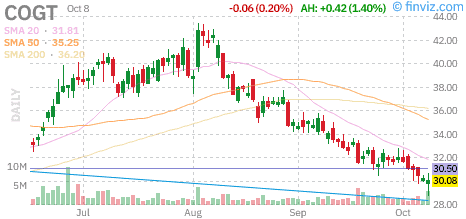
Finviz API data used for this hub show an October 8, 2026 regular-session close of $30.08, down 0.20%, on volume of 3,643,985 shares. The provider’s market-capitalization figure is approximately $5.22 billion. This is a dated market snapshot, not a live October 9 quote. Vendor share fields and SEC share disclosures can use different dates or definitions, so multiplying an older share field by the latest price may not reproduce the vendor’s reported capitalization exactly. The hub preserves the source and date rather than implying false precision. [12]
The daily chart offers a visual account of trading, but it does not identify why buyers and sellers acted. Movement before a decision can reflect changing expectations, hedging, general market conditions or liquidity. A short-interest measure can describe reported positioning, but it is not proof of imminent covering or a reliable forecast of a squeeze. Event gaps can occur even in a stock that normally trades millions of shares. Historical volume is therefore useful context for liquidity, not a guarantee of execution at an anticipated price during a regulatory announcement.
Stephen Ayers’ April 2 Seeking Alpha article offered a constructive view while acknowledging a premium valuation. It is an attributed investment opinion from an earlier point in the development timeline. Its model assumptions and then-current valuation should not be presented as a fresh October consensus target or as confirmation of an acquisition. The role of that outside research is to identify questions about commercial scale and expectations; primary disclosures control the facts, and subsequent clinical, financing and regulatory developments must be incorporated independently. [13]
14 Valuation scenarios and what can move COGT stock
A practical valuation begins with prospective net revenue by indication, then subtracts the costs required to generate it. Patient eligibility, access, uptake, treatment duration and net pricing determine revenue. Manufacturing, license royalties, commercial support and corporate expenditure determine how much of that revenue can become operating cash. Development spending, taxes, working capital and financing claims affect the amount ultimately attributable to common equity. The chain is longer than multiplying a disease-prevalence estimate by a list price, and uncertainty at each step compounds.
In a constructive scenario, favorable decisions produce usable labels, physicians adopt the medicine at a durable pace and safety management allows patients to remain on treatment. Shared infrastructure supports more than one indication, improving the return on launch spending. The earlier pipeline adds value without consuming capital disproportionate to its evidence. This is an analytical scenario, not management guidance or a promised outcome. Its credibility would increase with reported access, net sales, persistence and an expense trajectory consistent with the expected transition.
In a more cautious scenario, one decision is delayed, the label is narrower, uptake is slower or the practical burden of treatment limits persistence. Commercial costs may continue while revenue develops more slowly. Additional studies or manufacturing work could increase cash requirements, and equity financing could dilute current holders. This scenario does not require the drug to have no clinical value. A medicine can be useful and still generate less financial value than investors expected, particularly when the starting market capitalization already anticipates a substantial commercial opportunity.
The PDUFA catalysts can therefore influence the stock materially, but their effect depends on surprise relative to expectations. An approval matching a widely anticipated outcome may prompt a smaller response than an unexpected label restriction or a revised launch timetable. Multiple decisions close together can also change how investors position around the first result. Neither the dates nor the clinical p-values determine a percentage return. Clinical significance, regulatory success, commercial value and share-price reaction are connected concepts, but they measure different things.
This hub does not assign a point price target or an unsupported approval probability. A defensible model would need explicit assumptions about adoption, net pricing, costs, timing, discounting and dilution, with sensitivities rather than a single confident output. The Health Score is a transparent editorial assessment of business robustness, not a discounted-cash-flow model. Readers can use the framework to identify which assumptions a bullish or bearish thesis requires and which future disclosures would support or invalidate them.
15 The next evidence checkpoints through 2027
The first verified regulatory checkpoint is November 30, 2026 for GIST, followed by December 30 for nonadvanced systemic mastocytosis. June 29, 2027 is the separate advanced-disease target. Each should remain labeled as a target action date until the actual outcome is disclosed. A later announcement can supersede the calendar, so the next update should record both the event date and the date the information became public. The objective is a reliable sequence of decisions, not a static list that continues advertising events after they have occurred. [3] [4]
The next financial report is another important checkpoint, even without inventing an unconfirmed earnings date. It should provide a more recent cash balance, subsequent share issuance, spending trends and any revision to the funding outlook. If an approval occurs near year-end, early reported revenue may reflect only a short commercial period and inventory timing. Such a quarter should not be annualized without examining launch context. Several periods of consistent evidence would provide a stronger basis for evaluating adoption and the economics of the new commercial organization.
Clinical follow-up remains relevant after regulatory submissions. Longer observation can clarify duration of benefit, safety and the interpretation of immature endpoints. The avapritinib-switch cohort and first-line exon 9 extension address distinct questions beyond the initial pivotal populations. Early pipeline submissions and Phase 1 updates can also change the longer-term portfolio. These developments should be tracked individually, with their own designs and data cutoffs, rather than folded into a general claim that all programs are progressing equally well.
Commercial disclosures should be read with the same attention to definitions used for the trials. Patients enrolled in support programs are not necessarily treated patients; prescriptions are not necessarily reimbursed shipments; gross sales are not net revenue; revenue is not cash collected. Companies may report only some of these measures. Where information is absent, the appropriate response is to identify the limitation rather than construct a precise operating metric from an incomplete proxy. Consistency over time matters as much as the level in any single release.
The central monitoring question is whether each new fact improves the path from clinical evidence to sustainable per-share value. An approval is a major possible step, not the end of the assessment. The same applies to a setback: its specific cause, remedy and financing consequences matter more than a generic label of failure. Maintaining separate records for clinical, regulatory, commercial and financial evidence makes it possible to update the thesis without confusing confidence in the science with certainty about the stock.
Sources and research references
Primary disclosures control facts. Finviz supplies dated market data. Seeking Alpha supplies an attributed accessible opinion. Consensus research records were fetched before use; publication design and limitations remain explicit.
[1] Cogent Form 10-Q, June 30, 2026; filed August 10[2] Cogent Q2 2026 financial results and dated guidance, August 10[3] FDA acceptance of GIST application and November 30 PDUFA, May 28[4] FDA acceptance of AdvSM application; June 29, 2027 target, September 15[5] PEAK detailed Phase 3 results, ASCO May 30, 2026[6] SUMMIT pivotal results presented at ASH, December 2025[7] APEX results, EHA June 12, 2026[8] Cogent Form 8-K: Hovione supply agreement, filed September 2[9] Cogent Form 8-K: new ATM facility, August 10[10] FDA orphan-drug database: avapritinib approvals for AdvSM and ISM[11] Consensus fetched SUMMIT conference-abstract record, Rein et al., 2026[12] Finviz COGT API: October 8, 2026 regular-session market reference[13] Stephen Ayers, Seeking Alpha, April 2, 2026: bullish opinion with premium-valuation caveatCogent stock and bezuclastinib: frequently asked questions
What are the next COGT PDUFA dates?
November 30, 2026 concerns bezuclastinib with sunitinib for GIST after imatinib. December 30, 2026 concerns nonadvanced systemic mastocytosis. Advanced systemic mastocytosis has a separate June 29, 2027 target. These are regulatory action targets, not guaranteed approvals or automatically identical commercial launch dates. [3] [4]
Is bezuclastinib already approved?
It remains investigational in the verified record as of October 9, 2026. Acceptance of an application, Priority Review and an expanded-access program do not constitute marketing approval. The final prescribing information and any conditions will depend on the actual regulatory decisions. [1] [3]
Does PEAK prove that patients live twice as long?
No. PEAK demonstrated a progression-free-survival advantage for the combination over sunitinib. Overall-survival data were immature. A hazard ratio of 0.50 for progression or death is not a statement that individual life expectancy doubles, and it cannot be substituted for an observed overall-survival result. [5]
Is the APEX response rate 65% or 81%?
Both figures were reported, but they belong to different analyses. The primary modified IWG analysis reported 65% in 68 evaluable patients. The secondary pure pathological response analysis reported 81% in 81 patients under a different response definition. The definitions and denominators must accompany the percentages. [7]
Is Cogent debt-free because it has substantial cash?
No. The June balance includes substantial cash and investments, but Cogent also has $230 million principal of convertible notes due in 2031 and continuing operating requirements. Subsequent financing and a pro forma resource calculation do not establish a current debt-free cash balance. [1] [2]
Can these catalysts move COGT shares?
Yes. Regulatory outcomes and label details can change expected revenue, timing and financing requirements. The direction and size of a market reaction also depend on prior expectations and positioning. No reliable percentage return follows from a PDUFA date alone, and this hub does not provide a trading recommendation or guaranteed price target.
 Umbria