Love the view?
Make it your next adventure.
Explore our travel guides. Share your stories, tips and questions on Reddit.

Biotech catalyst, news and analysis PDUFA tracker

Biotech catalyst, news and analysis PDUFA tracker
Redwire Corp

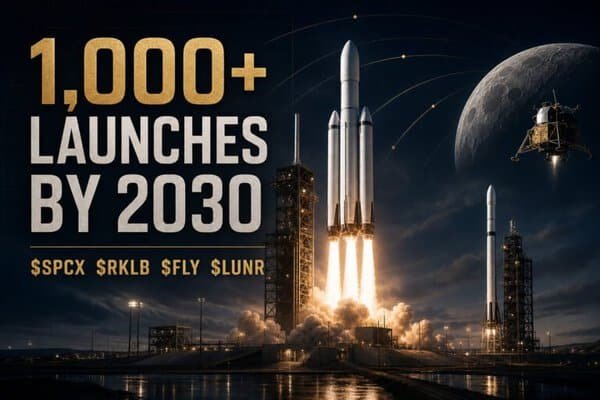
America’s new space transportation policy targets more than 1,000 launches and reentries a year by 2030. SpaceX, Rocket Lab and Firefly are the clearest launch exposures; Intuitive Machines is the strongest lunar-logistics read-through. The policy is a strategic tailwind, not a contract or a funded revenue guarantee.

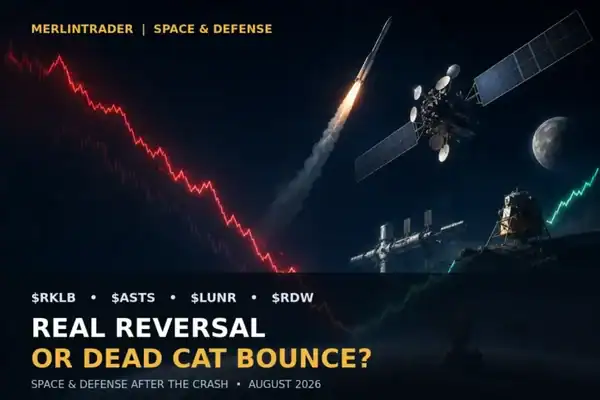
Between late May and July 29, 2026, RKLB, ASTS, LUNR and RDW lost 60-75% of their value, then rallied 35-75% in seven sessions. Nine defense names beat and raised guidance. Real reversal, or dead cat bounce? The next earnings decide.

On May 8, 2026, the U.S. Department of War launched the Presidential Unsealing and Reporting System for UAP Encounters, or PURSUE, and began publishing a first wave of records tied to unidentified anomalous phenomena. That part is not internet folklore. It is an official government release, framed by the administration as a transparency push and explicitly tied to President Donald Trump’s February 19, 2026 directive to identify, review, declassify and release unresolved UAP-related records.

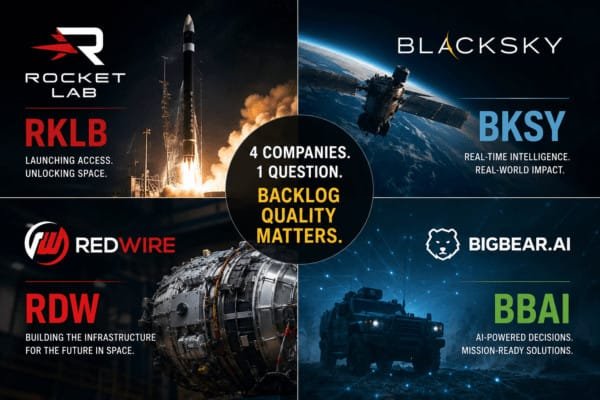
In every strong thematic market, there comes a moment when investors stop rewarding the story and start grading the machinery underneath it. Space, defense technology and AI-enabled government software have all enjoyed powerful narrative support: satellite constellations, national-security budgets, hypersonic testing, geospatial intelligence, autonomous systems, battlefield decision software, and the broader AI infrastructure cycle. But after the latest earnings wave, the central question has become sharper and more practical: how much of the reported backlog can actually convert into durable revenue, margin improvement and cash-flow progress?

The question is no longer whether the Space Force truly exists as an autonomous armed service. After the April 15 release and B. Chance Saltzman’s remarks at the 41st Space Symposium, the point is that U.S. leadership is asking markets, industry and Congress to treat it as a fully operational, combat-credible force: a force no longer living on doctrine alone, but one that has already produced real effects in recent operations and now wants to translate that legitimacy into architectures, personnel, industrial production and multiyear contracts