Merlintrader Trading Pub
Biotech catalyst, news and analysis PDUFA tracker
Merlintrader Trading Pub
Biotech catalyst, news and analysis PDUFA tracker
Category Educational
Educational Guides for Smarter Market Research
Merlintrader Educational brings together practical guides designed to help readers understand the forces that move biotech, healthcare, technology, energy, space and small-cap stocks. The focus is not on predicting the next winner, but on learning how to evaluate evidence, identify risk and place market-moving headlines in the right context.
The articles below explain subjects such as FDA and PDUFA decisions, clinical-trial results, biotech valuation, cash runway and dilution, market structure, technical analysis and trading psychology. Broader sector guides also explore emerging technologies, critical minerals, artificial intelligence, space economics and other themes shaping today’s markets. Whenever possible, real companies and market events are used as worked examples to connect theory with situations investors and traders may encounter in practice.
Browse the latest educational articles below to strengthen your research process, challenge common market myths and develop a more disciplined approach to volatile stocks. All content is provided strictly for educational and informational purposes and does not constitute investment advice.
AI transparency: articles and reports are produced with the help of artificial intelligence and checked through a process that does not constitute specialist validation. They may contain errors: verify relevant information with independent sources. Read the full disclaimer.
You Are Not Holding a Stock, You Are Wearing Its Shirt: A Field Guide to Falling in Love With a Ticker
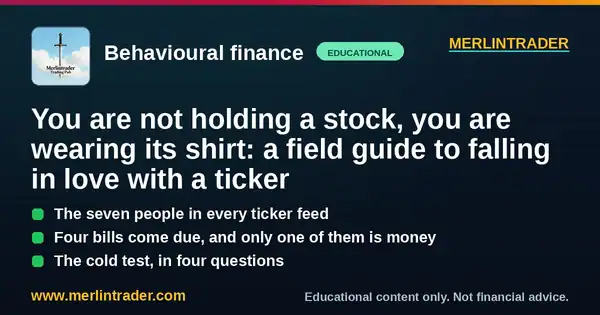
Nobody plans it. You do some research, you buy a small position, and eleven months later you are defending a company at two in the morning. The seven people in every ticker feed, the dictionary of the smitten, the four bills, and a cold test in four questions.
Why The Critical-Minerals Race Is Won In The Midstream, Not The Mine ($UAMY, $MP, $USAR, $TMC)
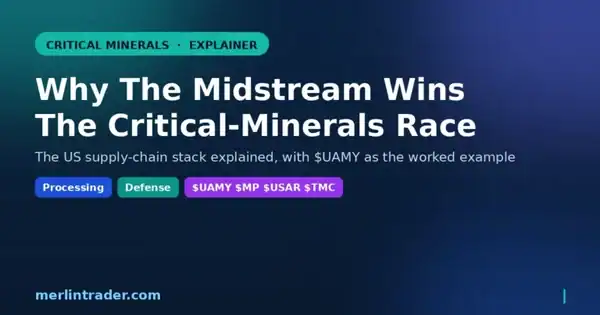
A framework for reading the critical-minerals sector: why the real bottleneck is processing (the midstream), a four-question tool to triage any headline, with $UAMY as the worked example and $MP, $USAR and $TMC on the map.
Priority Review Vouchers Explained: How an FDA Approval Becomes $180-205 Million in Cash, With $RCKT and $DNLI as Worked Examples · $XBI $IBB
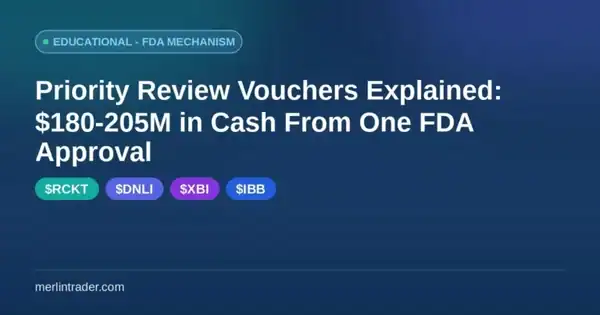
How Rare Pediatric Disease Priority Review Vouchers turn a single FDA approval into $180-205 million in non-dilutive cash - the mechanism explained, with $RCKT and $DNLI as worked examples.
Betting on the FDA: How Kalshi’s Biotech Prediction Markets Work, and What They Mean for $XBI, $IBB and the Sector
Kalshi launched a pilot program on July 16, 2026, enabling trading on clinical trial outcomes and FDA decisions linked to biotech firms. This new prediction market offers a public price reflecting the probability of drug approval, but raises ethical concerns and potential manipulation risks due to limited participant knowledge and liquidity challenges.
Outlook Therapeutics ($OTLK): A Story — The World’s Most-Used Eye Drug Is Not Approved for the Eye
Off-label economics explained with Outlook Therapeutics ($OTLK): why the most-used wet AMD treatment costs $50 and is not approved, while approved alternatives cost twenty times more. FDA PDUFA July 29, 2026.
ImmunityBio ($IBRX): A Story — Why FDA Approval Is Only the Starting Line
An accessible three-act explainer using ImmunityBio ($IBRX) and its bladder-cancer drug Anktiva to show why FDA approval is only the starting line: the human stakes, the commercial launch curve, and who controls the company.
Reusable Rockets Explained: The Launch Economics, $RKLB as the Worked Example, and What China’s First Booster Catch Changes
A plain-English guide to the economics of reusable rockets: why refurbishing beats rebuilding, how cost-per-kg collapsed, where SpaceX ($SPCX), Blue Origin, China's Long March 10B and Rocket Lab ($RKLB) sit on the reuse ladder, a reusable triage for launch news, and what China's first booster catch does and doesn't change. Educational, not investment advice.
Why AI Needs Optics: The Optical Interconnect Stack Explained, With POET as the Worked Example
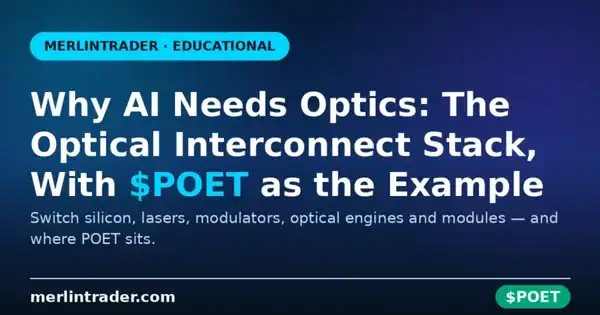
An educational guide to the AI optical interconnect stack - switch silicon, lasers, modulators, optical engines and modules - using POET Technologies (POET) as the highlighted optical-engine example.
Biotech & Trading Glossary: PDUFA, FDA & Small Caps

70+ biotech, small-cap, FDA and trading terms explained clearly: PDUFA date, CRL, cash runway, short squeeze, surrogate endpoint and more.
Analyst Price Targets in Biotech: Why the Most Quoted Number Is Often the Least Useful One

A deeper, U.S.-focused Merlintrader editorial on how to read sell-side price targets in small and mid-cap biotech, why 12-month targets often fail as forecasts, and why binary events such as PDUFA dates, Phase 3 readouts and FDA advisory committees can turn the “average target” into a misleading comfort number.
The Trend Is Your Friend
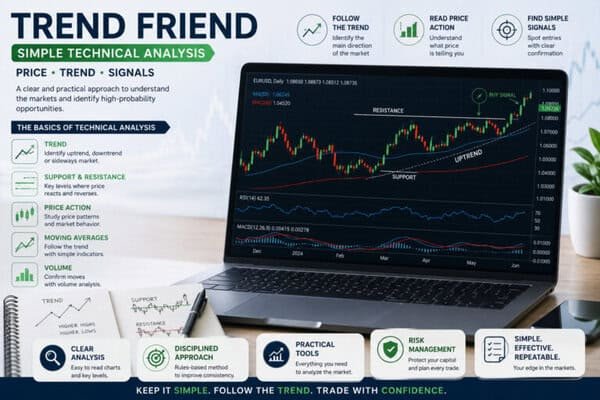
There are trading phrases that survive because they are useful, and there are trading phrases that survive because they are easy to repeat. “The trend is your friend” belongs to both categories. It is useful, but only when treated as a probabilistic framework rather than a religious commandment. Used well, it keeps a trader aligned with momentum, liquidity, and market psychology. Used badly, it turns into a license to chase, overstay, and confuse a mature move with a fresh opportunity.
When Good News Is No Longer Enough
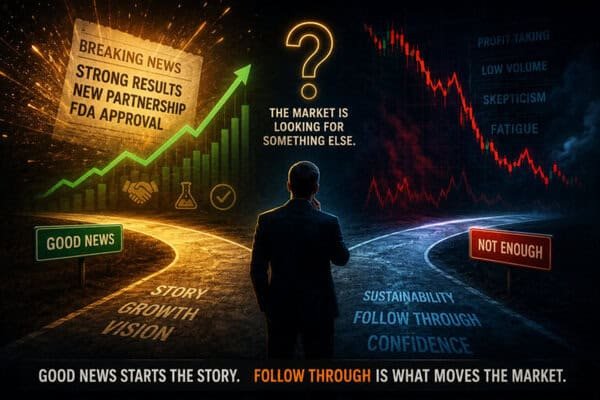
There are moments when a positive headline no longer lights a fire under a stock. It opens green, holds for a moment, then fades. That is not always an anomaly. Quite often, it is the market quietly telling you that the story alone is no longer enough.
Encyclopedia of Social Trader Myths – Vol. 3The Self-Inflicted Edition
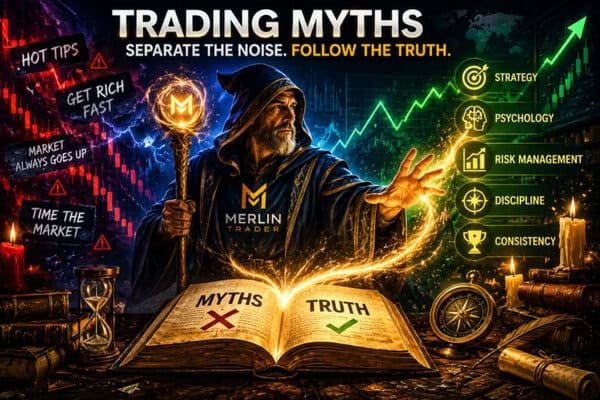
The first myths of social trading usually come from outside: the trending ticker, the guru thread, the magical catalyst calendar, the cult of “smart money,” the promise that one more breakout will fix your year. But the deeper myths are the private ones. They appear after the chart turns ugly, after the timing fails, after the confidence starts cracking. That is when the internal narrator goes to work.
This third volume is about those myths. Not the noisy lies from the feed, but the polished lies traders tell themselves when they need to protect pride, postpone discomfort, and keep a bad trade emotionally alive for just a little longer. These myths sound reasonable in real time. That is exactly why they are dangerous.
The Ten Commandments of the Trader
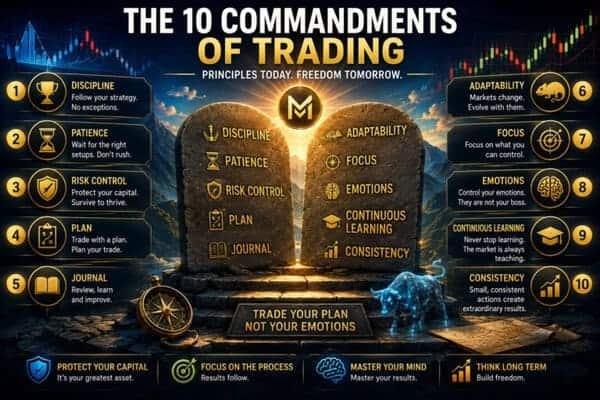
Why these commandments matter
Many people think trading is mainly about finding the right stock, the right indicator, or the right catalyst. In reality, the hardest part is not the entry itself. The hardest part is making repeated decisions under uncertainty without letting emotion, urgency, ego, or frustration take control.
That is why these commandments matter. They are not magic rules and they do not guarantee profits. What they do is far more useful: they help traders avoid some of the most common and expensive mistakes, especially in volatile environments where speed and pressure can easily lead to poor judgment.
This page is designed as educational content for readers who want a stronger foundation. Before strategy comes discipline. Before conviction comes risk management. Before confidence comes process.
AI retail and Merlintrader

When people talk about artificial intelligence in trading and investing, I almost always see two opposite – and both wrong – reactions.
On one side you have those who demonise it by default: “it’s dangerous”, “it fills your head with nonsense”, “it’s useless, markets are moved by others anyway”. On the other side you have those who treat it like a modern oracle: “tell me what to buy”, “give me the next 10-baggers”, “build me the perfect watchlist”.
I work with AI every single day to build Merlintrader’s content, and I can tell you something very simple: the truth is neither here nor there. AI is not an enemy to fight, and it’s not a guru to worship. It is a tool. Extremely powerful if you use it well. Dangerous if you use it badly. Useless if you ignore it.
Encyclopedia of Social Trader Myths – Vol. 2

The slightly less polite, more cynical and more honest companion to the original Encyclopedia of Social Trader Myths. Same dark humour, more uncomfortable truths about how traders really behave on Stocktwits, Reddit, X and Discord.