Skip to content
06/15/2026
  • Biotech Tools Hub
  • Voce di menu
  • Voce di menu
  • Voce di menu
  • Voce di menu
  • Our Profile on PRLog
Merlintrader Trading Pub

Merlintrader Trading Pub

Biotech catalyst news and analysis. FDA PDUFA tracker

DISCLAIMER — Educational content only. Not financial advice. Stocks can be volatile and may cause capital loss.
Read Disclaimer
Primary Menu
  • Merlintrader
    • About Merlintrader
    • Merlintrader Blog
    • Daily Briefing
    • Daily Watchlist
    • Discord
    • Latest News
    • Small & Medium Caps
    • CHARTSWATCHER 10% OFF !
    • Disclaimer
  • Cannabis Stocks Hub 2026
    • Cannabis Stocks HUB 2026: A Possible Reset for a Broken Sector $MSOS, $TLRY, $CGC, $CRON, $ACB
    • Tilray Brands (Nasdaq: $TLRY): Cannabis, Beverage and Medical Cannabis Stock Hub
  • Space, Defense & AI Hub 2026
    • BlackSky Technology Inc. (NYSE: $BKSY) Stock Hub
    • BigBear.ai Holdings (NYSE: $BBAI)
    • Castellum, Inc. (NYSE American: $CTM) Stock Hub
    • Intuitive Machines (Nasdaq: $LUNR) Stock Hub
    • Ondas Holdings (NASDAQ: $ONDS) Stock Hub
    • Palladyne AI Corp. (Nasdaq: $PDYN) Stock Hub
    • Planet Labs PBC (NYSE: $PL)
    • POET Technologies (NASDAQ: $POET): Company Story,
    • Red Cat Holdings (NASDAQ: $RCAT)
    • Redwire Corporation (NYSE: $RDW) Stock Hub
    • Rocket Lab Corporation (Nasdaq: $RKLB) Stock Hub
    • Satellogic Inc. (Nasdaq: $SATL)
  • Biotech Stocks Hub
    • ADMA Biologics (Nasdaq: $ADMA)
    • Agios Pharmaceuticals (Nasdaq: $AGIO) Stock Hub
    • Alpha Tau Medical Ltd. (Nasdaq: $DRTS)
    • Altimmune Inc. (Nasdaq: $ALT )
    • Aquestive Therapeutics (Nasdaq: $AQST Stock Hub.
    • Ardelyx, Inc. (Nasdaq: $ARDX) Stock Hub
    • BioCryst Pharmaceuticals (Nasdaq: $BCRX) Stock Hub
    • Capricor Therapeutics (Nasdaq: $CAPR) Stock Hub
    • Corcept Therapeutics $CORT Stock Hub
    • CorMedix Therapeutics (Nasdaq: $CRMD) Stock Hub
    • Cytokinetics, Incorporated (Nasdaq: $CYTK)
    • Fate Therapeutics (Nasdaq: $FATE): Stock Hub
    • Geron Corporation (Nasdaq: $GERN) Stock Hub
    • ImmunityBio, Inc. (Nasdaq: $IBRX) Stock Hub
    • Iovance Biotherapeutics (Nasdaq: $IOVA)
    • MannKind Corporation (Nasdaq: $MNKD) Stock Hub
    • Microbot Medical Inc. (Nasdaq: $MBOT) Stock Hub
    • Moleculin Biotech (Nasdaq: $MBRX) Stock Hub
    • Novavax, Inc. (Nasdaq: $NVAX) Stock Hub
    • NRx Pharmaceuticals (Nasdaq: $NRXP) Stock Hub
    • Ocugen, Inc. (Nasdaq: $OCGN) Stock Hub
    • Ocular Therapeutix (Nasdaq: $OCUL) Stock Hub
    • Omeros Corporation (Nasdaq: $OMER): Stock Hub
    • Outlook Therapeutics (Nasdaq: $OTLK): Stock Hub
    • Protalix BioTherapeutics (NYSE American: $PLX) Stock Hub
    • SeaStar Medical Holding Corporation (Nasdaq: $ICU) Stock Hub
    • SELLAS Life Sciences Group (Nasdaq: $SLS) Stock Hub.
    • Summit Therapeutics (Nasdaq: $SMMT) Stock Hub
    • Travere Therapeutics (Nasdaq: $TVTX)
    • Viridian Therapeutics (Nasdaq: $VRDN)
  • FREE CATALYST CALENDAR
    • Catalyst Total Tracker
  • Merlintrader Travel Pub

Home - OTLK - Outlook Therapeutics ( $OTLK ) after the new FDA dispute-resolution meeting. What this April review is.

  • OTLK
  • Reports Biotech

Outlook Therapeutics ( $OTLK ) after the new FDA dispute-resolution meeting. What this April review is.

After three Complete Response Letters and a long fight over what counts as sufficient evidence for ONS-5010 / LYTENAVA in wet AMD, Outlook Therapeutics has now moved into a formal FDA dispute-resolution process. This article walks through the CRL history, the new April 2026 meeting, and the real powers of the FDA deciding official — without hype, but also without pretending the door is already shut.
2 months ago (Last updated: 4 weeks ago) 4 views
Outlook Therapeutics (OTLK): FDA Dispute Resolution Meeting in April 2026 | What It Means, What the FDA Official Can Decide
Outlook Therapeutics OTLK static stock chart from Finviz
Next Catalyst

FDA deciding official meeting expected in April 2026

Outlook Therapeutics said the FDA accepted its Formal Dispute Resolution Request and granted a meeting with the deciding official in April 2026. The company did not disclose an exact meeting date. That makes the next catalyst a real regulatory event, but still a window rather than a fixed calendar day.

OTLK • Regulatory Deep Dive

Outlook Therapeutics after the new FDA dispute-resolution meeting: what happened, what this April review is, and what the FDA official can actually decide

After three Complete Response Letters and a long fight over what counts as sufficient evidence for ONS-5010 / LYTENAVA in wet AMD, Outlook Therapeutics has now moved into a formal FDA dispute-resolution process. This article walks through the CRL history, the new April 2026 meeting, and the real powers of the FDA deciding official — without hype, but also without pretending the door is already shut.

Snapshot

Three CRLs
2023, August 2025, and December 30, 2025

Regulatory focus now

Formal dispute resolution
An internal FDA appeal process, not an approval decision by itself

Known next step

April 2026 meeting
Meeting with the FDA deciding official; exact date not disclosed

Executive overview

The latest Outlook Therapeutics headline matters because it keeps the U.S. story alive. The company announced that the FDA accepted its Formal Dispute Resolution Request, or FDRR, and granted a meeting with the deciding official in April 2026. That does not mean the FDA has changed its scientific position already, and it does not mean approval is around the corner. What it does mean is that the case has moved into a formal review path above the level that produced the most recent Complete Response Letter.

That distinction matters. OTLK is not dealing with a routine scheduling call or a casual follow-up discussion. It is in an internal FDA appeals framework. For investors and readers trying to understand the real significance, the most useful way to read this is not “approval soon” and not “nothingburger” either. It is better described as a procedural win that preserves regulatory optionality while leaving the substantive outcome unresolved.

The hopeful part of the story is procedural, not promotional: after repeated setbacks, the FDA is still willing to entertain a formal review at a higher level. In a long and difficult file, that is not the same thing as victory, but it is also not the same thing as a dead end.

Sources

  • Outlook Therapeutics press release, April 7, 2026
  • FDA: Formal Dispute Resolution and Administrative Hearings of Final Administrative Orders
  • 21 CFR 10.75 — Internal agency review of decisions

A fast but necessary history: how OTLK got here

To understand why this April meeting matters, it helps to strip the story back to the essentials. Outlook’s wet AMD case has been a multi-year regulatory argument, not a single review-cycle hiccup.

August 2023
The FDA issued a Complete Response Letter on the BLA review cycle then underway. The company said the CRL cited several CMC issues, open observations from pre-approval manufacturing inspections, and a lack of substantial evidence. Outlook also said at the time that NORSE TWO had met its safety and efficacy endpoints, but the agency still did not approve the application during that cycle.
Late 2023 to 2024
After subsequent Type A interactions, Outlook said the FDA required an additional adequate and well-controlled clinical trial and further CMC work. That led to NORSE EIGHT under a Special Protocol Assessment framework. In January 2024 the company said FDA had agreed to the NORSE EIGHT protocol under the SPA, meaning a successful trial could address the clinical deficiency identified in the 2023 CRL.
November 2024 / January 2025
Outlook reported that NORSE EIGHT did not meet the pre-specified non-inferiority endpoint at week 8. The company later argued that the totality of week-12 data, biologic activity, and other supporting information still reinforced efficacy and safety, but the trial did not deliver the clean win that would have simplified the story.
August 27, 2025
Outlook disclosed a second CRL. According to the company’s later prospectus language, this second CRL contained only one deficiency: lack of substantial evidence of effectiveness. FDA recommended that confirmatory evidence of efficacy be submitted because ONS-5010 did not meet the primary efficacy endpoint in NORSE EIGHT, while reiterating that NORSE TWO met its primary endpoint for effectiveness.
October 2025 resubmission / December 30, 2025 CRL
After a September 2025 Type A meeting, Outlook resubmitted the BLA in October 2025. Then came a third CRL, dated December 30, 2025. In later company disclosure, Outlook said FDA again concluded that the additional mechanistic and natural-history data did not change the previous review conclusion and again recommended confirmatory evidence of efficacy, while not specifying what exact form of confirmatory evidence would be acceptable.
February 11, 2026 / March 2, 2026
Outlook requested a Type A meeting after the December 2025 CRL, then held that meeting on March 2, 2026. The company described that meeting as focused on clarifying the outstanding issue around substantial evidence of effectiveness and discussing potential paths forward for regulatory approval.
April 2026 catalyst
The company has now moved one step further and announced that FDA accepted its FDRR and granted a meeting with the deciding official in April 2026.

That history matters because it frames the April event correctly. This is not a fresh first review of a new clean file. It is the continuation of a long-running argument over what level of confirmatory evidence the FDA believes is needed and whether Outlook’s current package is enough.

Plain English version: OTLK is no longer arguing only about timing. It is arguing about regulatory sufficiency — about whether the evidence already in the file should count as enough, or whether the agency can still insist on more.

Sources

  • Outlook Therapeutics regulatory update, August 30, 2023
  • Outlook Therapeutics 10-Q filed with SEC
  • Outlook Therapeutics March 2026 prospectus supplement
  • Outlook Therapeutics Type A meeting request, February 11, 2026
  • Outlook Therapeutics update after Type A meeting, March 5, 2026

What the new April 2026 headline actually says

Outlook’s latest press release says the company submitted a Formal Dispute Resolution Request to FDA as a follow-up to the recent Type A meeting regarding the December 30, 2025 CRL for ONS-5010 / LYTENAVA in neovascular age-related macular degeneration. The release further says FDA accepted the FDRR and granted a meeting with the deciding official to be conducted in April 2026.

The company also states that, in its view, the data from NORSE TWO and NORSE EIGHT provide sufficient evidence to support approval. It adds that the submission includes existing clinical, functional, pharmacodynamic, and safety information, and repeats the company’s statement that no safety concerns have been raised by FDA. Importantly, however, those passages describe the company’s position. They do not announce that FDA has agreed with the company’s interpretation.

That is the single most important reading discipline here. “Accepted by FDA” refers to the dispute-resolution request entering the process. It does not mean “FDA accepted the sponsor’s scientific argument.” This is where a lot of market confusion tends to start, especially in small and mid-cap biotech names where procedural headlines often trade like outcome headlines.

What investors should not confuse: acceptance of the appeal process is not acceptance of the efficacy case. The process is alive. The verdict is not known.

The company did not disclose the exact date of the April meeting. For editorial purposes, that means the catalyst should be described as an April 2026 meeting window, not as a fixed-date event. That distinction sounds small, but it matters when people start treating a headline window like a scheduled PDUFA day.

Sources

  • Outlook Therapeutics press release, April 7, 2026

What a Formal Dispute Resolution Request really is

The simplest way to explain it is this: an FDRR is a formal internal FDA appeal. It is used when a sponsor believes a scientific, medical, or review position should be reconsidered at a higher supervisory level inside the agency. This is not federal court, not outside arbitration, and not a PR-stage “please take another look” letter. It is a structured process within FDA.

The legal and procedural backbone matters. Under 21 CFR 10.75, an interested person outside the agency can request internal agency review of a decision through the established agency channels of supervision or review. The regulation says that the review will be made by consultation between the employee and supervisor, by review of the administrative file, or both. In other words, this is a supervisory review path that sits inside FDA and works through FDA’s own channels.

The relevant FDA guidance further explains that once a request for formal dispute resolution has been accepted, FDA can schedule a meeting and the deciding official should then provide either an interim response or a decision within 30 calendar days from the meeting date. That does not guarantee a favorable outcome, but it does mean the April meeting is intended to lead to an actual step in the process rather than endless drift.

That is why this April event matters more than a generic “management remains in dialogue” statement. A company can say it is talking to FDA for months. A granted FDRR meeting is narrower, more formal, and attached to an internal review structure with clearer process expectations.

Sources

  • 21 CFR 10.75 — Internal agency review of decisions
  • FDA guidance on formal dispute resolution

Who is the “deciding official,” really?

In market language, people often call this person the “judge,” because the setup sounds like an appeal. That shorthand is understandable, but it should not be taken too literally. The deciding official is not an external judge and not a neutral court figure standing outside the agency. The deciding official is a higher-level FDA official inside the supervisory chain who is empowered to review the dispute and issue a response.

That still matters a lot. A decision at that level is not just another informal reviewer comment. It can reshape the practical path forward because it comes from above the level that generated the disputed position. In a case like OTLK, where the core argument is no longer about a minor formatting issue but about whether the submitted package can satisfy the substantial-evidence standard, that higher-level review has obvious relevance.

Just as important is what the deciding official does not do. This official does not wave away the process, invent a brand-new record from thin air, or automatically convert an appeal into an approval letter. The review is still anchored to the administrative file and the agency’s internal scientific and regulatory framework. That makes the process serious, but not magical.

Best way to think about the deciding official: a real supervisory authority inside FDA with the power to review, affirm, reject, or redirect the disputed position — but still acting within FDA procedure, not outside it.

Sources

  • FDA guidance on formal dispute resolution
  • 21 CFR 10.75 — Internal agency review of decisions

The key question: what can actually come out of this April meeting?

This is the section that matters most. Once readers understand the history and the meaning of the new headline, the next question becomes simple: what are the real possible outcomes? Not the social-media version. The real version.

Based on FDA procedure and on the company’s own description of the dispute, there are several concrete paths that can follow the April meeting. The point is not to predict which one will happen here. The point is to understand the range of authority in play.

1) The appeal can be denied

The deciding official can reject the sponsor’s appeal and leave the agency’s prior position effectively in place. In OTLK’s case, that would mean the agency is still not persuaded that the current file provides sufficient evidence of effectiveness without additional confirmatory evidence.

2) The appeal can be granted in whole or in part

FDA procedure allows the deciding official to grant the appeal, or to grant it only in part. For OTLK, that could mean the disputed scientific or regulatory position is revised at least partially. It would be a meaningful win, but it still would not automatically mean same-day approval.

3) An interim response can be issued

FDA guidance explicitly allows for an interim response instead of an immediate final decision. That means the April meeting could lead to clarification, additional internal review, or another formal step rather than a clean binary yes-or-no resolution on the spot.

4) FDA can point to an alternative path forward

Even when the deciding official does not give the sponsor everything it wants, FDA can explain why and identify actions or a different path that could address the agency’s concerns. In plain language: not “yes,” but also not merely “go away.”

Why that fourth possibility matters more than it may seem

Many market participants reduce these situations to two outcomes: either the company wins or the company loses. Real FDA process is often more nuanced. Especially in difficult files, the practical value of a higher-level meeting may lie in clarifying what the agency would actually accept. If the file has stalled partly because the sponsor still does not know what kind of confirmatory evidence would satisfy the review concern, a more explicit supervisory response can still be valuable even without an outright reversal.

That matters in OTLK’s case because the company has said the December 2025 CRL again recommended confirmatory evidence but did not specify what form of confirmatory evidence would be acceptable. In a story like this, clarity itself can be catalytic. Not because clarity is approval, but because uncertainty has been one of the biggest drags on the U.S. case.

Could the story continue even after a negative answer?

Yes. FDA guidance contemplates further appeal paths through higher levels of the agency in some circumstances. That should not be romanticized. A negative answer would still be negative. But it does mean a denial at one level is not always the final conceivable administrative chapter.

Again, the hopeful read here is procedural rather than predictive: a difficult dispute can still have additional layers of review. That does not make the probability of success high by definition. It simply means the process is not always exhausted by a single adverse response.

Where some hope legitimately exists: the deciding official is not limited to saying only “approved” or “dead.” The official can deny, grant, partially grant, issue an interim response, or direct the sponsor toward a clearer next step. For a company stuck between repeated CRLs and incomplete regulatory visibility, even a more defined map can matter.

Sources

  • FDA guidance on formal dispute resolution
  • 21 CFR 10.75 — Internal agency review of decisions
  • Outlook Therapeutics Type A meeting request, February 11, 2026
  • Outlook Therapeutics March 2026 prospectus supplement

What this meeting can change — and what it cannot

The April meeting can change the quality of the roadmap. It can potentially change the agency’s internal handling of the dispute. It can potentially change how clearly the company understands the evidentiary gap the FDA still sees. It can also change the market narrative if the outcome suggests that the case remains more open than the third CRL made it appear.

What it cannot do is erase history. OTLK is still a company coming into this event after repeated CRLs. It is still a case where the U.S. approval path has become a prolonged argument over evidentiary sufficiency. And it is still a company whose broader investment profile includes financing sensitivity and dilution risk, which remain relevant when a regulatory process extends.

So the mature way to frame the event is neither cynicism nor cheerleading. The mature frame is this: April could bring a more meaningful answer than the market has had recently, but the answer could be favorable, unfavorable, partial, or still incomplete. What makes the event worth watching is not certainty. It is real authority.

Important discipline for readers: do not treat the April meeting as a disguised PDUFA. It is a dispute-resolution event. It may improve visibility. It may improve process. It may even improve the company’s odds. But it is not the same thing as a standard approval deadline.

Sources

  • Outlook Therapeutics press release, April 7, 2026
  • FDA guidance on formal dispute resolution

Bottom line

Outlook Therapeutics has now reached a stage where the central issue is not whether management can tell another optimistic story, but whether a higher-level FDA official sees enough basis to alter, soften, clarify, or uphold the agency’s disputed position. That is why this new April 2026 meeting deserves attention.

The quick recap is simple. First, OTLK has a long CRL history, including a 2023 CRL focused on CMC and evidence concerns, a second CRL in August 2025 centered on lack of substantial evidence of effectiveness, and a third CRL on December 30, 2025 that again kept the U.S. file from moving forward. Second, the company held a Type A meeting on March 2, 2026 and then escalated into a Formal Dispute Resolution Request. Third, FDA has now accepted that request and granted an April meeting with the deciding official.

The key takeaway is not that approval is close. The key takeaway is that the U.S. case is still alive inside a formal supervisory review process, and that process carries real potential outcomes: denial, grant, partial grant, interim response, or a clearer alternative path. That is enough to keep the story relevant, enough to preserve some hope, and not enough to remove doubt.

Sources

  • Outlook Therapeutics press release, April 7, 2026
  • Outlook Therapeutics update after Type A meeting, March 5, 2026
  • Outlook Therapeutics March 2026 prospectus supplement
  • FDA guidance on formal dispute resolution
  • 21 CFR 10.75 — Internal agency review of decisions

Related Merlintrader articles

  • Outlook Therapeutics comeback story
  • Outlook Therapeutics Inc.
  • OTLK Outlook Therapeutics
  • Santa’s biotech watchlist
Disclaimer: This content is for informational and educational purposes only and does not constitute investment advice, legal advice, or a recommendation to buy or sell any security. Biotech and small-cap stocks can be highly volatile and may involve substantial risk, including loss of capital, dilution risk, regulatory uncertainty, and binary event risk. Regulatory interpretations in this article are editorial explanations based on public company disclosures and FDA procedural materials; they are not legal conclusions. Readers should always verify key facts directly from official company filings, FDA materials, and their own professional advisers. See also Merlintrader Disclaimer and Terms of Use & Privacy.

Quadro rapido

Tre CRL
2023, agosto 2025 e 30 dicembre 2025

Focus regolatorio ora

Formal dispute resolution
Un appello interno FDA, non una decisione di approvazione di per sé

Prossimo step noto

Meeting di aprile 2026
Incontro con il deciding official FDA; data esatta non pubblicata

Executive summary

L’ultima notizia su Outlook Therapeutics conta perché tiene viva la storia americana. La società ha annunciato che la FDA ha accettato la sua Formal Dispute Resolution Request, cioè la FDRR, e ha concesso un meeting con il deciding official nel mese di aprile 2026. Questo non significa che la FDA abbia già cambiato posizione scientifica, e non significa nemmeno che l’approvazione sia vicina. Significa però che il caso è entrato in un percorso formale di review a un livello superiore rispetto a quello che ha prodotto l’ultima Complete Response Letter.

Questa distinzione conta parecchio. OTLK non si trova davanti a una telefonata di routine o a un semplice follow-up informale. Si trova dentro un framework di appello interno FDA. Per chi cerca di capire il peso reale del catalyst, il modo più utile di leggerlo non è né “approvazione in arrivo” né “notizia vuota”. La lettura più corretta è: piccolo successo procedurale che mantiene aperta l’opzione regolatoria, mentre il risultato di merito resta ancora incerto.

La parte che lascia un po’ di speranza è procedurale, non promozionale: dopo diversi stop, la FDA è ancora disposta a esaminare formalmente il dossier a un livello superiore. In una storia lunga e complicata, questo non equivale a una vittoria, ma non equivale nemmeno a una porta definitivamente chiusa.

Fonti

  • Comunicato Outlook Therapeutics, 7 aprile 2026
  • FDA: Formal Dispute Resolution and Administrative Hearings of Final Administrative Orders
  • 21 CFR 10.75 — Internal agency review of decisions

Breve storia, ma necessaria: come si è arrivati fin qui

Per capire perché il meeting di aprile conta, conviene togliere il rumore e ricostruire i passaggi essenziali. Il caso OTLK sul wet AMD non è mai stato un singolo inciampo di review, ma una discussione regolatoria che dura da anni.

Agosto 2023
La FDA emette una Complete Response Letter sul ciclo di review allora in corso. La società spiega che la CRL cita diversi problemi CMC, osservazioni aperte dalle ispezioni pre-approval e una mancanza di substantial evidence. Outlook aggiunge che NORSE TWO aveva centrato safety ed efficacy endpoints, ma l’agenzia comunque non approva la domanda in quel ciclo.
Fine 2023 / 2024
Dopo successivi Type A meeting e altre interazioni, Outlook afferma che la FDA richiede un ulteriore studio adeguato e ben controllato, oltre a ulteriore lavoro CMC. Da lì nasce NORSE EIGHT sotto Special Protocol Assessment. Nel gennaio 2024 la società comunica che la FDA aveva concordato il protocollo NORSE EIGHT sotto SPA, quindi uno studio riuscito avrebbe potuto affrontare la deficiency clinica emersa con la CRL del 2023.
Novembre 2024 / Gennaio 2025
Outlook riporta che NORSE EIGHT non ha centrato il pre-specified non-inferiority endpoint alla week 8. In seguito la società sostiene che il totale dei dati alla week 12, l’attività biologica e gli altri elementi di supporto continuino a sostenere efficacia e safety, ma lo studio non consegna quel risultato netto che avrebbe reso molto più semplice la storia.
27 agosto 2025
Outlook comunica una seconda CRL. Nel linguaggio usato poi nel prospetto di marzo 2026, questa seconda CRL contiene una sola deficiency: lack of substantial evidence of effectiveness. La FDA raccomanda l’invio di confirmatory evidence of efficacy perché ONS-5010 non aveva centrato il primary efficacy endpoint in NORSE EIGHT, pur ribadendo che NORSE TWO aveva centrato il proprio primary endpoint di efficacia.
Resubmission ottobre 2025 / CRL del 30 dicembre 2025
Dopo un Type A meeting di settembre 2025, Outlook resubmette la BLA nell’ottobre 2025. Poi arriva una terza CRL, datata 30 dicembre 2025. In una disclosure successiva la società spiega che la FDA ha nuovamente concluso che i dati meccanicistici e di natural history aggiunti non modificavano la precedente review conclusion e ha ancora raccomandato confirmatory evidence of efficacy, senza però specificare quale forma esatta di evidenza confermatoria sarebbe stata accettabile.
11 febbraio 2026 / 2 marzo 2026
Outlook chiede un nuovo Type A meeting dopo la CRL di dicembre 2025, poi tiene quel meeting il 2 marzo 2026. La società descrive l’incontro come focalizzato sul chiarire l’outstanding issue relativo alla substantial evidence of effectiveness e sul discutere possibili path forward per una futura approvazione regolatoria.
Catalyst aprile 2026
Ora la società è andata oltre questo passaggio e annuncia che la FDA ha accettato la FDRR e ha concesso un meeting con il deciding official in aprile 2026.

Questa sequenza conta perché inquadra correttamente l’evento di aprile. Non siamo davanti alla prima review pulita di un dossier nuovo. Siamo davanti alla continuazione di una lunga discussione su quale livello di confirmatory evidence la FDA ritenga necessario e se il pacchetto già depositato da Outlook possa essere considerato sufficiente.

Versione semplice: OTLK non sta più litigando solo sui tempi. Sta litigando sulla sufficienza regolatoria, cioè sul fatto che l’evidenza già nel file debba o non debba essere considerata abbastanza per approvare.

Fonti

  • Aggiornamento regolatorio Outlook Therapeutics, 30 agosto 2023
  • 10-Q Outlook Therapeutics presso SEC
  • Prospectus supplement Outlook Therapeutics, marzo 2026
  • Richiesta Type A meeting Outlook Therapeutics, 11 febbraio 2026
  • Aggiornamento dopo il Type A meeting, 5 marzo 2026

Cosa dice davvero la nuova notizia di aprile 2026

Nell’ultimo comunicato Outlook afferma di aver presentato una Formal Dispute Resolution Request alla FDA come seguito del recente Type A meeting relativo alla CRL del 30 dicembre 2025 per ONS-5010 / LYTENAVA nel wet AMD. Il comunicato aggiunge che la FDA ha accettato la FDRR e ha concesso un meeting con il deciding official da tenersi nel mese di aprile 2026.

La società ribadisce inoltre che, a suo giudizio, i dati di NORSE TWO e NORSE EIGHT siano sufficienti a sostenere l’approvazione. Aggiunge che la submission comprende dati clinici, funzionali, farmacodinamici e di safety già esistenti e ripete che, secondo la società, la FDA non ha sollevato safety concerns. Ma questi passaggi descrivono la posizione della società. Non annunciano che la FDA abbia già accettato questa interpretazione.

Questo è probabilmente il punto di lettura più importante. “Accepted by FDA” si riferisce all’ingresso della richiesta dentro il processo di dispute resolution. Non significa “FDA ha accettato l’argomento scientifico dello sponsor”. Ed è qui che spesso nasce la confusione di mercato, soprattutto nelle small e micro-cap biotech, dove una headline procedurale viene spesso trattata come una headline di outcome.

La distinzione da non sbagliare: l’accettazione del processo di appello non è l’accettazione del caso di efficacia. Il processo è vivo. Il verdetto non è noto.

La società non ha pubblicato il giorno esatto del meeting di aprile. A livello editoriale questo vuol dire che il catalyst va descritto come una finestra temporale di aprile 2026, non come un evento con data certa. Sembra una sfumatura piccola, ma non lo è quando il mercato comincia a trattare una finestra come se fosse già un vero PDUFA day.

Fonti

  • Comunicato Outlook Therapeutics, 7 aprile 2026

Che cos’è davvero una Formal Dispute Resolution Request

Il modo più semplice per spiegarla è questo: una FDRR è un appello formale interno alla FDA. Si usa quando uno sponsor ritiene che una posizione scientifica, medica o di review debba essere rivalutata a un livello superiore dentro la catena di supervisione dell’agenzia. Non è un tribunale federale, non è un arbitrato esterno e non è una lettera generica del tipo “riguardate il dossier”. È un processo strutturato dentro FDA.

La base legale e procedurale conta. Il 21 CFR 10.75 prevede che un soggetto esterno all’agenzia possa chiedere una internal agency review di una decisione attraverso i canali di supervisione o review stabiliti. La norma dice anche che questa review viene condotta tramite consultazione tra dipendente e supervisore, oppure tramite review dell’administrative file, oppure con entrambe le modalità. Tradotto: è un percorso di supervisione interno all’agenzia, non un passaggio esterno.

La guidance FDA spiega poi che, una volta accettata una richiesta di formal dispute resolution, la FDA può fissare un meeting e il deciding official dovrebbe fornire una interim response o una decisione entro 30 giorni di calendario dalla data del meeting. Non è una garanzia di esito favorevole, ma significa che il meeting di aprile è pensato per produrre un vero passo procedurale, non per perdersi nel nulla.

Ed è per questo che l’evento di aprile conta più di un generico “restiamo in dialogo con la FDA”. Una società può dire per mesi che sta parlando con l’agenzia. Un meeting concesso nell’ambito di una FDRR è più stretto, più formale e agganciato a una struttura interna di review con aspettative di processo più chiare.

Fonti

  • 21 CFR 10.75 — Internal agency review of decisions
  • Guidance FDA sul formal dispute resolution

Chi è davvero il “giudice” della FDA in questo caso

Nel linguaggio di mercato molti chiamano questa figura “giudice”, perché l’impostazione ricorda un appello. Come scorciatoia si capisce, ma non va presa troppo alla lettera. Il deciding official non è un giudice esterno e non è un tribunale indipendente fuori dall’agenzia. È invece un funzionario FDA di livello superiore nella catena di supervisione, con il potere di rivedere la disputa e dare una risposta.

Questo però non lo rende irrilevante, anzi. Una decisione a quel livello non è il solito commento informale di review. Può cambiare concretamente il percorso in avanti perché arriva da sopra il livello che ha generato la posizione contestata. In un caso come OTLK, dove il nodo centrale non è più un dettaglio minore ma il fatto che il pacchetto presentato basti o non basti a soddisfare lo standard di substantial evidence, una review a livello superiore è ovviamente molto importante.

Conta anche chiarire cosa il deciding official non può fare. Non può cancellare magicamente l’intero processo, non può inventare dal nulla un record nuovo e illimitato, e non trasforma automaticamente un appello in una approval letter. La review resta ancorata all’administrative file e al framework scientifico e regolatorio interno FDA. Quindi è un processo serio, ma non magico.

Il modo migliore di pensarlo: una vera autorità di supervisione interna FDA con il potere di rivedere, confermare, respingere o reindirizzare la posizione contestata, ma sempre dentro le regole FDA e non fuori da esse.

Fonti

  • Guidance FDA sul formal dispute resolution
  • 21 CFR 10.75 — Internal agency review of decisions

La domanda chiave: cosa può uscire davvero da questo meeting di aprile?

Questa è la sezione più importante. Una volta chiarita la storia e il significato della nuova headline, la domanda diventa semplice: quali sono gli esiti reali? Non la versione social. Quella vera.

Sulla base delle procedure FDA e di come la stessa società ha descritto la disputa, ci sono diversi esiti concreti che possono seguire il meeting di aprile. Il punto qui non è predire quale avverrà. Il punto è capire il perimetro di potere che entra in gioco.

1) L’appello può essere respinto

Il deciding official può respingere l’appello dello sponsor e lasciare sostanzialmente in piedi la posizione precedente dell’agenzia. Nel caso OTLK, questo vorrebbe dire che la FDA continua a non ritenere sufficiente il file attuale sul fronte dell’efficacia senza ulteriore confirmatory evidence.

2) L’appello può essere accolto in tutto o in parte

La procedura FDA consente al deciding official di grant the appeal, cioè accogliere l’appello, oppure di accoglierlo solo in parte. Per OTLK questo potrebbe significare che la posizione scientifica o regolatoria contestata venga rivista almeno parzialmente. Sarebbe un risultato importante, ma non significherebbe automaticamente approvazione immediata.

3) Può arrivare una risposta intermedia

La guidance FDA consente esplicitamente una interim response invece di una decisione finale immediata. Questo significa che il meeting di aprile potrebbe portare a chiarimenti, ulteriore review interna o un altro passaggio formale, invece di una risoluzione secca sì/no sul momento.

4) La FDA può indicare un percorso alternativo

Anche quando il deciding official non concede tutto quello che lo sponsor chiede, la FDA può spiegare perché e indicare azioni o un percorso diverso che potrebbero affrontare le sue preoccupazioni. In parole semplici: non “sì”, ma nemmeno solo “arrivederci”.

Perché la quarta possibilità conta più di quanto sembri

Molti investitori riducono queste storie a due soli esiti: o l’azienda vince o perde. Il processo reale della FDA è spesso più sfumato. Soprattutto nei dossier difficili, il valore pratico di un meeting a livello superiore può stare nel chiarire cosa l’agenzia sarebbe disposta ad accettare davvero. Se il file si è inceppato anche perché lo sponsor non sa ancora con precisione che tipo di confirmatory evidence verrebbe giudicata sufficiente, una risposta di supervisione più esplicita può essere utile anche senza un ribaltamento totale della posizione.

Questo pesa parecchio nel caso OTLK perché la società ha detto che la CRL del dicembre 2025 raccomandava ancora confirmatory evidence ma non specificava quale tipo di conferma sarebbe stata accettabile. In una storia così, la chiarezza di per sé può diventare un catalyst. Non perché la chiarezza equivalga all’approvazione, ma perché l’incertezza è stata una delle zavorre principali del caso U.S.

La storia può continuare anche dopo una risposta negativa?

Sì. La guidance FDA contempla, in certe circostanze, ulteriori possibilità di appello ai livelli superiori dell’agenzia. Questo non va romanzato: una risposta negativa resterebbe negativa. Però significa che un rigetto a un certo livello non coincide sempre con l’ultimo capitolo amministrativo possibile.

Anche qui la lettura che lascia un po’ di speranza è procedurale, non predittiva: una disputa complicata può avere ancora ulteriori livelli di review. Non vuol dire che la probabilità di successo diventi alta per definizione. Vuol dire semplicemente che il processo non è sempre esaurito da una singola risposta sfavorevole.

Dove esiste una speranza legittima: il deciding official non è limitato a dire solo “approvato” o “chiuso”. Può respingere, accogliere, accogliere in parte, emettere una risposta intermedia o indicare un prossimo step più chiaro. Per una società bloccata tra CRL ripetute e scarsa visibilità regolatoria, anche una mappa più definita può contare.

Fonti

  • Guidance FDA sul formal dispute resolution
  • 21 CFR 10.75 — Internal agency review of decisions
  • Richiesta Type A meeting Outlook Therapeutics, 11 febbraio 2026
  • Prospectus supplement Outlook Therapeutics, marzo 2026

Cosa questo meeting può cambiare — e cosa non può cambiare

Il meeting di aprile può cambiare la qualità della roadmap. Può cambiare il modo in cui la disputa viene gestita all’interno della FDA. Può potenzialmente rendere più chiaro ciò che l’agenzia considera ancora mancante sul piano probatorio. Può anche cambiare la narrativa di mercato se l’esito suggerisse che il caso resta più aperto di quanto la terza CRL lasciasse pensare.

Quello che non può fare è cancellare la storia precedente. OTLK resta una società che arriva a questo evento dopo CRL ripetute. Resta una storia in cui il percorso U.S. è diventato una discussione lunga sulla sufficienza dell’evidenza. E resta una società il cui profilo di investimento comprende anche sensibilità al funding e rischio dilution, che diventano ancora più rilevanti quando il percorso regolatorio si allunga.

Per questo il modo maturo di inquadrare l’evento non è né il cinismo né il tifo. Il frame corretto è: aprile potrebbe portare una risposta più significativa di quelle viste di recente, ma quella risposta potrebbe essere favorevole, sfavorevole, parziale o ancora incompleta. Ciò che rende il catalyst davvero interessante non è la certezza. È il fatto che in gioco ci sia un livello di autorità reale.

Disciplina importante per il lettore: non trattare il meeting di aprile come un PDUFA mascherato. È un evento di dispute resolution. Può migliorare visibilità e processo. Può perfino migliorare le odds della società. Ma non è la stessa cosa di una classica approval deadline.

Fonti

  • Comunicato Outlook Therapeutics, 7 aprile 2026
  • Guidance FDA sul formal dispute resolution

Bottom line

Outlook Therapeutics è arrivata a un punto in cui il tema centrale non è più se il management riesca a raccontare ancora una narrativa ottimistica, ma se un funzionario FDA di livello superiore veda abbastanza basi per modificare, ammorbidire, chiarire o confermare la posizione contestata dell’agenzia. È per questo che il nuovo meeting di aprile 2026 merita attenzione.

Il riepilogo rapido è semplice. Primo: OTLK ha una lunga storia di CRL, inclusa quella del 2023 focalizzata su CMC ed evidenza, una seconda CRL nell’agosto 2025 centrata sulla lack of substantial evidence of effectiveness e una terza CRL il 30 dicembre 2025 che ha nuovamente fermato il percorso U.S. Secondo: la società ha tenuto un Type A meeting il 2 marzo 2026 e poi ha alzato il livello presentando una Formal Dispute Resolution Request. Terzo: la FDA ha ora accettato questa richiesta e ha concesso un meeting con il deciding official in aprile.

Il takeaway più utile non è che l’approvazione sia vicina. Il takeaway più utile è che il caso americano è ancora vivo dentro un processo formale di review di supervisione, e quel processo prevede esiti reali: rigetto, accoglimento, accoglimento parziale, risposta intermedia o un percorso alternativo più chiaro. È abbastanza per mantenere la storia rilevante, abbastanza per lasciare un po’ di speranza, e non abbastanza per togliere i dubbi.

Fonti

  • Comunicato Outlook Therapeutics, 7 aprile 2026
  • Aggiornamento dopo il Type A meeting, 5 marzo 2026
  • Prospectus supplement Outlook Therapeutics, marzo 2026
  • Guidance FDA sul formal dispute resolution
  • 21 CFR 10.75 — Internal agency review of decisions

Articoli correlati Merlintrader

  • Outlook Therapeutics comeback story
  • Outlook Therapeutics Inc.
  • OTLK Outlook Therapeutics
  • Santa’s biotech watchlist
Disclaimer: Questo contenuto ha finalità esclusivamente informative ed educative e non costituisce consulenza finanziaria, legale o una raccomandazione di acquisto o vendita di strumenti finanziari. Le biotech e le small-cap possono essere altamente volatili e comportare rischi elevati, inclusi perdita di capitale, dilution risk, regulatory uncertainty e binary event risk. Le interpretazioni regolatorie contenute in questo articolo sono spiegazioni editoriali basate su disclosure pubbliche della società e su materiali procedurali FDA; non sono conclusioni legali. Prima di prendere decisioni operative, è sempre necessario verificare i fatti chiave direttamente su filing ufficiali, documenti FDA e con i propri consulenti professionali. Vedi anche Disclaimer Merlintrader e Condizioni d’uso e privacy.

Biotech Catalyst Calendar

Track upcoming biotech catalysts, regulatory events, and trial milestones on Merlintrader’s dedicated calendar page: Biotech Catalyst Calendar.
Se ti piacciono i contenuti del sito, aiutami condividendolo nei social ed in altri forum. Grazie.

What do you feel about this?

  • OTLK
  • Reports Biotech

Post navigation

Previous: From Artemis to the Battlefield: why $LUNR, $FLY, $SIDU, $PDYN and $BKSY no longer belong to separate stories
Next: The war’s real bill: how Washington and Tel Aviv ignited a global economic shock and fractured the Atlantic alliance

Related Stories

AMLX
  • Reports Biotech

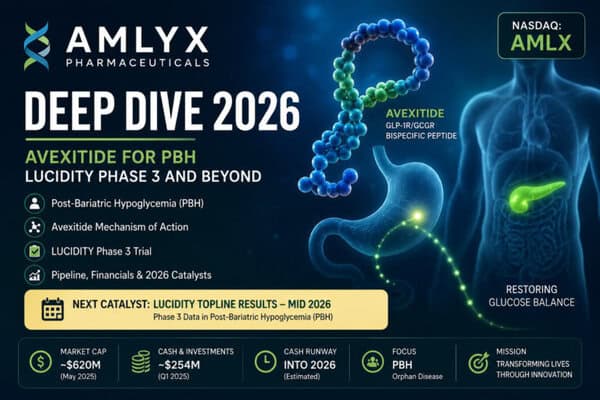
Amylyx Pharmaceuticals (Nasdaq: $AMLX) — Avexitide, Post-Bariatric Hypoglycemia and the LUCIDITY Phase 3 Trial

1 hour ago 46
UNCY SPRO CAPR
  • Reports Biotech

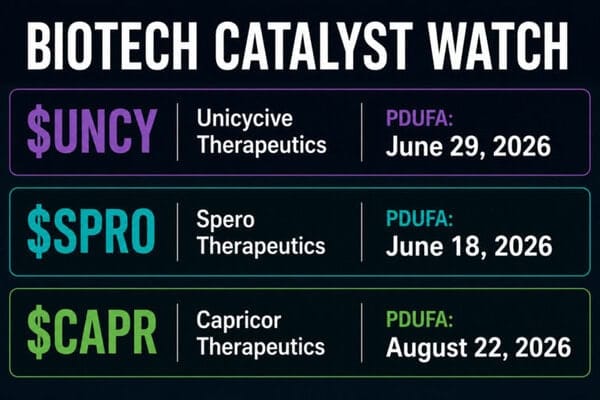
FDA Pressure Builds Into Summer: Unicycive, Spero and Capricor Move Toward High-Stakes Decisions

2 days ago 21
OTLK JUNE
  • Reports Biotech
  • OTLK

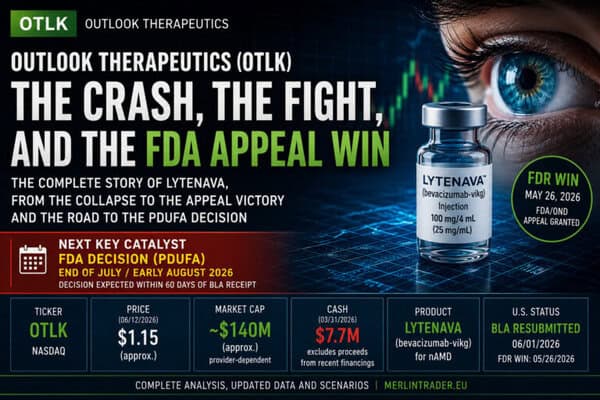
Outlook Therapeutics (OTLK) — The Crash, the Fight, and the FDA Appeal Win

3 days ago 7
Biotech Tape
  • Reports Biotech

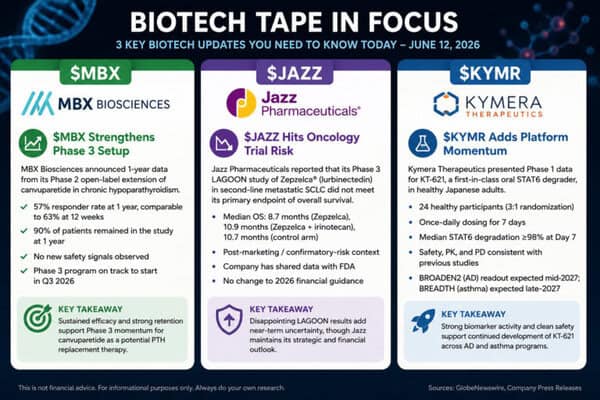
Biotech Tape in Focus: $MBX Strengthens Phase 3 Setup, $JAZZ Hits Oncology Trial Risk, $KYMR Adds Platform Momentum

3 days ago 0
COGT
  • Reports Biotech

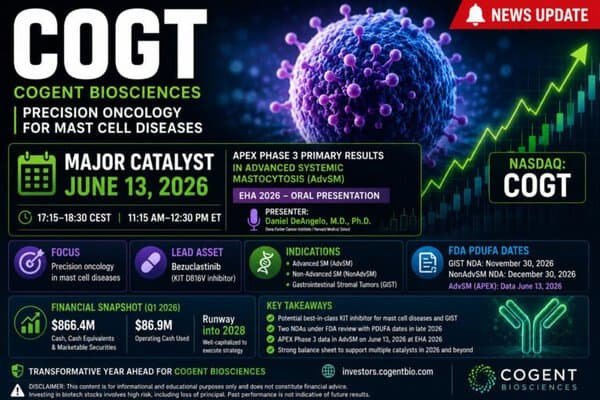
Cogent Biosciences (Nasdaq: $COGT) Deep Dive: Bezuclastinib, Three FDA Paths, and the EHA APEX Catalyst

3 days ago 7
iron
  • Reports Biotech

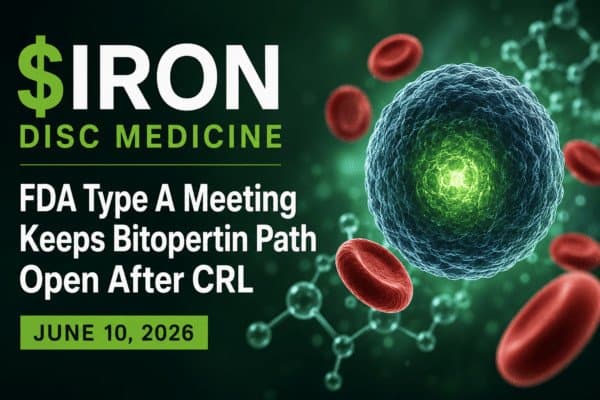
Disc Medicine (Nasdaq: $IRON): FDA Type A Meeting Keeps Bitopertin Alive After CRL

5 days ago 1

Trending Now

Amylyx Pharmaceuticals (Nasdaq: $AMLX) — Avexitide, Post-Bariatric Hypoglycemia and the LUCIDITY Phase 3 Trial AMLX 1
  • Reports Biotech

Amylyx Pharmaceuticals (Nasdaq: $AMLX) — Avexitide, Post-Bariatric Hypoglycemia and the LUCIDITY Phase 3 Trial

1 hour ago 46
The Week Ahead: Fed Pressure, Trump Risk, SpaceX Aftershock and Small-Cap Catalysts to Watch — $SPRO $RKLB $PL The week ahead jun 15 2
  • Editorial

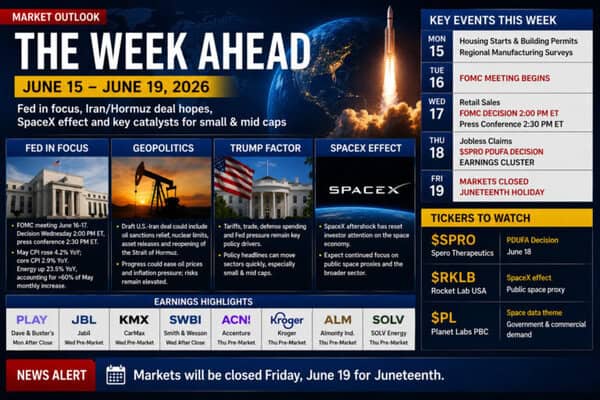
The Week Ahead: Fed Pressure, Trump Risk, SpaceX Aftershock and Small-Cap Catalysts to Watch — $SPRO $RKLB $PL

4 hours ago 33
Short Squeeze Watch: three crowded short-interest stocks, but not the same setup Short 3
  • Uncategorized

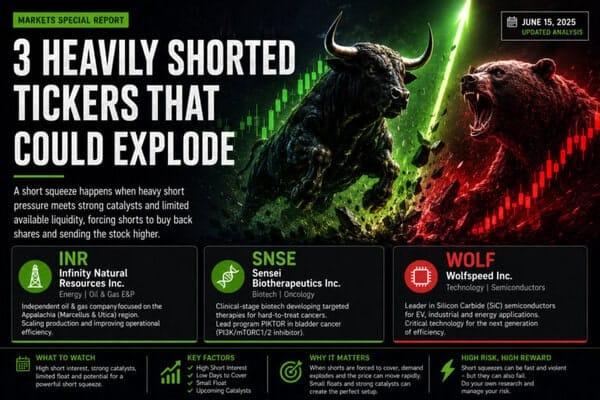
Short Squeeze Watch: three crowded short-interest stocks, but not the same setup

2 days ago 11
FDA Pressure Builds Into Summer: Unicycive, Spero and Capricor Move Toward High-Stakes Decisions UNCY SPRO CAPR 4
  • Reports Biotech

FDA Pressure Builds Into Summer: Unicycive, Spero and Capricor Move Toward High-Stakes Decisions

2 days ago 21

Welcome to Merlintrader!
Here we share ideas, analysis and news from the biotech and small-cap world, with a special focus on the catalysts that really move the market.
If you like the content on this site, please help me by sharing it on social media and in other forums. Thank you!

✦ Disclaimer: The information provided is strictly for educational and informational purposes. This content represents independent, informational research and does not constitute regulated investment research or financial advice. I am not a licensed financial advisor or an authorized investment professional. Nothing here should be interpreted as a recommendation to buy, sell, or trade any security. If you need personalized financial advice, you should consult a qualified and authorized professional. Biotech and small-cap stocks carry significant risk, including the potential loss of all invested capital. Each user remains fully responsible for their own trading decisions. Full legal disclaimers.
✦ RunUP Biotech: Interested in understanding market dynamics around FDA catalysts and clinical trials? The RunUP Biotech strategy provides a framework for analyzing pre-event positioning, volume patterns, and risk-management approaches. Educational focus on probability and pattern structure — not predictions or guaranteed outcomes. Learn more →
✦ Support Merlintrader: This website is free and has no paywall. If you find the reports and tools useful, you can support the project via Buy Me a Coffee — it helps me cover costs and keep publishing independent analysis.
✦ Disclosure: I closed my DRTS position today, May 11, at $10.29 per share, after entering at $7.31 per share. I opened a small position in CING on May 12 at $4.90 per share. Read the full disclaimer.
```
Free research library

Explore the Merlintrader blog

Inside the site you will find hundreds of free reports, deep dives on biotech and small caps, FDA catalyst coverage, market analysis, and articles built to help readers understand what really moves these stocks.

  • Full reports on individual stocks
  • FDA, catalyst and clinical-trial analysis
  • Daily briefings, watchlists and market themes
  • A free archive updated on a regular basis
Explore the blog

Free content, readable structure, and regular updates.

Archivio gratuito

Esplora il blog Merlintrader

Nel sito trovi centinaia di report gratuiti, approfondimenti su biotech e small cap, catalyst FDA, analisi di mercato e articoli pensati per aiutare i lettori a capire meglio cosa muove davvero questi titoli.

  • Report completi su singoli titoli
  • Analisi di catalyst, FDA e trial clinici
  • Daily briefing, watchlist e temi di mercato
  • Un archivio gratuito aggiornato con regolarità
Vai al blog

Contenuti gratuiti, struttura leggibile e aggiornamenti costanti.

Merlintrader Newsletter

Stay ahead of the next catalyst

Get market notes, deep-dive updates and catalyst-focused research directly from Merlintrader.

Educational market content only. No spam. You can unsubscribe anytime.
Terms, privacy and disclaimer

You May Have Missed

AMLX
  • Reports Biotech

Amylyx Pharmaceuticals (Nasdaq: $AMLX) — Avexitide, Post-Bariatric Hypoglycemia and the LUCIDITY Phase 3 Trial

1 hour ago 46
The week ahead jun 15
  • Editorial

The Week Ahead: Fed Pressure, Trump Risk, SpaceX Aftershock and Small-Cap Catalysts to Watch — $SPRO $RKLB $PL

4 hours ago 33
Short
  • Uncategorized

Short Squeeze Watch: three crowded short-interest stocks, but not the same setup

2 days ago 11
UNCY SPRO CAPR
  • Reports Biotech

FDA Pressure Builds Into Summer: Unicycive, Spero and Capricor Move Toward High-Stakes Decisions

2 days ago 21

Scanner for active traders
ChartsWatcher logo

Try ChartsWatcher free, then unlock 10% OFF with SAVE10

ChartsWatcher is a real-time scanner for momentum traders: fast movers, unusual volume and rotations — so you can focus on the few tickers that matter right now, instead of watching hundreds of charts.

Start with the free version. When you upgrade, use SAVE10 for 10% OFF your first paid period.

Start free – then use SAVE10

No credit card required to start. Apply SAVE10 when upgrading.

ChartsWatcher platform screenshot
Recommended platform
Medved Trader logo

One platform. All your brokers.

Medved Trader connects multiple brokers in one workspace, with pro charts, hotkeys and fast execution — without changing your broker accounts.

A single cockpit for positions, Level II and multi-broker order routing, built for active day & swing traders.

Get 1 Month Free ➔

Multi-broker workflow + customizable layouts in one platform.

Medved Trader platform dashboard
Monica.im Monica.im – the AI assistant I use every day

If you find value in the work I publish on Merlintrader and want a practical AI assistant for research and writing, you can sign up using this referral link. Click here to try Monica.im and support the site

Find out how I use AI on Merlintrader: AI, retail and Merlintrader

Disclosure: some of the links in the promotional blocks above are affiliate or referral links. If you choose to subscribe or sign up through them, Merlintrader may receive a small commission or benefit at no extra cost to you.

Merlintrader author

Authors: Merlintrader, Jane and Gemini

Author's note

In every piece of content I share things as I personally interpret them, based on raw data from official company filings, regulatory documents, conference call transcripts and other primary sources where available. Some parts of the research and structure are supported by AI assistants (Jane and Gemini), which help me organise data, cross-check details and improve charts or visuals. However, any interpretation, opinion and final judgement remain entirely my own as a trader like you, not as a licensed financial advisor or registered analyst. Market sentiment can change quickly, while official documents and numbers remain what they are. It is also possible for me to make mistakes: collecting and cross-checking FDA timelines, clinical data, filings and corporate updates is complex, so inaccuracies may occur. If you spot something that looks off, feel free to let me know and I will correct it. Please do not treat this content as professional investment advice, but as one more piece of information to compare with your own research and the opinion of qualified professionals.

AI usage disclosure

Content on Merlintrader may be prepared using a human + AI workflow. Drafting, editing and data organisation may be supported by generative AI tools, for example large language models provided by third-party vendors, based on prompts and instructions defined by the author. All sources are publicly available, and the final selection of data, checks, opinions and conclusions is carried out by the author, who remains fully responsible for the content.

Legal disclaimer – please read carefully

Each piece of content is provided strictly for informational and educational purposes. It is not and must not be interpreted as investment advice, investment research in a regulatory sense, portfolio management, or a recommendation to buy or sell any security or financial instrument. The author is not a licensed investment advisor, not a registered broker, and not a FINRA/SEC-registered analyst or portfolio manager. Any reference to potential scenarios, price levels or catalysts is purely illustrative and reflects a personal, non-professional view based on publicly available information at the time of writing.

Nothing in any content published on Merlintrader should be considered a solicitation to the public to invest, nor an invitation to raise capital, nor a promise of profit or of capital protection. Biotech and healthcare stocks in particular can be highly volatile and speculative, especially around clinical and regulatory catalysts. Before making any investment or trading decision, always perform your own due diligence and consider consulting a qualified, regulated financial professional who can evaluate your personal situation, objectives and risk tolerance. Past performance and historical examples do not guarantee future results.

The author may hold, or may have held, long or short positions in some of the securities mentioned in Merlintrader content, and may open, close or modify such positions without notice. This potential alignment of interests may influence the tone or focus of the analysis. No position held by the author changes the fact that this content is not investment advice and should not be used as such.

The full texts of the disclaimers and terms of use, in both Italian and English, are available on the official Merlintrader legal pages listed below.

Donate via PayPal

If you find these reports useful and want to support the project, you can make a voluntary one-time donation via PayPal or Buy Me a Coffee. It helps cover data, tools and hosting costs so that the content can remain independent and freely accessible.

Buy Me a Coffee

Tools and research platforms used by Merlintrader

Below is a shortlist of tools and platforms that I personally use to follow prices, catalysts, fundamentals and sentiment. Links are provided for transparency and convenience only.

  • Finviz Elite – advanced stock screener and charting, used for heatmaps, relative performance and technical context.
  • ChartsWatcher – real-time, next-generation scanner for the US stock market. Used to monitor intraday momentum, volume spikes and colour-coded pattern alerts.
  • Stocktwits – social stream focused on tickers, used only as a sentiment and activity indicator, not as a source of investment recommendations.
  • Monica.im – AI assistant used for light reports, drafting and quick research; helps with structuring notes and first-pass analysis alongside the deep-dive work published on Merlintrader.
  • Medved Trader – professional trading and charting platform used for real-time execution, order-flow and detailed intraday analysis. No affiliate link; mentioned because it is part of the actual trading workflow.
  • Merlintrader trading Blog – the home for biotech-focused reports, dashboards and educational articles that expand on the ideas mentioned in this document.

Some of the links above are affiliate links. If you decide to subscribe or purchase through them, it may generate a small commission for Merlintrader at no extra cost to you. This helps keep the site online and the reports freely accessible. You are under no obligation to use these links; always choose the solution that best fits your needs and your own evaluation.

Full legal information, risk warnings and terms of use are available on the official Merlintrader legal pages:

Disclaimer and risk warnings | Terms of use and privacy information

The same pages also include the corresponding English text or an English equivalent of the main legal notices, so that international readers can access the core risk disclosures and terms of use.

Biotech Catalyst Calendar

For a broader, continuously updated view of upcoming biotech catalysts (PDUFA dates, major clinical readouts, regulatory events and key conferences), you can consult the dedicated calendar on Merlintrader.

Open the Biotech Catalyst Calendar

Terms and Conditions
Cookie Policy
Privacy Policy
Merlintrader is a personal blog curated by Horacio F. Greco. Contact: info@merlintrader.com. No professional financial advice.
Do Not Sell or Share My Personal Information
  • Policies, Terms and Conditions
  • Voce di menu
  • Voce di menu
  • Voce di menu
  • Voce di menu
  • Our Profile on PRLog
Copyright © 2026 All rights reserved. | ReviewNews by AF themes.