DISCLAIMER — Not financial advice. Educational content only, not an offer or solicitation to buy or sell any security. Biotech and small/mid-cap stocks are highly speculative and volatile and can result in a partial or total loss of capital. Do your own research and consult a licensed advisor where appropriate.
Tools I Use

Real-Time Market Scanner
Fast movers • Alerts • Momentum
10% OFF with SAVE10


Recommended Platform

Professional Trading Workflow
Charts • Watchlists • Multi-broker tools
Built for active traders


Merlintrader Trading Pub
Biotech catalyst, news and analysis PDUFA tracker
Merlintrader Trading Pub
Biotech catalyst, news and analysis PDUFA tracker
Category Reports Biotech
Tickers reports and analysis
Beyond ReWalk: The Public Companies Competing for the Future of Exoskeletons and Neurorehabilitation — $LFWD $MYO $CHRN $APLD
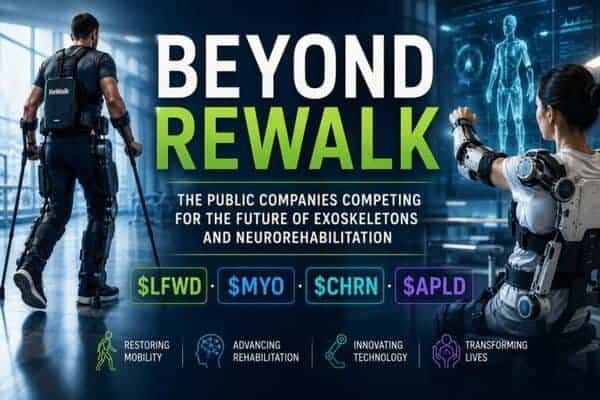
Beyond ReWalk: Public Exoskeleton and Neurorehabilitation Companies | $LFWD $MYO $CHRN $APLD Merlintrader Sector Deep Dive · Medical Robotics · Wearable Technology · Neurorehabilitation Beyond ReWalk: The Public Companies Competing for the Future of Exoskeletons and Neurorehabilitation — $LFWD $MYO…
Biotech Radar July 13, 2026: Sanofi, Guardant Health and Pharvaris
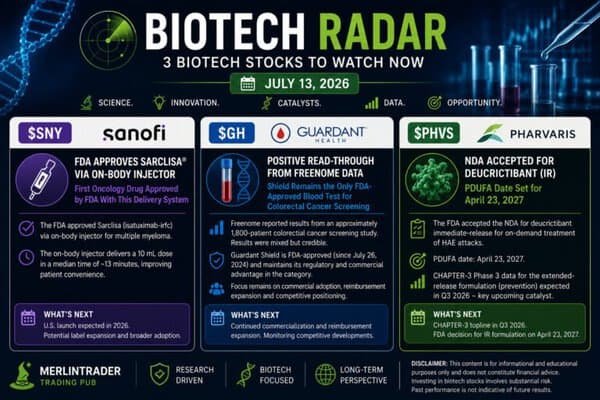
Biotech Radar July 13, 2026 $SNY $GH $PHVS Three-name biotech watch Biotech Radar July 13, 2026: Sanofi ($SNY), Guardant Health ($GH) and Pharvaris ($PHVS) Three distinct healthcare setups define today’s watch: a first-of-its-kind oncology delivery approval, a competitive read-through in…
Insider Trading This Week: The 20 Biggest Buys And Sells
Insider trading this week (July 6-10, 2026): the 20 biggest open-market buys and 20 biggest sells by dollar value, with names, tickers, amounts and next catalysts. Educational, no recommendations.
Biotech Radar — July 11, 2026: Chemomab, CervoMed and AtaiBeckley — $CMMB $CRVO $ATAI
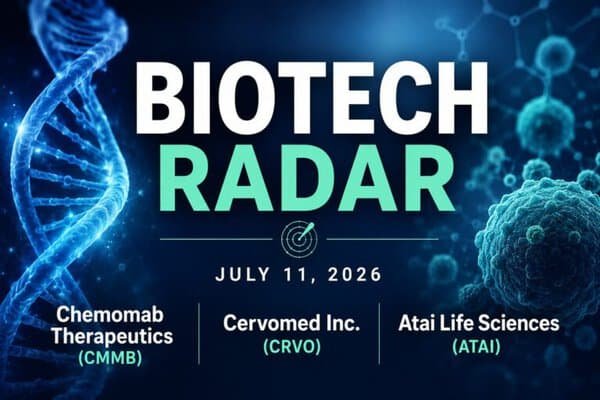
Today’s radar compares three very different catalyst structures: Chemomab’s proposed merger with Scipher Medicine and shift toward AI-guided rheumatoid arthritis development, CervoMed’s completed Phase 2a enrollment in nonfluent variant primary progressive aphasia, and AtaiBeckley’s completion of dosing in the VLS-01 Phase 2b Elumina trial ahead of a Q4 2026 topline readout.
$VKTX, $GPCR, $SKYE: Next-Generation Obesity Drug Stocks to Watch
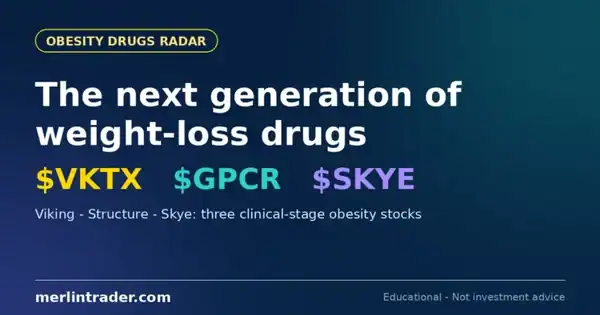
Obesity drugs radar: Viking ($VKTX), Structure ($GPCR) and Skye ($SKYE) — three clinical-stage weight-loss stocks, their trials, cash positions and 2026 catalysts, with the Novo/Lilly landscape as context.
Mesoblast ($MESO) Deep Dive: Ryoncil Hits $36M in Q4 and $115M in FY2026
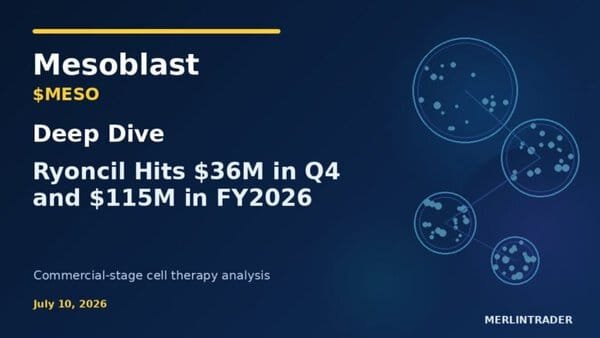
Mesoblast ($MESO) Deep Dive: Ryoncil Hits $36M in Q4 and $115M in FY2026 Merlintrader Deep Dive Published / updated: July 10, 2026 Biotech / Cell Therapy / Commercial Launch Analysis Mesoblast ($MESO) Deep Dive: Ryoncil Hits $36M in Q4 and…
$IONS / $AZN ATTR-CM Setback: Eplontersen Misses Phase 3 Endpoint, While $ALNY and $BBIO Gain a Cleaner Competitive Read-Through
Ionis and AstraZeneca’s CARDIO-TTRansform trial did not meet its primary endpoint in transthyretin-mediated amyloid cardiomyopathy. The result does not erase Wainua’s existing polyneuropathy franchise, but it changes the near-term ATTR-CM competitive map and puts Alnylam and BridgeBio back at the center of investor attention.
Immunome (Nasdaq: IMNM) Deep Dive: Varegacestat FDA Review and April 2027 PDUFA
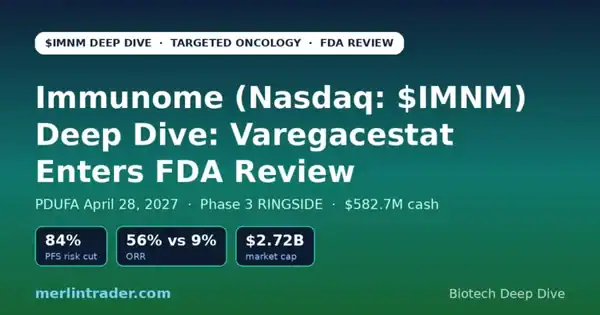
Immunome (Nasdaq: IMNM) deep dive: the FDA accepted the varegacestat NDA for desmoid tumors with an April 28, 2027 PDUFA date, backed by strong Phase 3 RINGSIDE data, 82.7M cash and a broader ADC pipeline.
$CRNX, $MCRB, $OKYO: Vertex’s $10B Crinetics Deal, Seres’ Microbiome Signal and OKYO’s FDA Phase 3 Pathway
Biotech radar: Vertex to acquire Crinetics ($CRNX) for ~$10B, Seres ($MCRB) posts an early 80% Day 15 SER-155 signal in checkpoint-inhibitor enterocolitis, and OKYO ($OKYO) moves urcosimod to Phase 3 NEPTUNE after FDA Type D feedback.
Biotech Radar: $VANI, $PHVS, $TOVX — Three Catalyst Stories From GLP-1 Implants to HAE and Pancreatic Cancer
Today’s radar is not built around one single theme. It is built around three very different biotech catalyst profiles: a small-cap GLP-1 implant narrative, a cleaner late-stage rare-disease regulatory story, and a highly speculative oncology microcap with a real but very early dosing question.
Biotech Radar — July 6, 2026: $PHVS, $AGEN, $IONS (FDA NDA Acceptance, MSS Colorectal Survival Data, Phase 3 Angelman Milestone)
Biotech radar for July 6, 2026: Pharvaris ($PHVS) FDA NDA acceptance with an April 2027 PDUFA date, Agenus ($AGEN) three-year BOT+BAL survival data in MSS colorectal cancer, and Ionis ($IONS) Phase 3 pivotal enrollment complete in Angelman syndrome.
Insider Trading This Week: The 20 Biggest Buys and Sells
Insider trading this week (June 29-July 3, 2026): the 20 biggest buys and 20 biggest sells by dollar value, with names, tickers, amounts and next catalysts.
Biotech Radar July 1, 2026: $CANF, $ABVX, $SXTP and $MODD Lead Today’s Catalyst Watch
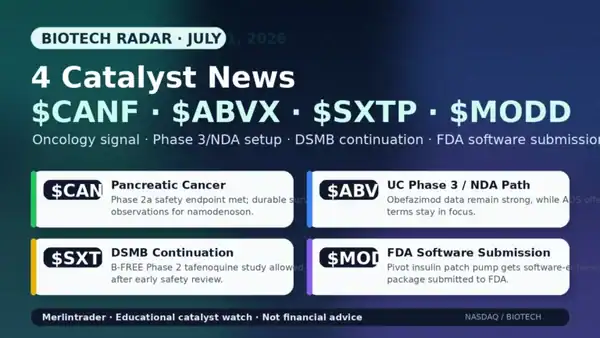
Today’s biotech tape is not built around one single mega-cap headline. It is a classic catalyst radar session: one small oncology name with a fresh Phase 2a survival signal, one late-stage inflammatory disease story with a major Phase 3/NDA setup but financing pressure, one infectious-disease micro-cap tied to babesiosis development, and one diabetes medtech name moving from clearance into real-world use.
Abivax (NASDAQ: $ABVX): Obefazimod, the ABTECT Phase 3 Safety Reset and the Q4 2026 NDA Path
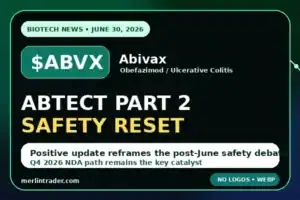
Abivax has moved from a speculative French biotech story to one of the most closely watched late-stage ulcerative colitis names in global healthcare. The June 29 ABTECT Maintenance Part 2 update did not simply add another dataset. It directly addressed the safety debate that had pressured the stock after the June 1 maintenance readout and pushed investors to reassess the risk/reward profile ahead of the planned U.S. NDA submission in Q4 2026.
Three Biotech Stories That Matter Now: Ipsen-Kartos M&A, $CAPR’s FDA AdCom, and $REPL’s RP1 Resubmission
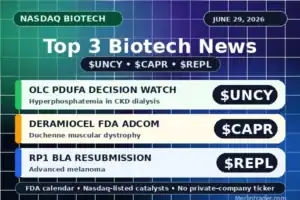
The biotech calendar is entering a dense FDA-driven window, with three Nasdaq-listed names standing out for very different reasons: a renal-disease PDUFA decision watch, a rare-disease cell therapy advisory committee, and an oncology BLA resubmission that has put accelerated approval back in focus.
Russell 2026 Biotech Watchlist: $UNCY, $GALT, $SPRB, $OVID and the Small-Cap Health Care Additions to Watch
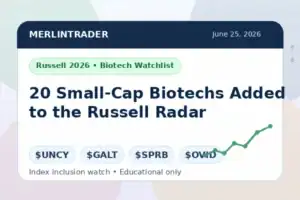
RUSSELL 2026 PRELIMINARY LIST 87 HEALTH CARE ADDITIONS BIOTECH FOCUS Russell 2026 Biotech Watchlist: $UNCY, $GALT, $SPRB, $OVID and the Small-Cap Health Care Additions to Watch The June 2026 Russell reconstitution becomes effective after the U.S. market close on June…
$PLSM $ICCM $SLN: Remote Care, Cryoablation and siRNA Catalysts Move Back Into Focus
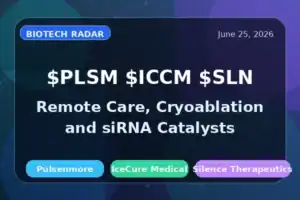
Three healthcare small caps enter the morning radar for different reasons: Pulsenmore is pushing FDA-authorized home ultrasound into U.S. virtual maternity care, IceCure is building the clinical-validation story around ProSense cryoablation, and Silence Therapeutics is moving closer to a Phase 2 SANRECO readout for divesiran in polycythemia vera.
Ionis Pharmaceuticals (Nasdaq: $IONS): TRYNGOLZA Wins FDA Approval in Severe Hypertriglyceridemia
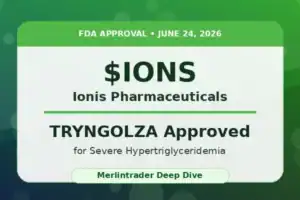
The FDA approval of TRYNGOLZA in adults with severe hypertriglyceridemia turns olezarsen from a rare-disease FCS launch into a broader cardiometabolic commercial story. The key issue now is not simply whether the drug works, but how quickly Ionis can convert a stronger label, a larger addressable population and pancreatitis-risk messaging into real prescribing momentum.
Biotech Radar – $DFTX $ABSI $NVCT – June 24, 2026
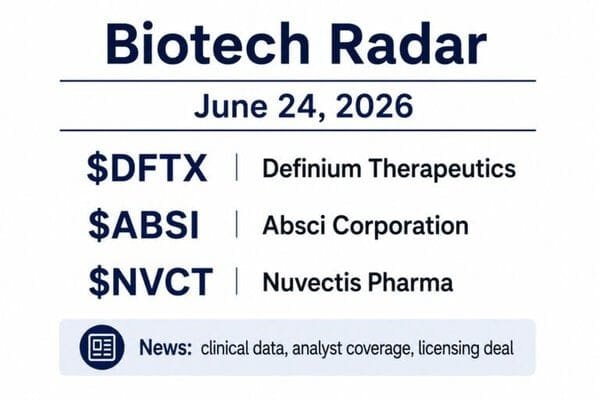
Phase 3 clinical data, analyst coverage and an international licensing deal: three real, verified catalysts across DFTX, ABSI and NVCT.
Moleculin Biotech (Nasdaq: $MBRX) — MIRACLE Trial Countdown Ahead of the June 30 Interim Unblinding
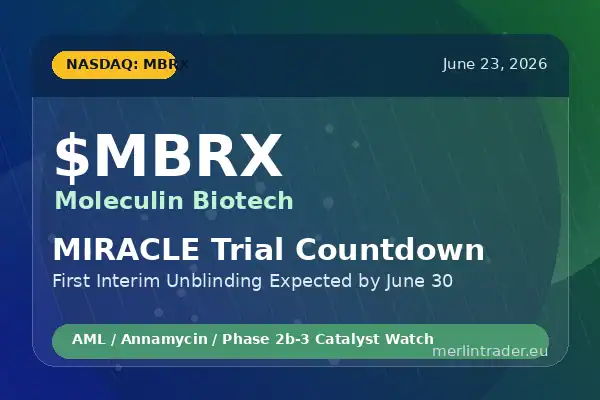
A verified deep dive on Annamycin, the MIRACLE Phase 2b/3 trial, the latest cardiac-safety package, the company’s fragile cash position, and the binary scenarios surrounding the first 45-subject interim unblinding expected by June 30, 2026.