Merlintrader Trading Pub
Biotech catalyst, news and analysis PDUFA tracker
Merlintrader Trading Pub
Biotech catalyst, news and analysis PDUFA tracker
AI transparency: articles and reports are produced with the help of artificial intelligence and checked through a process that does not constitute specialist validation. They may contain errors: verify relevant information with independent sources. Read the full disclaimer.
Akanda Corp. (Nasdaq: $AKAN) – Cannabis Rescheduling, Micro-Float Rally and Balance Sheet Risk

Akanda Corp. is one of the clearest examples of how a powerful sector catalyst can ignite an extremely small, structurally fragile, low-float equity without necessarily changing the underlying business. The April 2026 rally was real as a market event, but it should not be misread as fundamental confirmation. The stock moved because federal cannabis reform returned to the front page, because Akanda had just completed a 1-for-4.5 reverse stock split, and because the post-split share structure made the name unusually sensitive to retail momentum, scanner activity and possible short-covering dynamics.
Intel Corporation (Nasdaq: $INTC): AI CPU Demand, Foundry Turnaround and the Return of a Historic Chip Giant
Intel has spent years as one of the market’s most painful semiconductor turnaround stories. The company lost technological prestige, watched AMD take share in CPUs, watched TSMC become the gold standard in advanced manufacturing, and watched Nvidia capture the center of the artificial intelligence investment cycle. For a long time, Intel was the stock people remembered more than the stock people wanted to own.
AEye Inc. (Nasdaq: $LIDR): Retail Momentum Meets the LiDAR Turnaround Story Ahead of Q1 Earnings

Why LIDR is suddenly interesting again
AEye Inc. has re-entered the trader conversation because three ingredients arrived at the same time: fresh analyst attention, a clean technology narrative and unusually strong retail interest around a small-cap ticker. Craig-Hallum initiated coverage with a Buy rating and a $3.50 price target on April 24, 2026, giving the market a simple headline to trade. AEye also has a near-term event on the calendar, with first-quarter 2026 results scheduled for May 13, 2026 after the close, followed by a conference call and webcast.
SES AI Corporation (NYSE: $SES): Earnings Beat, Revenue Growth and 2026 Outlook

SES AI’s April 2026 earnings update changes the tone of the story. For most of its public-market life, SES has been discussed primarily as a lithium-metal battery technology platform with large automotive ambitions, long timelines and heavy cash consumption. The Q1 2026 report does not remove those risks, but it adds a more tangible commercial layer: revenue came in at $6.7 million, up 47% sequentially and well above published consensus estimates, while the company reaffirmed full-year 2026 revenue guidance of $30 million to $35 million.
Quantum Leap: The Sector Calculates the Future — and the Profits $IONQ $QBTS $RGTI
Quantum computing is no longer a theoretical exercise. In the span of a few weeks in April 2026, three publicly traded quantum companies — IonQ (IONQ), D-Wave Quantum (QBTS), and Rigetti Computing (RGTI) — produced a synchronised breakout that caught the attention of investors well beyond the specialized tech community. IONQ surged more than 20% in a single session, dragging QBTS and RGTI higher with it, in a coordinated move driven by genuine fundamental catalysts rather than sector hype alone.
$HUT Deep Dive April 2026: Hut 8 from Bitcoin Miner to Power-First AI Infrastructure Platform
Hut 8 is no longer an easy one-line story. The old label of “bitcoin miner” is now too narrow, but the new label of “AI infrastructure platform” is still only partially earned. That gap between narrative and proof is exactly why the stock matters right now. Readers are not just looking at another crypto proxy. They are looking at a company trying to turn power access, digital infrastructure, and capital markets agility into a premium multiple.
$BIRD / NewBird AI: the pivot that turned a broken footwear story into the market’s most attention-grabbing AI trade
Allbirds did not just announce a strategic update. It detonated one of the strangest speculative episodes of the year: a company that sold its footwear brand and had been moving toward dissolution suddenly reappeared as “NewBird AI,” backed by a $50 million convertible facility meant to fund a GPU infrastructure strategy. The result was a volume shock, a retail frenzy, and a debate over whether the market is pricing execution or simply pricing narrative.
Space Wars
The question is no longer whether the Space Force truly exists as an autonomous armed service. After the April 15 release and B. Chance Saltzman’s remarks at the 41st Space Symposium, the point is that U.S. leadership is asking markets, industry and Congress to treat it as a fully operational, combat-credible force: a force no longer living on doctrine alone, but one that has already produced real effects in recent operations and now wants to translate that legitimacy into architectures, personnel, industrial production and multiyear contracts
Elon Musk, Tesla, SpaceX, xAI and Grok: Building an Ecosystem for Humanity’s Future
Elon Reeve Musk, born on June 28, 1971, in Pretoria, South Africa, has become one of the most influential and polarizing entrepreneurs of the modern era. Over the past three decades, he has played a central role in reshaping digital payments, electric vehicles, reusable rockets, satellite connectivity, artificial intelligence, neural interfaces and social platforms. More than a businessman in the traditional sense, Musk positions himself as an engineer-entrepreneur obsessed with long-term civilizational questions.
Can Cannabis Regulation in Maryland, Massachusetts, and California Become a Sector Catalyst for $ACB, $CGC, $TLRY, $CRON, and $SNDL?

Three separate state-level moves — Maryland’s public-health labeling discussion, Massachusetts’ near-term governance and licensing overhaul, and California’s pesticide testing rulemaking — may not look like classic headline catalysts at first glance. But for cannabis operators, labs, manufacturers, packaging vendors, distributors, and investors watching margin pressure, market access, and compliance risk, these are exactly the types of regulatory shifts that can quietly reshape the sector.
Robinhood Markets ($HOOD): why the new intraday-margin era matters, and why the story is bigger than the old PDT rule
Robinhood Markets, Inc. (NASDAQ: HOOD) is a commission-free, SEC-registered brokerage that has fundamentally disrupted retail investing access in the U.S. Since its 2013 founding and 2021 IPO, Robinhood has amassed ~24 million funded accounts managing $1.5+ trillion in assets. The platform generates revenue through payment for order flow (PFOF), margin lending, and cryptocurrency services—not traditional commissions.
Interactive Brokers (IBKR) – Complete Report on Business Quality, Earnings Drivers and Risk Framework
Interactive Brokers is one of the more interesting names in listed financials because it combines brokerage, technology, market infrastructure and scale economics in a way that is not easy to replicate. The stock is often discussed as if it were just another read-through on retail trading activity or interest rates. That framing is too narrow.
Webull ($BULL) Deep Dive: Why the End of the Legacy Pattern Day Trader Rule Could Matter More Here Than Almost Anywhere Else
Webull is one of the most direct public-market expressions of a very specific regulatory story: the SEC has approved FINRA’s proposal to remove the old pattern day trader regime, including the long-standing $25,000 minimum equity requirement and the three-day-trade limit that restricted smaller margin accounts. That does not mean the new system is live everywhere today. It means the direction of travel is now official, the market can underwrite the path, and brokers most exposed to active retail behavior suddenly have a new narrative runway.
Safe Pro Group ( $SPAI ) Deep Dive: Why Today’s U.S. Army Exercise Matters
Today’s update did not change the fact that Safe Pro is still a very early, very promotional, very high-risk small cap. What it did change is the quality of the operating narrative. Safe Pro is no longer talking only about future opportunity in defense AI. It is now stacking a visible sequence of milestones: a government subcontract, rapid delivery, Army exercises, commercial rollout of NODE-X, and another field validation event announced today.
Fastly (FSLY): verified April 2026 deep dive on the edge-security rerating thesis
Fastly is no longer the same simple “broken CDN turnaround” story it looked like a couple of years ago. The April 2026 setup is more nuanced. The business is showing real improvement in mix and operating profile, 2025 revenue accelerated to 15% growth, free cash flow turned positive, non-GAAP operating income turned positive for the full year, and management guided to another year of revenue growth plus positive non-GAAP operating income in 2026. That is the hard foundation the market was missing for a long time.
One Stop Systems ( $OSS ) Deep Dive April 2026 UPDATED May 06
From edge-AI pitch to real program conversion: what today’s autonomous-energy-node order says about OSS, how the business changed after the Bressner divestiture, and what still has to go right before this can be treated as a durable public-market winner.
AMC Entertainment ( $AMC) Deep Dive – April 2026
AMC is showing genuine operating improvement, but the common stock is still a highly leveraged instrument sitting underneath a very heavy capital structure.
USA Rare Earth ( $USAR ): a strategic mine-to-magnet buildout, not a simple rare-earth headline trade
A long-form look at how USA Rare Earth is trying to build an integrated non-China rare earth chain across Texas, Oklahoma, the U.K. and France, why the story now matters far beyond mining, and where the real upside and real execution risk sit today.
The Trend Is Your Friend
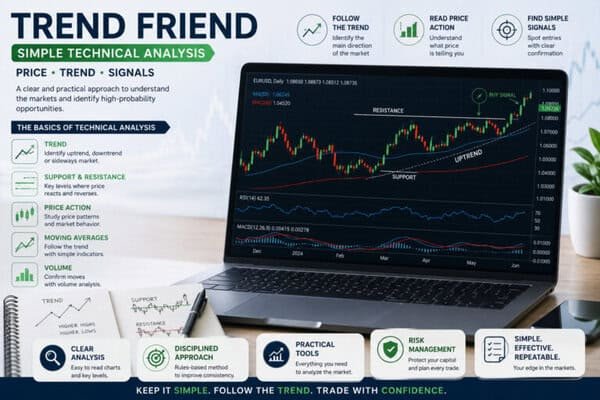
There are trading phrases that survive because they are useful, and there are trading phrases that survive because they are easy to repeat. “The trend is your friend” belongs to both categories. It is useful, but only when treated as a probabilistic framework rather than a religious commandment. Used well, it keeps a trader aligned with momentum, liquidity, and market psychology. Used badly, it turns into a license to chase, overstay, and confuse a mature move with a fresh opportunity.
Voyager Technologies (NYSE: VOYG) — April 2026 deep dive
Voyager Technologies is one of the more interesting space-defense names because it is not a clean, single-theme stock. It is not just a commercial space dream. It is not just a defense contractor. It is not just a speculative “future station” vehicle either. It is a hybrid company where a real operating business in defense and mission services sits next to a very large long-duration bet on the future commercial low-Earth-orbit economy. That mix is what makes VOYG potentially powerful, but it is also exactly what makes it difficult to value.