Merlintrader Trading Pub
Biotech catalyst, news and analysis PDUFA tracker
Merlintrader Trading Pub
Biotech catalyst, news and analysis PDUFA tracker
AI transparency: articles and reports are produced with the help of artificial intelligence and checked through a process that does not constitute specialist validation. They may contain errors: verify relevant information with independent sources. Read the full disclaimer.
$SPCX, $RKLB, $FLY, $LUNR: Who Is Most Exposed to America’s 1,000-Launch Space Policy?
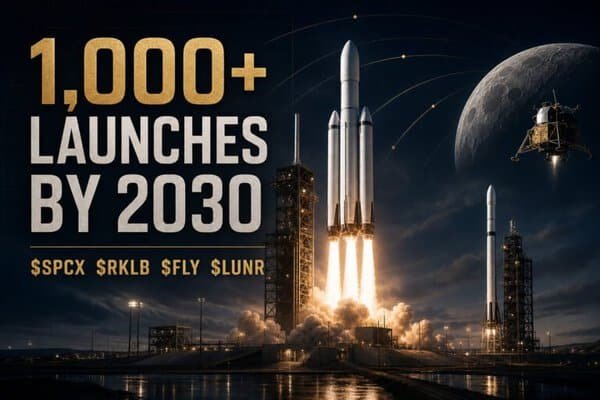
America’s new space transportation policy targets more than 1,000 launches and reentries a year by 2030. SpaceX, Rocket Lab and Firefly are the clearest launch exposures; Intuitive Machines is the strongest lunar-logistics read-through. The policy is a strategic tailwind, not a contract or a funded revenue guarantee.
$TVTX vs $VERA: The Business That Already Exists vs the Upside That Could Become Enormous
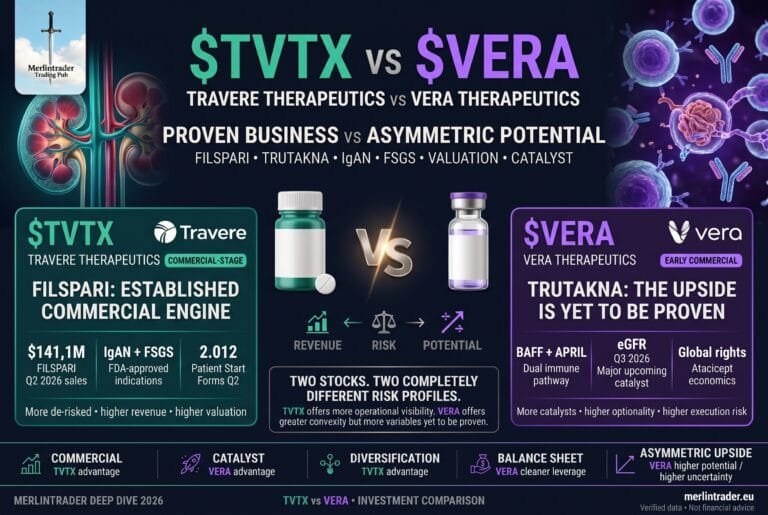
Travere Therapeutics and Vera Therapeutics look like an easy pair to compare: both operate in rare kidney disease, both have major exposure to IgA nephropathy, and their flagship products will increasingly compete for attention from the same nephrologists. Yet investors are actually choosing between two almost opposite profiles.
You Are Not Holding a Stock, You Are Wearing Its Shirt: A Field Guide to Falling in Love With a Ticker

Nobody plans it. You do some research, you buy a small position, and eleven months later you are defending a company at two in the morning. The seven people in every ticker feed, the dictionary of the smitten, the four bills, and a cold test in four questions.
$MSOS $TLRY $CGC $ACB: Inside the 274 Pages That Closed the Cannabis Rescheduling Record
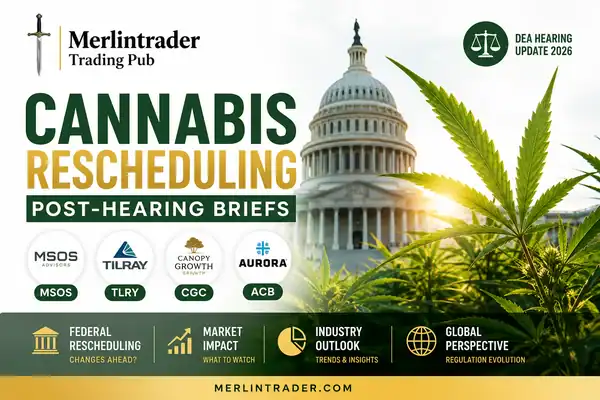
Every party in the DEA rescheduling case filed on August 17. The Government asked for Schedule III; all six other filings asked that marijuana stay in Schedule I. What the 274 pages say, what the sector reported, and which dates are real.
Biotech Radar — August 15, 2026: $CAPR, $ABCL and $DFTX Lead a Week of FDA Turns, Clinical Wins and Hard Resets
Biotech Radar for Aug. 15, 2026: CAPR, ABCL and DFTX lead, plus TENX, SION, PDSB, FDA approvals, clinical data, earnings and biotech deals.
US Drone Tariffs Explained: The Six-Layer Supply Chain Map, With $RCAT, $ONDS, $AVAV and $LPTH As Worked Examples
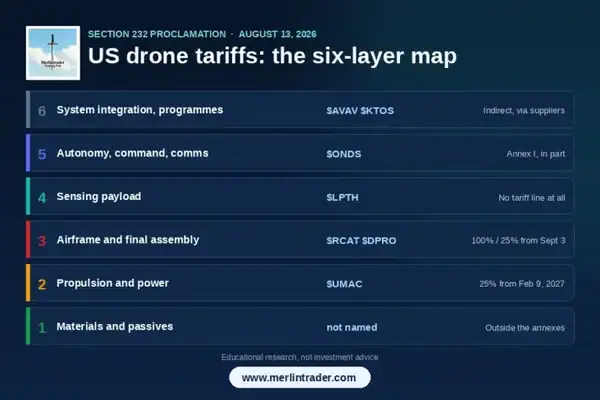
The Section 232 proclamation of August 13, 2026 puts a 100 percent duty on imported drones from September 3, defers a 25 percent component tier to February 2027, and arrived on the same day export controls were loosened. A six-layer map of the supply chain, four worked examples and a five-question routine for reading the next announcement.
$BE, $CRWV, $NBIS And $OKLO: What The Second Quarter Revealed About The AI Power Boom
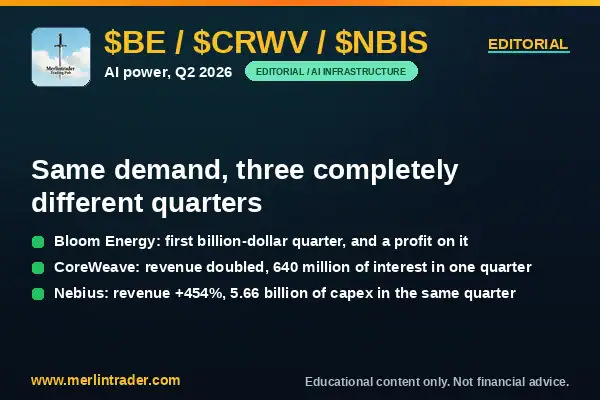
Three companies serving the same AI data centre demand reported three completely different quarters. Bloom Energy passed $1 billion of revenue and made a profit. CoreWeave doubled revenue and paid $640 million of interest. Nebius grew 454% and spent $5.66 billion on capacity. Meanwhile the nuclear names are down a third this year.
RKLB, ASTS, LUNR, RDW: Real Reversal or Dead Cat Bounce? Space & Defense After the Crash
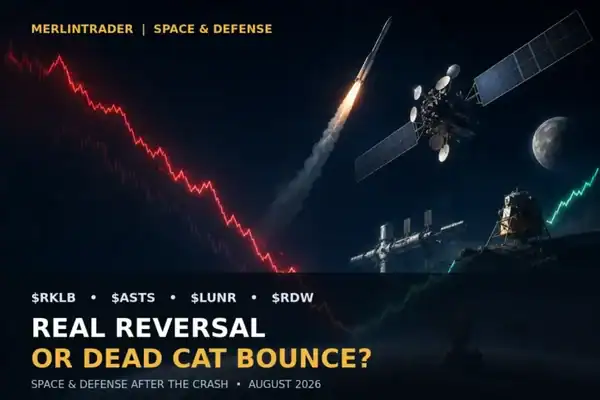
Between late May and July 29, 2026, RKLB, ASTS, LUNR and RDW lost 60-75% of their value, then rallied 35-75% in seven sessions. Nine defense names beat and raised guidance. Real reversal, or dead cat bounce? The next earnings decide.
$NBIS, $MSFT, $BE and $ORCL: Nebius Vineland and the $17.4 Billion Microsoft Bet
The Nebius Vineland AI data center is already under construction while the amended site plan returns to a Planning Board hearing on August 17. Inside $NBIS: the $17.4 billion Microsoft contract, the Bloom Energy power redesign, Michael Burry's short, DA Davidson's cut to $175 and the August 12 earnings call.
$OKLO, $XE, $SMR and $IMSR: Four Advanced Nuclear Business Models, Compared
Oklo, X-Energy, NuScale and Terrestrial Energy are usually traded as one theme. They are four different businesses. A comparison on business model, regulatory status, fuel enrichment, contracts and cash, with a reusable six-question triage tool.
Biotech Radar — August 5, 2026: $OBX, $ACRV and $URGN Lead a Broad Clinical and Capital-Markets Tape
Biotech Radar for August 5, 2026: $OBX, $ACRV and $URGN lead, with clinical, commercial and financing news across nine additional biotech names.
Biotech Radar July 29, 2026: PolyPid Gets Priority Review, Processa Resets Around VT-7208, TScan Starts Phase 3 — $PYPD $PCSA $TCRX
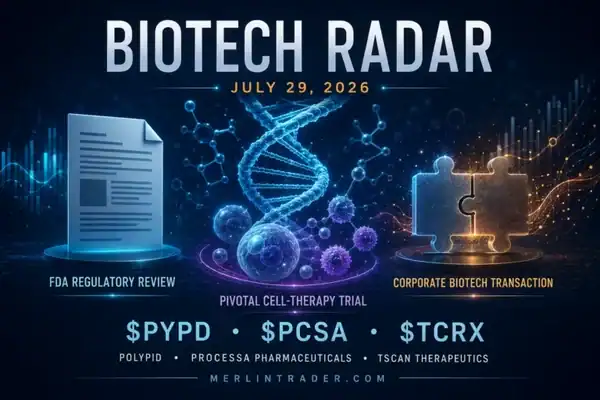
PolyPid receives FDA Priority Review for D-PLEX100, Processa rebuilds around VT-7208 with a $200 million financing, and TScan begins pivotal Phase 3 execution.
Biotech Radar July 28, 2026: Kiniksa Rerates, Nautilus Pushes Voyager Shipments to Mid-2027 and Alkermes Expands Its Sleep Franchise — $KNSA $NAUT $ALKS
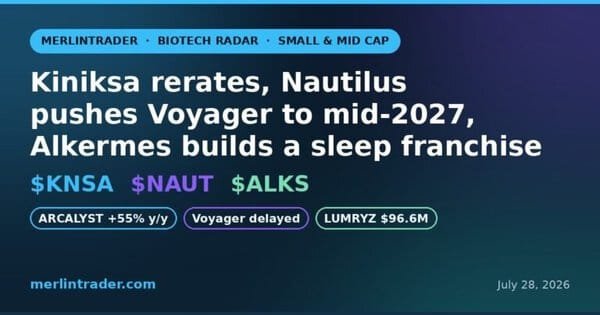
Today’s Radar separates a genuine commercial-plus-clinical rerating at Kiniksa from a material commercialization-timeline reset at Nautilus Biotechnology and a strong but more complex post-acquisition quarter at Alkermes. NeoGenomics and Mirion remain on the closing-bell watchlist, with results scheduled after the market closes.
$MSOS $TLRY $CGC $ACB: After the DEA Hearing, the Cannabis Trade Moves Into the Shadows
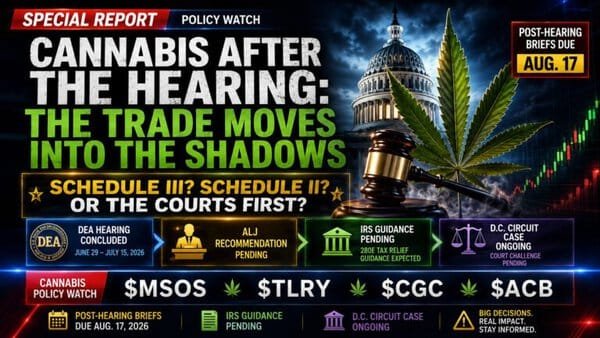
The courtroom has gone quiet, but the federal cannabis story is becoming more complicated—not less. Behind the August 17 deadline, investors are watching an unfinished tax rule, a dangerous court challenge and a Schedule II scenario that few traders appear prepared to discuss.
Biotech Radar July 27, 2026: Entera Bio ($ENTX), Freenome ($FRNM), Sarepta Therapeutics ($SRPT) and Legend Biotech ($LEGN)
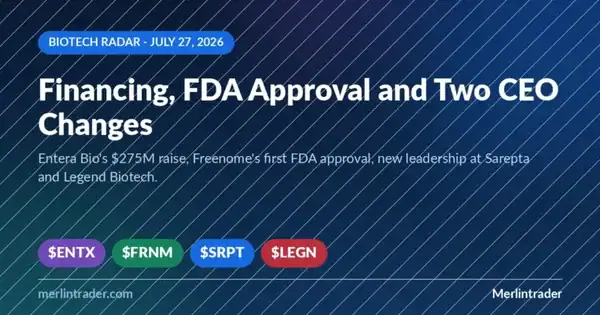
Four biotech stories moved onto the radar for four very different reasons: a company-changing financing at $ENTX, a first commercial FDA approval at $FRNM, a planned leadership handoff at $SRPT and a sudden CEO departure at $LEGN.
Golden Dome Enters the Procurement Era: 108 Tracking Satellites, the FY2027 Funding Fight and What It Means for $LHX $RKLB $LMT $NOC
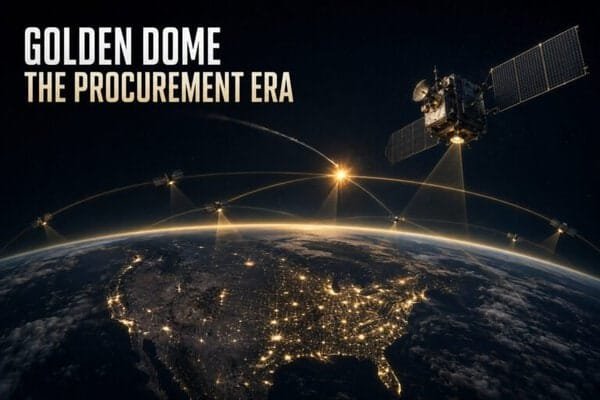
Golden Dome is no longer only a presidential vision or a broad market narrative. Congress has begun writing oversight into law, billions are moving through missile-warning and tracking awards, and the next political battle is already forming around FY2027 funding, space-based interceptors, acquisition authority and the true cost of defending the U.S. homeland.
Cannabis News Today: DEA Rescheduling, U.S. Hemp and $ACB $TLRY $CRON $CGC
A complete cannabis-sector update: the federal hearing is over, but a decision is not imminent; Congress is split between legalization and an attempt to block rescheduling; industry political donations are rising; and a parallel court fight could delay the process. Meanwhile, Aurora Cannabis, Tilray Brands, Cronos Group and Canopy Growth are looking for company-specific catalysts that do not depend entirely on Washington.
Biotech Radar July 22, 2026: BridgeBio, Curis, Monopar and Others — $BBIO $CRIS $MNPR
Six verified biotech developments published today: an accepted rare-disease NDA, updated PCNSL response data, the opening of a rolling Wilson-disease application, a positive brain-metastases imaging study, a Canadian ALS regulatory path and a $1.5 billion cell-therapy tools acquisition.
Why The Critical-Minerals Race Is Won In The Midstream, Not The Mine ($UAMY, $MP, $USAR, $TMC)
A framework for reading the critical-minerals sector: why the real bottleneck is processing (the midstream), a four-question tool to triage any headline, with $UAMY as the worked example and $MP, $USAR and $TMC on the map.
Priority Review Vouchers Explained: How an FDA Approval Becomes $180-205 Million in Cash, With $RCKT and $DNLI as Worked Examples · $XBI $IBB
How Rare Pediatric Disease Priority Review Vouchers turn a single FDA approval into $180-205 million in non-dilutive cash - the mechanism explained, with $RCKT and $DNLI as worked examples.